Russian commentator Kiriil Semonov has noted, if international recognition is not forthcoming, the Taliban could use extremist groups to perpetrate violence in neighbouring countries, posing a particularly serious threat to the Central Asian republics, writes Talmiz Ahmad
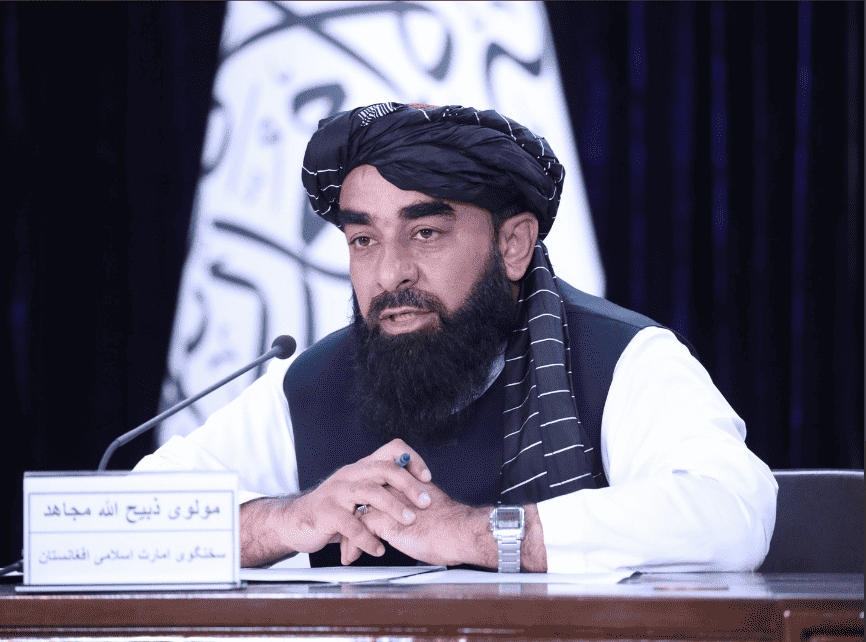
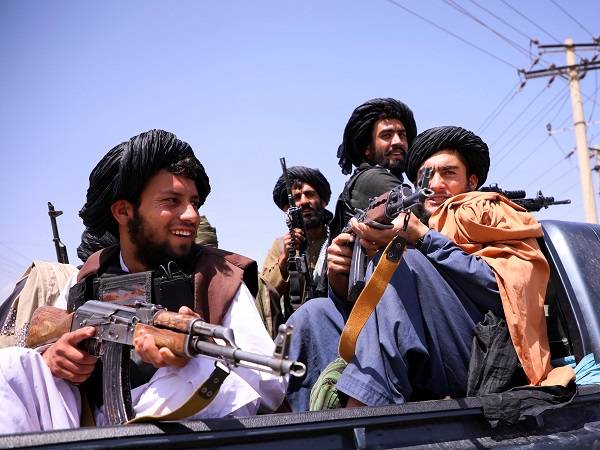
Over several months before the Taliban took control of Kabul in August 2021, their spokespersons asserted that they were now a “new” Taliban–a Taliban who would be moderate in doctrine and accommodative of the country’s diversity. During the last six weeks, there have been few indications of change. On women’s education and employment, the Taliban have not yet taken a final view: though women at present are not permitted access to higher education or employment, the door has not been finally closed on these claims.
In the broad area of ideology, there have been three developments: one, there are reports that numerous Salafi mosques and madrassas in 16 provinces have been shut down. Two, Taliban militants have committed themselves to conflict with the ISK, which the latter has cheerfully accepted.
Three, the Taliban have made no call for jihad or for attacks on western targets; in fact, the emergence of Taliban in power suggests the efficacy of dialogue with major powers. This is affirmed by the Taliban’s recent engagements with Russia and China, both of which have been important interlocutors for the nascent administration, despite being associated with abiding hostility to their domestic Muslim communities — the Uyghurs in China and the Chechens in Russia.
What implications does this have for Afghanistan emerging as the bastion of violent extremism?
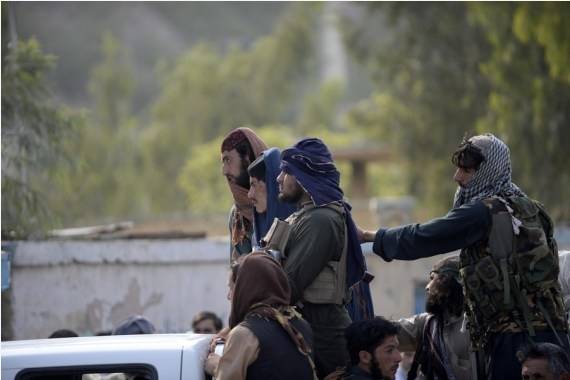
The Taliban’s hostility to Salafi influences in Afghanistan and specifically the ISK would suggest that it is unlikely to provide sanctuary to jihadi groups and allow the country to become the playing field for extremist activity. In fact, the Hayat Tahreer al-Sham (HTS), the erstwhile Al Qaeda-affiliated Jabhat Nusra in Syria, has seen the value of re-inventing itself on the Taliban precedent — confine its activities to Syria, back Turkey and Russia in fighting extremist groups at Idlib, and seek international recognition and support as a legitimate opposition movement in Syria.
While HTS cadres have welcomed the Taliban’s success, their leaders have cautioned that they view Afghanistan as a refuge for them as civilians and not as a base for violent attacks as the Taliban will not tolerate them.
The crucial issue is that of international recognition — like any liberation movement that has come to power after prolonged struggle, the Taliban would like broad international acceptance. Failure in this regard could have serious consequences: as Russian commentator Kiriil Semonov has noted, if international recognition is not forthcoming, the Taliban could use extremist groups to perpetrate violence in neighbouring countries, posing a particularly serious threat to the Central Asian republics.

The success of the Taliban in Afghanistan is thus a victory for freedom from foreign occupation, but it is not yet a triumph for representative governance. Developments over the next few months will tell us in which direction that country will move.
Outlook for political Islam: Today, in West Asia, neither jihad nor the Brotherhood have the state sponsors they had earlier. Saudi Arabia and the UAE, that, besides Pakistan, had been the only countries to recognise the “emirate” at Kandahar, now espouse moderate Islam; neither has shown any enthusiasm for the Taliban victory in Kabul. The UAE has given sanctuary to former president Ashraf Ghani, while the kingdom has called for an “inclusive” government in Kabul.
A Saudi commentator has said Saudi Arabia would like to see an Afghanistan that is not driven by extremist religious ideology. It now only views the country through the prism of its geopolitical competition with Iran and is expected to work with Pakistan to stem Iranian influence rather than back extremist ideological politics in that country
Again, Turkey and Qatar, both champions of Brotherhood-affiliated political Islam, are shaping fresh ideological approaches. Both have called for an inclusive government in Kabul; in fact, Turkey has made its management of Kabul airport conditional on the fulfilment of this requirement.
Turkey has also been similarly cautious in its criticism of the Tunisian president’s attack on Ennahda, despite close ties of the AKP with its ideological partner. President Recep Tayyip Erdogan has remained silent, in contrast with the rallies he had personally led when President Mohamed Morsi of Egypt was ousted. Turkish spokespersons have merely described events in Tunisia as “worrisome”, “illegitimate” and a source of “deep concern”.
Turkey’s low-key responses reflect its interest to revive its ties with Egypt and Saudi Arabia and promote a new political order in Libya in cooperation with Egypt. A commentator has noted that Turkey will sacrifice the Brotherhood to appease Cairo and Riyadh “in the hopes of securing new friends in the region”.
In an ironical twist, Saudi Arabia is also reviewing its ties with the Brotherhood-affiliated Al-Islah party in Yemen. Contrary to its traditional hostility to the Brotherhood and its off-shoots, the kingdom has maintained close relations with the Al-Islah for several decades and has in recent years used the party in its fight against the Houthis. This is an opportunistic alliance as the two sides differ on important matters: Al-Islah rejects the sectarian approach of the Saudis and supports a united Yemen made up of all its diverse groups and ideologies.
These differences have come to the fore in recent months: Saudi Arabia has voiced strong criticisms of Al-Islah as an Islamist organisation. The kingdom’s clerics have called it a “terrorist” organisation and accused it of “sedition, wreaking havoc, committing violence and terrorism”. Al-Islah member and Nobel laureate, Tawakkol Karman, has responded sharply by calling the Saudi clerics “hypocrites for bin Salman and his shoe polishers”, pointing out that the Brotherhood is struggling for freedom, and that Saudi Arabia is “the mother and father of terrorism”. This divide has pushed Al-Islah closer to the Houthis.
These developments reflect a region in the throes of uncertainty as the US prepares to disengage from the region’s competitions and conflicts. But they certainly do not portend the demise of political Islam, even if its principal parties are experiencing pressure from authoritarian rulers.
Despite severe repression in Egypt, the Brotherhood remains resilient today largely due to the depth and spread of its leadership, the discipline and commitment of its members, and the free debate that is going on through social media on how the movement should face the current challenges and where it should affect major changes.
Ideas being discussed include: accommodation with the al-Sisi government; recourse to violent opposition; and even a shift away from Islam towards the adoption of a broader agenda that would include matters that concern the global South: issues of culture and identity; ethnic, communal and sectarian extremism; poverty, inequality and exploitation, and environmental degradation and food security, etc.
In order to understand the place of Islamism in West Asian affairs we should see it, not as movements with diverse expressions, but as a solid platform of resistance to authoritarian rule. The only relevant political issue in West Asian politics, as Peter Mandaville has learnt from Brotherhood activists, is whether one supports or opposes the authoritarian regime — Islam, he points out, “provides a culturally and politically permissible means of registering dissent”.
Recent developments in Tunisia and Morocco are setbacks in the struggle for popular participation in governance. However, given the persistence of authoritarian rule in the region, political Islam will remain for several years the principal and enduring instrument of resistance in West Asia.
(The author, a former ambassador to Saudi Arabia, Oman and the UAE, holds the Ram Sathe Chair for International Studies, Symbiosis International University, Pune. This is the second and concluding part of his article. Views expressed are personal. The content is being carried under an arrangement with indianarrative.com)