August 12, 2021
4 mins read

US envoy meets Libyan commander to push for elections

The meeting came amid growing tensions between Haftar and the transitional government….reports Asian Lite News

US ambassador to Libya met with a Libyan military commander amid international efforts to salvage a UN-brokered roadmap to elections in the North African country later this year.

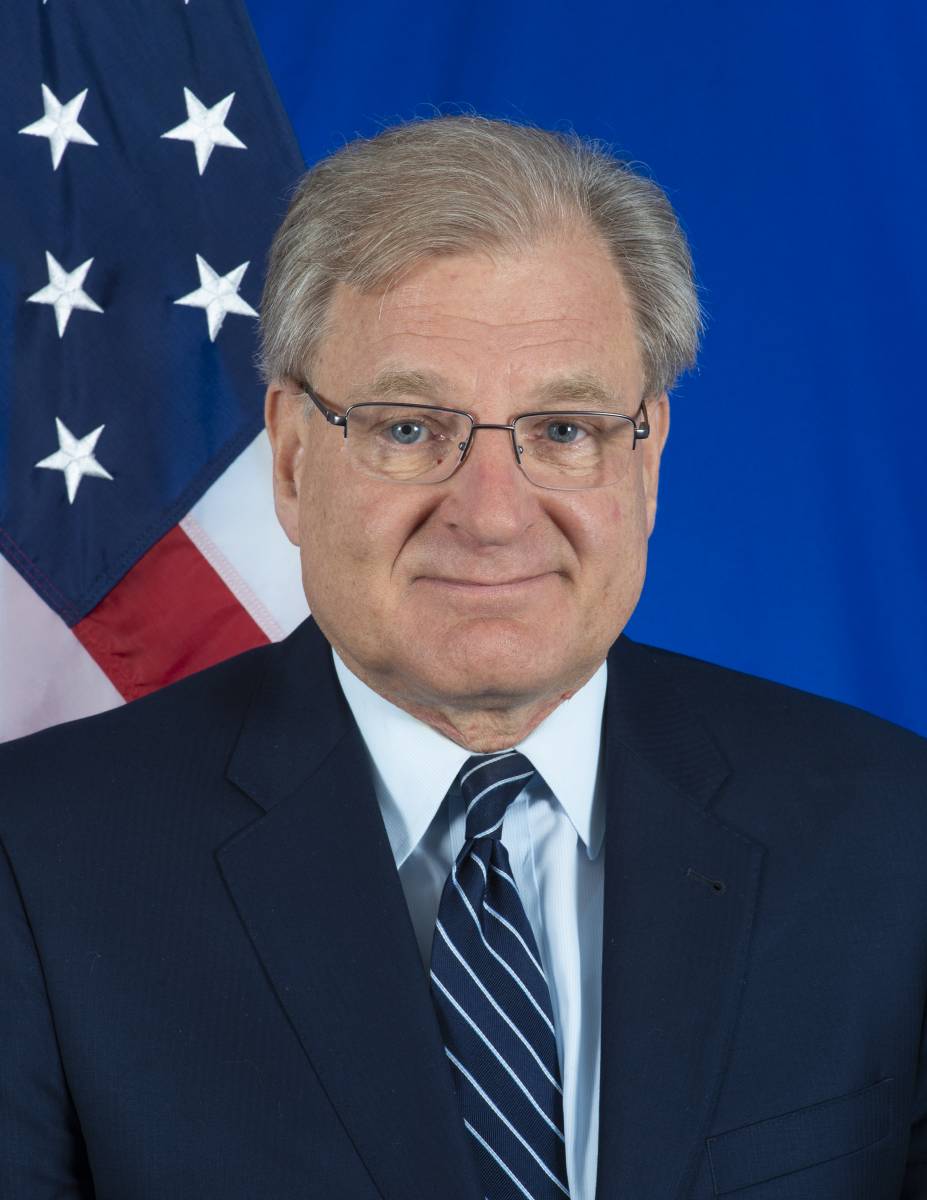
Richard Norland met with Khalifa Haftar, commander of the self-styled Libyan Arab Armed Forces, in the Egyptian capital of Cairo. The meeting was part of US efforts to support Libyan parliamentary and presidential elections in December, the US Embassy said.

Norland “continues to focus on the urgency of supporting the difficult compromises necessary to establish the constitutional basis and legal framework needed now in order for the elections to take place on Dec. 24,” the embassy wrote on Twitter.

“The United States supports the right of the Libyan people to select their leaders through an open democratic process and calls on key figures to use their influence at this critical stage to do what is best for all Libyans,” it said.

The meeting came amid growing tensions between Haftar and the transitional government. Haftar announced earlier this week the promotions of military officers without consulting or getting approval from the ruling Presidential Council. The council’s head serves as the supreme commander of Libya’s fragmented military.

“Your military will not be subjected to any authority except one elected by the people,” Haftar told his troops Monday in a ceremony celebrating the foundation of the Libyan military.

Libya has been wracked by chaos since a NATO-backed uprising toppled longtime dictator Muammar Qaddafi in 2011. In the years that followed the uprising, the oil-rich country split between a UN-supported government in the capital, Tripoli, and rival authorities based in the country’s east, each backed by armed groups and foreign governments.

Haftar, an Egypt ally, was aligned with the former east-based government.

Tripoli, July 20, 2020 (Xinhua) — A fighter of the UN-recognized Libyan government gestures on a pickup truck in the Abu Qurain area about 300 kilometers east of the Libyan capital Tripoli, July 20, 2020. (Photo by Hamza Turkia/Xinhua/.IANS)

In April 2019, Haftar and his forces launched an offensive to try and capture Tripoli from armed groups loosely allied with a UN-supported but weak government there.

His 14-month-long campaign, however, collapsed after Turkey stepped up its military support of the Tripoli-based government with hundreds of troops and thousands of Syrian mercenaries. That led to the October cease-fire and roadmap to elections adopted in Tunis a month later, which included a transitional government.

Last month, the UN special envoy for Libya, Jan Kubis, accused “spoilers” of trying to obstruct the holding of crucial elections in December to unify the divided nation. He told the UN Security Council that many key players in Libya reiterated their commitment to the elections, but “I am afraid many of them are not ready to walk the talk.”

The Security Council has warned that any individual or group undermining the electoral process could face UN sanctions.

The Libyan Political Dialogue Forum, a 75-member body from all walks of life, has so far failed to agree on a legal framework to hold elections. The forum met online Wednesday to consider four proposals for the constitutional basis for elections, according to the UN support mission in Libya.

The forum’s “lack of ability to reach an agreement (on the constitutional basis) risks resulting in depriving once again the Libyan people of their right to democratically elect their representatives and restore the long-lost legitimacy of Libyan institutions,” Kubis told the forum.

Another major hurdle is the presence of thousands of foreign forces and mercenaries, and the failure to pull them out as required under last October’s cease-fire agreement that ended the fighting in the oil-rich country.

The UN mission, meanwhile voiced concern late Tuesday about the abduction and disappearance of a government official in Tripoli earlier this month.

Rida Faraj Fraitis, chief of staff for the first deputy of the prime minister, and a colleague were abducted by armed men after Fraitis’ visit to government offices in the capital Aug. 2, the mission said. Their fate was unknown.

The UN mission said it was concerned about the further targeting of people supporting the democratic transition. Such targeting “has serious implications for the peace and reconciliation process and for the full unification of national institutions,” the mission said.

ALSO READ: Beijing opposes US envoy’s meeting with Dalai Lama’s representative

Previous Story

Indian diaspora to hoist biggest tricolour at Times Square on I-Day

Next Story

Solar power projects create employment in UP

Previous Story

Indian diaspora to hoist biggest tricolour at Times Square on I-Day

Next Story

Solar power projects create employment in UP

Latest from -Top News

Pakistan Risks Overstretching Itself in Yemen War

Pakistan’s expanding military role in Saudi Arabia amid the Yemen conflict could strain its defence resources and fragile finances…reports Asian Lite News Desk Pakistan’s military involvement in the war in Yemen may prove unsustainable because of mounting financial pressures and competing security demands, according to a new report. Islamabad’s growing military presence in Saudi Arabia risks stretching its defence resources while exposing the country to greater strategic and economic challenges. An article by Andrew Wilson in One World Outlook describes Pakistan’s involvement as a case of “fiscal and strategic overreach”, arguing that the country lacks the financial flexibility to sustain an expanded military commitment. Pakistan’s external finances depend heavily on an International Monetary Fund (IMF) programme, financial support from Gulf countries and remittances from Pakistani workers in the region. The report argues that deeper military involvement in the conflict could place additional pressure on these sources of financial stability. It also warns that deploying troops and military equipment abroad could weaken Pakistan’s capacity to address security challenges along its eastern border and deal with two domestic insurgencies. The move could also draw Islamabad into a conflict it has sought to approach cautiously. A Reuters report in May, citing Pakistani security and government sources, said Islamabad had deployed around 8,000 troops, a squadron of approximately 16 aircraft, mostly JF-17 fighter jets, two drone squadrons and a Chinese HQ-9 air-defence battery to Saudi Arabia. According to those sources, Riyadh was financing the deployment, with Pakistani personnel operating the equipment. The sources also said a confidential agreement contemplated the possibility of deploying up to 80,000 troops. Islamabad has not confirmed those figures, although it has acknowledged its military presence in Saudi Arabia, including the deployment of fighter jets at King Abdulaziz Air Base from April. The One World Outlook article argues that Saudi financial support can cover allowances and operating expenses but cannot easily replace military equipment needed elsewhere or resolve the political and strategic challenges of participating in the Yemen conflict. Pakistan’s defence budget is another concern. For the 2026-27 financial year, the federal government allocated PKR 3 trillion, or approximately $10.8 billion, to defence services. The allocation represents an 18 per cent increase from the original PKR 2.55 trillion provision and amounts to around 2.1 per cent of projected gross domestic product (GDP). Defence spending accounts for approximately 16 per cent of the federal government’s PKR 18.8 trillion expenditure. Military pensions are budgeted separately at PKR 822 billion, while debt servicing costs stand at approximately PKR 8 trillion, more than two-and-a-half times the defence allocation. The report argues that these competing financial obligations leave little room for additional military expenditure without placing further pressure on public finances. Pakistan’s reliance on IMF assistance also limits its fiscal flexibility. The country must meet the conditions attached to the programme, including a primary budget surplus target of 2 per cent of GDP and continued restraint on development spending. According to the article, these requirements make it difficult for Islamabad to finance an additional military commitment without compromising other budgetary priorities. Pakistan’s economic indicators offer limited reassurance. Economic growth for the 2025-26 financial year is estimated at between 3.6 and 3.7 per cent, while inflation reached approximately 10.3 per cent in September following an energy price shock. Foreign exchange reserves stood at around $21.5 billion at the end of September. Although this marks an improvement from the low levels recorded in 2023, the report notes that the reserves cover only a few months of imports. Financial assistance from Gulf partners remains central to Pakistan’s external stability. The article says Islamabad holds approximately $8 billion in Saudi deposits at its central bank. In July, the State Bank of Pakistan said Riyadh had extended the maturity of $5 billion in deposits to December 2028, easing the country’s immediate external financing requirements. A further $3 billion deposit was also extended in the spring. However, the article argues that these arrangements provide temporary relief rather than long-term financial independence, particularly as regional conflict threatens the stability of the Gulf economies on which Pakistan relies. The report concludes that Pakistan faces a difficult balance between supporting Saudi Arabia militarily and preserving the financial and military resources needed to address its domestic and regional challenges.

UK and Germany Ratify Kensington Treaty

Britain and Germany ratify the Kensington Treaty, agreeing new cooperation on AI, quantum research, defence and security while targeting investment, jobs and Russian hybrid threats…reports Asian Lite News Desk Britain and Germany

Economic tide is turning in Bangladesh

If there is one thing that can bring some comfort to the struggling Bangladeshi economy, it is good relations with India. Bangladesh should remember that Delhi’s backing, through easy supplies of essentials
Go toTop

Don't Miss

US to give Ukraine another USD 600 mn arms package

Quoting President Joe Biden, Blinken said that the President has

US Airlines warn of ‘calamity’ over 5G deployment

AT&T have already twice delayed the launch of their new