December 9, 2022
3 mins read

UK kicks off process to negotiate new trade deal with South Korea

CSA Catapult is a semiconductor research and technology organisation funded by Innovate UK which specialises in promoting UK next generation technology around the world…reports Asian Lite News

The UK has kicked off preparations to negotiate an enhanced Free Trade Agreement with South Korea by launching a call for input asking businesses, organisations and individuals to help shape the UK’s negotiating aims ahead of talks.

The new deal will upgrade our trading agreement with South Korea, ensuring a more modern and fit-for-purpose deal that builds on our existing £14.3 billion trading relationship and meets the specific needs of the UK. This will include important areas such as digital trade, enhanced climate provisions and further support for small and medium sized businesses.

The news comes following Minister for Trade Policy Greg Hands’ visit to CSA Catapult in Newport last week to discuss how an enhanced Free Trade Agreement could increase UK exports to the growing South Korean market. CSA Catapult is a semiconductor research and technology organisation funded by Innovate UK which specialises in promoting UK next generation technology around the world.

Minister for Trade Policy Greg Hands said, “I’m delighted we are on the cusp of launching trade negotiations with another dynamic market in a fast-growing part of the world. South Korea is a growing market for top-quality British products and services and forms a key part of the UK’s renewed focus on the Indo-Pacific region, securing stronger ties with economies of the future. The opportunities increasing our trade with South Korea presents are significant, not least in digital trade, which is already worth £1.3 billion.”

The new agreement is expected to include dedicated help for smaller businesses, and provisions for investment and digital trade, which will support economic growth and jobs. Further liberalising our services provisions could also boost UK exports of financial and business services to Korea, already worth £1.4 billion in 2021.

The UK is already a top destination for South Korean green investment and could become an even more attractive country to do business in under a new deal.

Korean companies such as SeAH Wind Ltd are investing in the UK. SeAH have recently announced an investment of over £400 million in a monopile foundation manufacturing facility creating up to 750 jobs by 2030.

South Korea is the 10th largest economy in the world and a top-three global producer of vital goods such as semiconductors and ships. In an increasingly unstable world, boosting trade with a like-minded democracy, and trusted ally, will improve our security and resilience.

The UK and South Korea have already signed an agreement to strengthen supply chain resilience confronting global shortages such as of semiconductors, which impacts products including medical equipment, computers and electric vehicles, as well as other supply chain issues caused by the pandemic.

The agreement will help to ensure the smooth flow of key supplies between our two countries, which will support businesses and public services like the NHS to avoid supply shortages.

Gerard Grech, CEO, Tech Nation, said, “We welcome the news of an enhanced Free Trade Agreement between the UK and South Korea, especially in furthering opportunities for export-ready UK tech scaleups looking to expand there. Providing companies with the opportunity to directly input into the deal shows real intent by the UK Government to listen to the tech industry, an approach that is testament to Tech Nation’s contribution to the sector and impactful international work.”

Martin McHugh, Chief Executive Officer, CSA Catapult said, “The Compound Semiconductor Applications (CSA) Catapult supports the growth of UK industry and has a strong track record in building power electronics supply chains for electric vehicles and telecom networks. Closer trade ties between the UK and South Korea are likely to offer growth for the UK, so we will encourage our industry partners to contribute to this consultation.”

Francis Chun, President and CEO, Samsung Electronics UK and Ireland said, “Samsung supports the UK and Korea in continuing to develop their close and positive relationship through comprehensive trade cooperation and the constructive revision of existing trade agreements. We believe that increased trade between the two countries, particularly in the area of technology and innovation, is important and beneficial for businesses and consumers in both countries.”

ALSO READ-UK orders thousands more anti-tank weapons  

Previous Story

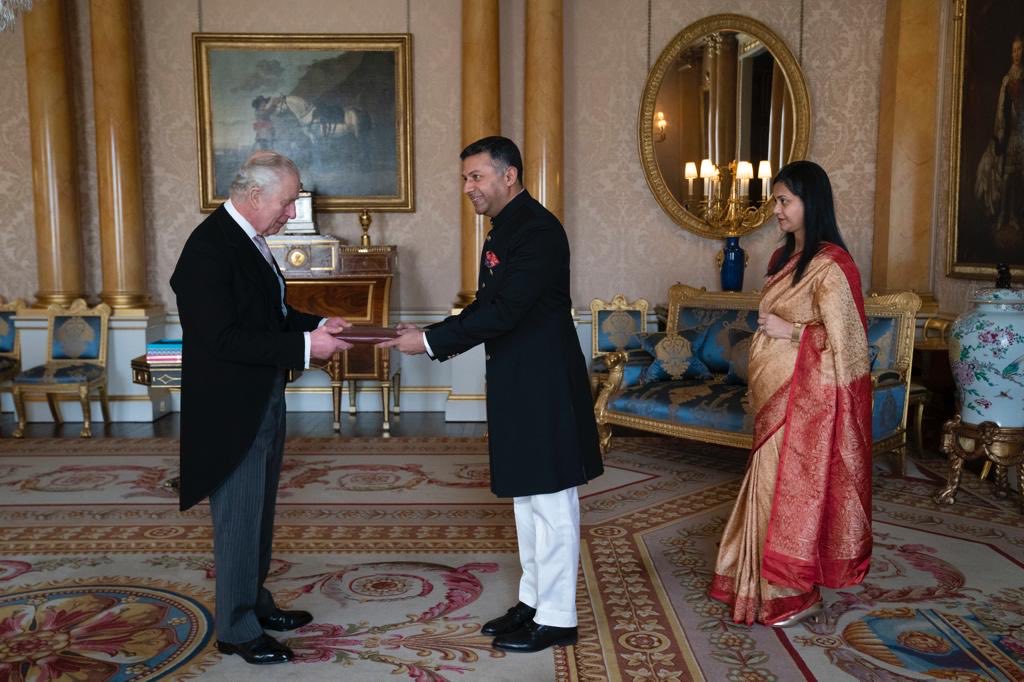
Vikram Doraiswami presents credentials to King Charles

Next Story

Sudjir Saxena to represent India in Asian Kickboxing Championship

Previous Story

Vikram Doraiswami presents credentials to King Charles

Next Story

Sudjir Saxena to represent India in Asian Kickboxing Championship

Latest from -Top News

Pakistan Risks Overstretching Itself in Yemen War

Pakistan’s expanding military role in Saudi Arabia amid the Yemen conflict could strain its defence resources and fragile finances…reports Asian Lite News Desk Pakistan’s military involvement in the war in Yemen may prove unsustainable because of mounting financial pressures and competing security demands, according to a new report. Islamabad’s growing military presence in Saudi Arabia risks stretching its defence resources while exposing the country to greater strategic and economic challenges. An article by Andrew Wilson in One World Outlook describes Pakistan’s involvement as a case of “fiscal and strategic overreach”, arguing that the country lacks the financial flexibility to sustain an expanded military commitment. Pakistan’s external finances depend heavily on an International Monetary Fund (IMF) programme, financial support from Gulf countries and remittances from Pakistani workers in the region. The report argues that deeper military involvement in the conflict could place additional pressure on these sources of financial stability. It also warns that deploying troops and military equipment abroad could weaken Pakistan’s capacity to address security challenges along its eastern border and deal with two domestic insurgencies. The move could also draw Islamabad into a conflict it has sought to approach cautiously. A Reuters report in May, citing Pakistani security and government sources, said Islamabad had deployed around 8,000 troops, a squadron of approximately 16 aircraft, mostly JF-17 fighter jets, two drone squadrons and a Chinese HQ-9 air-defence battery to Saudi Arabia. According to those sources, Riyadh was financing the deployment, with Pakistani personnel operating the equipment. The sources also said a confidential agreement contemplated the possibility of deploying up to 80,000 troops. Islamabad has not confirmed those figures, although it has acknowledged its military presence in Saudi Arabia, including the deployment of fighter jets at King Abdulaziz Air Base from April. The One World Outlook article argues that Saudi financial support can cover allowances and operating expenses but cannot easily replace military equipment needed elsewhere or resolve the political and strategic challenges of participating in the Yemen conflict. Pakistan’s defence budget is another concern. For the 2026-27 financial year, the federal government allocated PKR 3 trillion, or approximately $10.8 billion, to defence services. The allocation represents an 18 per cent increase from the original PKR 2.55 trillion provision and amounts to around 2.1 per cent of projected gross domestic product (GDP). Defence spending accounts for approximately 16 per cent of the federal government’s PKR 18.8 trillion expenditure. Military pensions are budgeted separately at PKR 822 billion, while debt servicing costs stand at approximately PKR 8 trillion, more than two-and-a-half times the defence allocation. The report argues that these competing financial obligations leave little room for additional military expenditure without placing further pressure on public finances. Pakistan’s reliance on IMF assistance also limits its fiscal flexibility. The country must meet the conditions attached to the programme, including a primary budget surplus target of 2 per cent of GDP and continued restraint on development spending. According to the article, these requirements make it difficult for Islamabad to finance an additional military commitment without compromising other budgetary priorities. Pakistan’s economic indicators offer limited reassurance. Economic growth for the 2025-26 financial year is estimated at between 3.6 and 3.7 per cent, while inflation reached approximately 10.3 per cent in September following an energy price shock. Foreign exchange reserves stood at around $21.5 billion at the end of September. Although this marks an improvement from the low levels recorded in 2023, the report notes that the reserves cover only a few months of imports. Financial assistance from Gulf partners remains central to Pakistan’s external stability. The article says Islamabad holds approximately $8 billion in Saudi deposits at its central bank. In July, the State Bank of Pakistan said Riyadh had extended the maturity of $5 billion in deposits to December 2028, easing the country’s immediate external financing requirements. A further $3 billion deposit was also extended in the spring. However, the article argues that these arrangements provide temporary relief rather than long-term financial independence, particularly as regional conflict threatens the stability of the Gulf economies on which Pakistan relies. The report concludes that Pakistan faces a difficult balance between supporting Saudi Arabia militarily and preserving the financial and military resources needed to address its domestic and regional challenges.

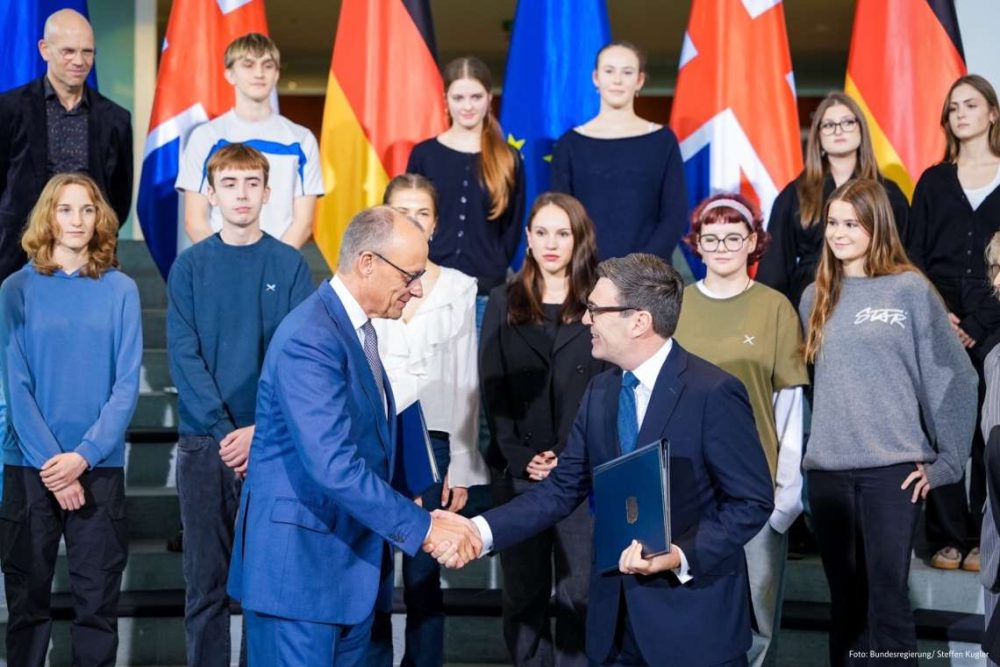
UK and Germany Ratify Kensington Treaty

Britain and Germany ratify the Kensington Treaty, agreeing new cooperation on AI, quantum research, defence and security while targeting investment, jobs and Russian hybrid threats…reports Asian Lite News Desk Britain and Germany

Economic tide is turning in Bangladesh

If there is one thing that can bring some comfort to the struggling Bangladeshi economy, it is good relations with India. Bangladesh should remember that Delhi’s backing, through easy supplies of essentials
Go toTop

Don't Miss

Arm Prepares for Year’s Biggest US IPO at $51 Per Share

Customers like Apple, Google, Nvidia, Intel, AMD, TSMC, and Samsung

UK wages grow at record rate

Regular pay grew by 7.8%, the highest annual growth rate