The relative improvement in global demand levels, and the growth of the oil and gas sectors are the major factors that will drive the growth of Arab economies, according to AMF, reports Asian Lite Newsdesk
The growth rate of Arab economies is expected to achieve 5.4% in 2022, compared to 3.5% in 2021, as per the estimates of Arab Monetary Fund.
The Chairman of the Board of Directors of the Arab Monetary Fund, Dr. Abdulrahman bin Abdullah Al-Hamidy pointed out that the growth is driven by many factors, namely the relative improvement in global demand levels, and the growth of the oil and gas sectors, and Arab governments continuing to adopt stimulus packages to support economic recovery.
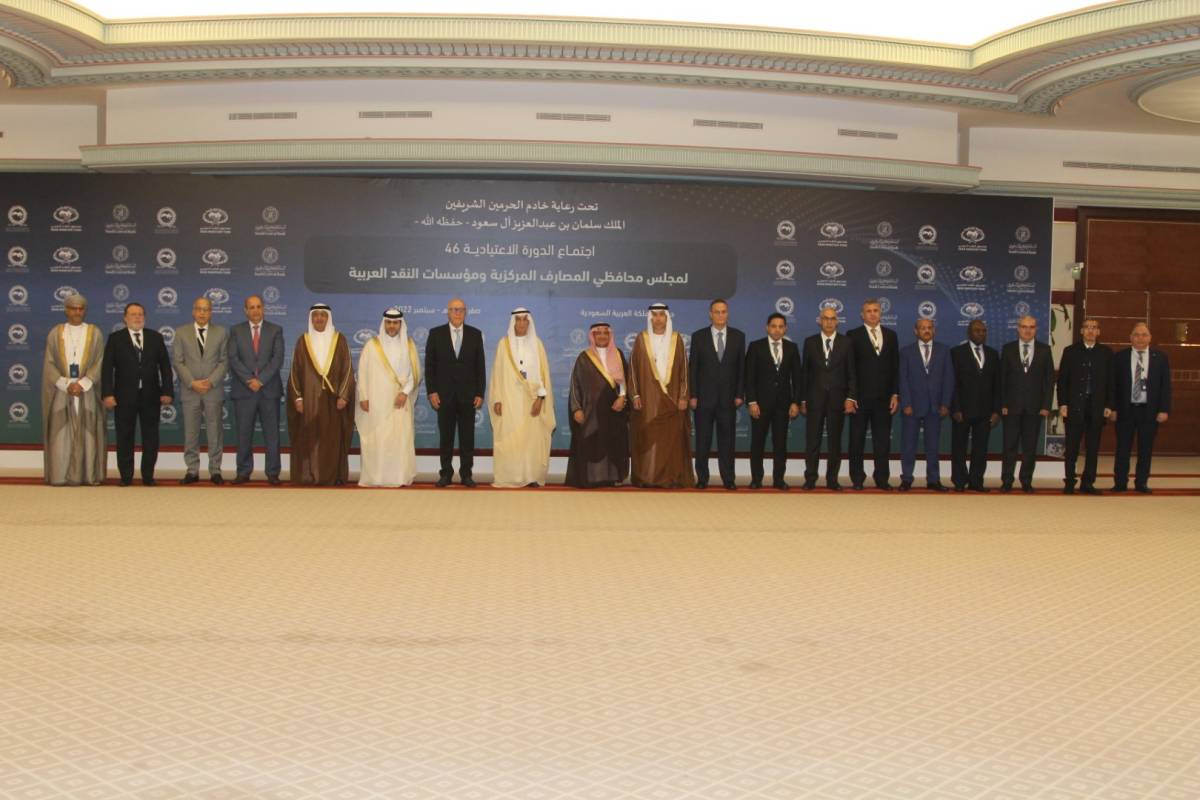
He made the remarks while addressing the 46th Ordinary Session of the Council of Arab Central Banks and Monetary Authorities Governors hosted by the Kingdom of Saudi Arabia under the patronage of King Salman bin Abdulaziz Al Saud.
In the meantime, the pace of economic growth for Arab countries is expected to decline in 2023 to record about 4.0%, in line with the decline in the global economic growth rate, the expected decline in commodity prices, and the impact of the gradual withdrawal from expansionary fiscal and monetary policies that support the aggregate demand side.
Meanwhile, Al-Hamidy indicated that the global economy, per recent estimates by international financial institutions, will achieve a growth rate of about 3.2% in 2022 and 2.9% in 2023.
“Those estimates were relatively optimistic at the beginning of the year, amounting to about 3.5% and 4.4%, respectively, which reflects the state of uncertainty and what global developments will bring about and the possibility of the global economy entering a phase of so-called stagflation, given that fact that the latest estimates indicate a rise in the global inflation rate, to reach about 8.3% in 2022, and 5.7% in 2023 compared to an average of 3.2% and 4.7% in 2020 and 2021, respectively,” he added.
The Seventeenth Edition of the Arab Economic Outlook Report (AEOR), released by the Arab Monetary Fund in August stated that rising oil prices, the increase in production in Arab oil-exporting countries, and the continuation of reforms that promote growth, will fuel the growth of Arab economies.
Arab countries are expected to face relatively high inflation rates in 2022 due to local and global inflationary pressures, the AEOR noted.
The report, which includes macroeconomic forecasts, growth and inflation forecasts for Arab economies for 2022 and 2023, indicated that the global economy is experiencing challenges related to the global supply chains and high commodity prices, which raise concerns about global food security. As a result, international institutions have reduced their forecasts for global economic growth issued in January 2022.
It is anticipated that growth paths in Arab countries will be affected by significant factors during 2022 and 2023, including the impact of recent global developments on Arab economies, macroeconomic policies, and the continuation of financial packages and their impact on containing the repercussions of COVID-19.
The growth rate of the Arab economies as a group is projected to rise to about 5.4 percent in 2022, a significant increase from about 3.5 percent in 2021. Many factors have contributed to this rise, including the relative improvement in global demand and high sectoral growth rates. There is also a positive impact of implementing economic reform programs and adopting future visions and strategies aimed at enhancing economic diversification, improving business environments, encouraging private investment, and improving economic resilience.
Oil-exporting countries in the Arab World will benefit throughout 2022 from the increased oil production quantities within the “OPEC+” agreement and relatively higher oil and gas prices in international markets, which will support public spending to enhance growth. Overall, Arab oil producers are expected to grow by 6 percent in 2022, compared to 3.2 percent in 2021, while oil prices are expected to decline in 2023.
The GCC countries are expected to record a relatively high growth rate of 6.3 percent in 2022, compared to 3.1 percent in 2021, thanks to a combination of factors, including the recovery from the COVID-19 pandemic, economic reforms, and continued adoption of stimulus packages, while 2023 will see a decline to 3.7 percent in economic growth.
As for other Arab oil exporters, they will benefit from increased production quantities within the OPEC+ agreement and a rise in global oil prices to raise their growth rates. As a result, they are expected to achieve 4.6 percent in 2022, which is higher than 3.1 percent in 2021. However, due to business environment challenges, their growth rate will come down to 3.9 percent next year.