August 11, 2022
3 mins read

BNP says it will take battle to streets

AL Chief Sheikh Hasina has asked her party leaders and workers to fight against any such conspiracies to create unrest and trouble in the country …reports Sumi Khan

A fresh controversial row has erupted after a top Bangladesh Nationalist Party (BNP) leader told his followers that his party was preparing for violent street protests to oust the ruling Awami League (AL) government led by Bangladesh Prime Minister Sheikh Hasina rather than fight it politically in elections.

“By all means we should not face election — we do find the latest move by the Election Commission to reach out to us satisfactory but we won’t fight any election,” said prominent BNP leader Mirza Abbas.

However, AL Chief Sheikh Hasina has asked her party leaders and workers to fight against any such conspiracies to create unrest and trouble in the country such as BNP -Jamaat’s targeted bombing on public buses and attack on law enforcers back in 2013 when the party boycotted the election and later carried out such violent attacks both to foil the war crimes’ trial and bring down the Hasina-led government.

These threats from prominent BNP leaders comes within a month following an earlier warning by BNP’s Volunteer Wing Secretary, who threatened Bangladesh Prime Minister Sheikh Hasina with “a repeat of 1975,” referring to the massacre of her entire family in a military coup at that time.

Such repeated threats by the BNP have compelled the Bangladesh Home Ministry to take a serious view because the month of August evokes grim memories of the 1975 coup that killed the whole family of Bangabandhu Sheikh Mujibur Rahman, the founder of the country and ‘Father of the Nation’.
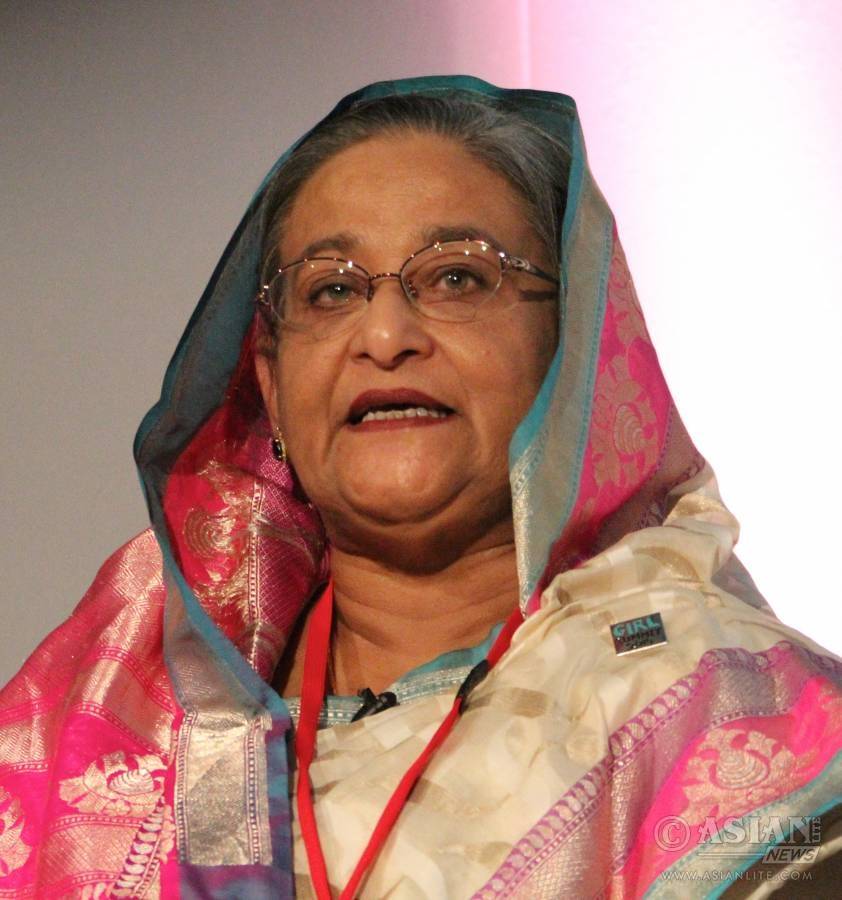
Sheikh Mujibur Rahman’s daughters Sheikh Hasina and Sheikh Rehana survived the attack as they were protected by the then Indian Prime Minister Indira Gandhi.

Amid the failure of killing the entire Bangabandhu’s family, on August 21, 2004, a grenade attack nearly killed Hasina. However, nearly 30 AL workers, including some top leaders died.

BNP leader Tarique Rahman, then in power in 2004, stands convicted by the court after a long judicial process, as the mastermind of the plot to kill Hasina in direct collaboration with radical elements.

Jamaat-e-Islami, a militant outfit and a key ally of BNP, has been ramping up efforts to reach out grassroots through formation of village unit committees.

Tarique and his mother Khaleda Zia have lived up to the legacy of her late husband, General Zia-ur-Rahman, Bangladesh’s first military ruler, who turned the clock back on the country’s “unfinished revolution” by setting in motion a process of ‘re-Pakistanisation’, which culminated in his successor General H.M. Ershad declaring Islam as the state religion of Bangladesh, says Bangladesh watcher Sukhoranjan Dasgupta,

He mentioned that Sheikh Hasina carries forward her father Bangabandhu’s legacy of national liberation and the dream of ‘Sonar Bangla’ (Golden Bengal). This is the legacy of the fight for independence from Pakistan amid the worst genocide in South Asia, Dasgupta said.

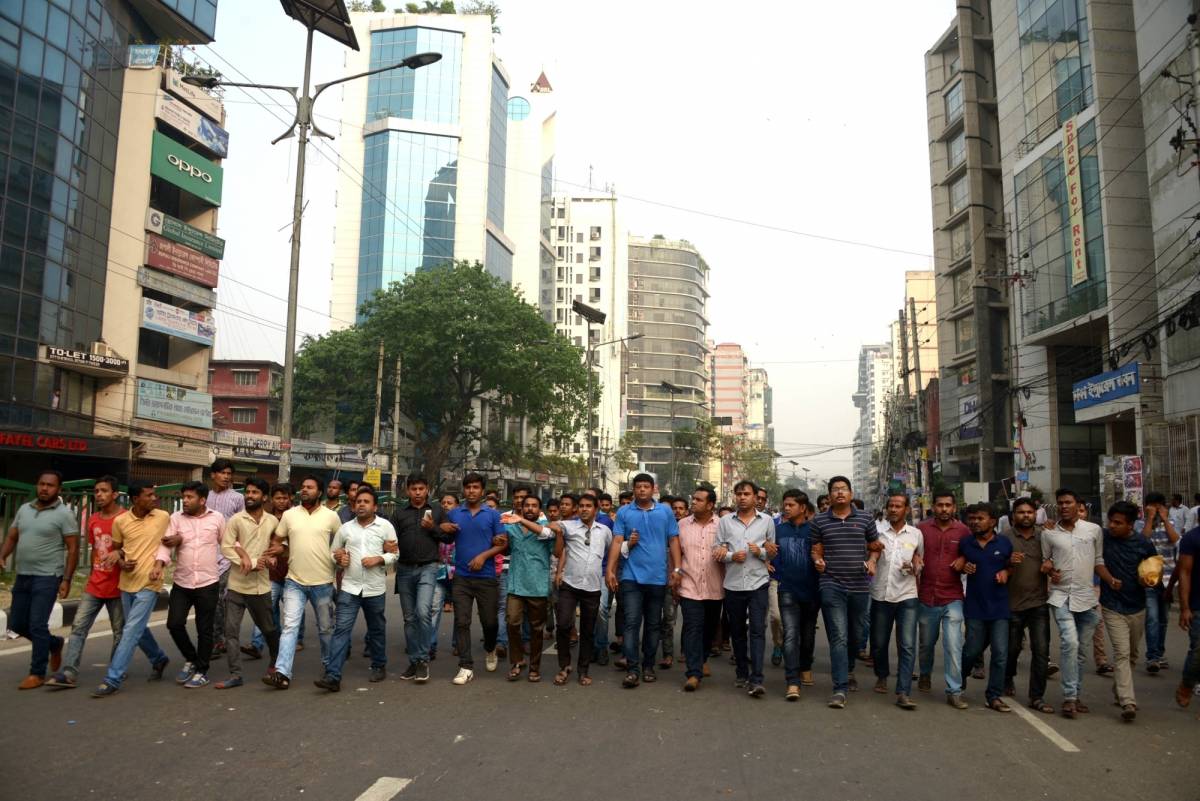
BNP Secretary General Mirza Fakhrul Islam Alamgir directed his party leaders and activists to “hit the streets to overthrow the Sheikh Hasina-led government”.

“Sit on the streets and oust this government.” Fakhrul said that while addressing a protest rally before the National Press Club on Tuesday afternoon.

In continuous threat to boycott election, the BNP Secretary General announced this.
ALSO READ: Rohingya repatriation: China vows to help Bangladesh

Previous Story

No immediate threat to Ukrainian nuke plant, says IAEA

Next Story

Lebanese cancer patients struggle to find medicines amid crisis

Previous Story

No immediate threat to Ukrainian nuke plant, says IAEA

Next Story

Lebanese cancer patients struggle to find medicines amid crisis

Latest from -Top News

Pakistan Risks Overstretching Itself in Yemen War

Pakistan’s expanding military role in Saudi Arabia amid the Yemen conflict could strain its defence resources and fragile finances…reports Asian Lite News Desk Pakistan’s military involvement in the war in Yemen may prove unsustainable because of mounting financial pressures and competing security demands, according to a new report. Islamabad’s growing military presence in Saudi Arabia risks stretching its defence resources while exposing the country to greater strategic and economic challenges. An article by Andrew Wilson in One World Outlook describes Pakistan’s involvement as a case of “fiscal and strategic overreach”, arguing that the country lacks the financial flexibility to sustain an expanded military commitment. Pakistan’s external finances depend heavily on an International Monetary Fund (IMF) programme, financial support from Gulf countries and remittances from Pakistani workers in the region. The report argues that deeper military involvement in the conflict could place additional pressure on these sources of financial stability. It also warns that deploying troops and military equipment abroad could weaken Pakistan’s capacity to address security challenges along its eastern border and deal with two domestic insurgencies. The move could also draw Islamabad into a conflict it has sought to approach cautiously. A Reuters report in May, citing Pakistani security and government sources, said Islamabad had deployed around 8,000 troops, a squadron of approximately 16 aircraft, mostly JF-17 fighter jets, two drone squadrons and a Chinese HQ-9 air-defence battery to Saudi Arabia. According to those sources, Riyadh was financing the deployment, with Pakistani personnel operating the equipment. The sources also said a confidential agreement contemplated the possibility of deploying up to 80,000 troops. Islamabad has not confirmed those figures, although it has acknowledged its military presence in Saudi Arabia, including the deployment of fighter jets at King Abdulaziz Air Base from April. The One World Outlook article argues that Saudi financial support can cover allowances and operating expenses but cannot easily replace military equipment needed elsewhere or resolve the political and strategic challenges of participating in the Yemen conflict. Pakistan’s defence budget is another concern. For the 2026-27 financial year, the federal government allocated PKR 3 trillion, or approximately $10.8 billion, to defence services. The allocation represents an 18 per cent increase from the original PKR 2.55 trillion provision and amounts to around 2.1 per cent of projected gross domestic product (GDP). Defence spending accounts for approximately 16 per cent of the federal government’s PKR 18.8 trillion expenditure. Military pensions are budgeted separately at PKR 822 billion, while debt servicing costs stand at approximately PKR 8 trillion, more than two-and-a-half times the defence allocation. The report argues that these competing financial obligations leave little room for additional military expenditure without placing further pressure on public finances. Pakistan’s reliance on IMF assistance also limits its fiscal flexibility. The country must meet the conditions attached to the programme, including a primary budget surplus target of 2 per cent of GDP and continued restraint on development spending. According to the article, these requirements make it difficult for Islamabad to finance an additional military commitment without compromising other budgetary priorities. Pakistan’s economic indicators offer limited reassurance. Economic growth for the 2025-26 financial year is estimated at between 3.6 and 3.7 per cent, while inflation reached approximately 10.3 per cent in September following an energy price shock. Foreign exchange reserves stood at around $21.5 billion at the end of September. Although this marks an improvement from the low levels recorded in 2023, the report notes that the reserves cover only a few months of imports. Financial assistance from Gulf partners remains central to Pakistan’s external stability. The article says Islamabad holds approximately $8 billion in Saudi deposits at its central bank. In July, the State Bank of Pakistan said Riyadh had extended the maturity of $5 billion in deposits to December 2028, easing the country’s immediate external financing requirements. A further $3 billion deposit was also extended in the spring. However, the article argues that these arrangements provide temporary relief rather than long-term financial independence, particularly as regional conflict threatens the stability of the Gulf economies on which Pakistan relies. The report concludes that Pakistan faces a difficult balance between supporting Saudi Arabia militarily and preserving the financial and military resources needed to address its domestic and regional challenges.

UK and Germany Ratify Kensington Treaty

Britain and Germany ratify the Kensington Treaty, agreeing new cooperation on AI, quantum research, defence and security while targeting investment, jobs and Russian hybrid threats…reports Asian Lite News Desk Britain and Germany

Economic tide is turning in Bangladesh

If there is one thing that can bring some comfort to the struggling Bangladeshi economy, it is good relations with India. Bangladesh should remember that Delhi’s backing, through easy supplies of essentials
Go toTop

Don't Miss

Bangladesh election countdown begins

Bangladesh enters campaign mode on January 22 as Yunus vows

B’desh reaches out to India on Rohingya, energy sector issues

The High Commissioner said that if India-Bangladesh can face the