China’s efforts to turn its far-western Xinjiang into a manufacturing powerhouse could force more Uyghurs to work against their will and make it harder to track whether the country’s exports are made with forced labour, according to a new report from a Washington, DC-based research group, th media reported.
The Centre for Advanced Defense Studies (C4ADS), which studies global conflict and trans-national security issues, said China is establishing industrial parks, providing more financial assistance from state-owned enterprises, and connecting manufacturers within its borders as part of a long-term objective to bolster supply chains, RFA Uyghur reported.
“The Chinese government is undertaking a concerted drive to industrialize the Xinjiang Uyghur Autonomous Region (XUAR), which has led an increasing number of corporations to establish manufacturing operations there,” the report says.
“This centrally-controlled industrial policy is a key tool in the government’s efforts to forcibly assimilate Uyghurs and other Turkic peoples through the institution of a coerced labour regime,” RFA Uyghur reported.
The report, analyses publicly available data and case studies to detail the political nature of China’s industrial transfer in the Xinjiang, the patterns through which it takes place, and the scale at which abuses in the region are embedded within Chinese and global supply chains.
“Forced labour is a major component of these human rights abuses,” the report says.
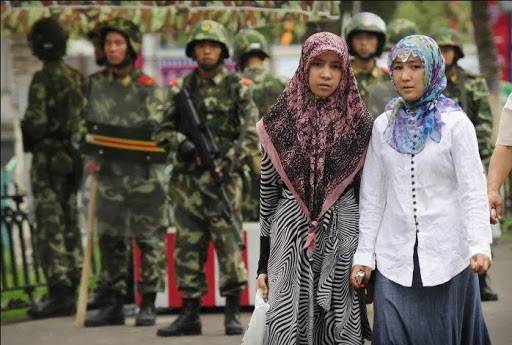
“It occurs not only within extrajudicial detention centers and through the placement of detainees in factories but also through the threat of detention to pressure Uyghurs into jobs across XUAR and throughout China.
“Both state-owned and private corporations are significant perpetrators of human rights abuses, implementing coercive working conditions, indoctrination and mass surveillance.”
The main mechanism for the central government’s industrialisation drive in the XUAR is a program to pair Xinjiang counties and municipalities with wealthier provinces and municipalities on the east coast. The effort began 25 years ago and was expanded in 2010, the report says, RFA Uyghur reported.
ALSO READ: Once Asia’s World City, Hong Kong is just another Chinese city now