December 3, 2022
4 mins read

Is US helping Pakistan to counter TTP’s inroads?

Former Pakistani Army Chief Qamar Javed Bajwa played a pivotal role in the Islamabad-US reset, reports Atul Anej

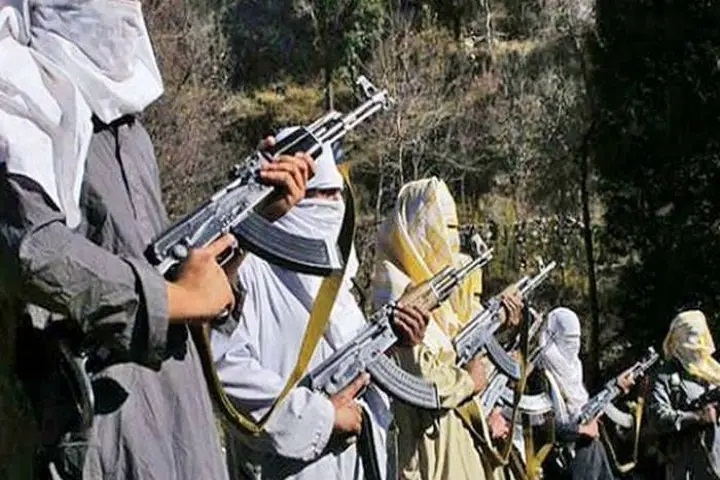
Just before the new Pakistani Army Chief, Asim Munir took over the reins of military power in Rawalpindi, the dreaded terror group, Tehreek-e-Taliban Pakistan (TTP) terminated its ceasefire with Islamabad.

The group also called ‘Pakistan Taliban’ demonstrated that the six-month ceasefire was history, by launching a couple of deadly attacks.

A suicide bomber targeted a bus carrying member of the Pakistani constabulary in the Baluchistan’s capital, Quetta. This was on November 30. The audacious attack, which was widely reported across the globe, earning TPP several brownie points in the arena of information war, killed six people, including a policeman.

Then on Thursday, the TTP claimed responsibility for ambushing a convoy ferrying Pakistani forces near the army public school in Azam Warsak area of Wana Tehsil of South Waziristan district.

Shaken by the TTP’s threat of unleashing fresh violence, Pakistan’s Interior Minister Rana Sanaullah said on Friday that the rise in terror activities was alarming, but the situation was not out of control. Nevertheless, he roundly blamed the Taliban government in Kabul for being complicit in spawning the crisis. “The TTP is enjoying all sorts of facilities in Afghanistan,” the Minister observed.
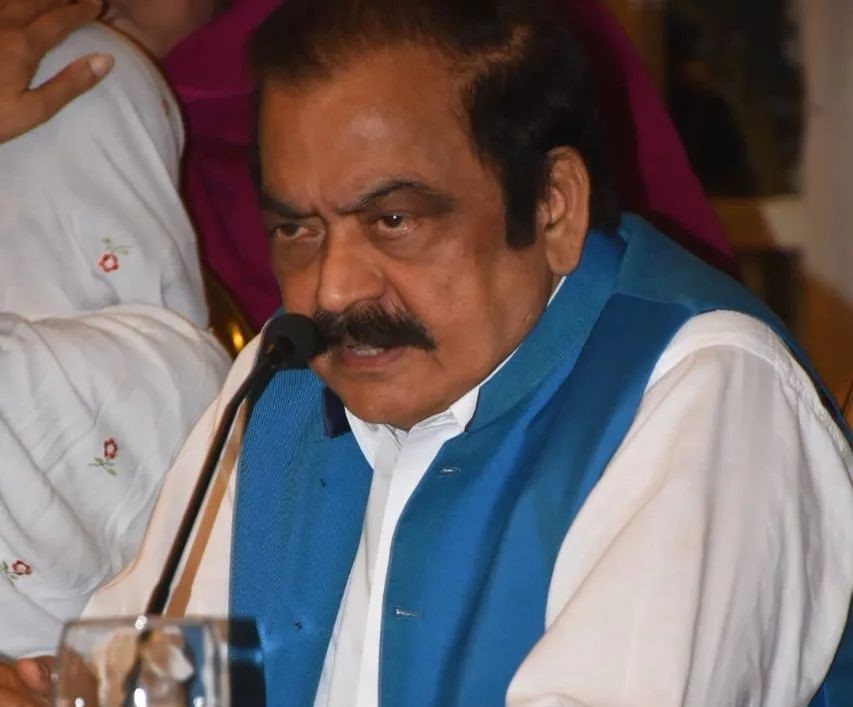
He lamented that the Afghan government had promised the world that it would not allow the use of its soil for terrorism. “If they follow through with this, it is not only in the benefit of Pakistan but it is also for their own benefit […] Because if the TTP is present there and is carrying out terrorist activities here, their soil is being used (for terrorist activities) contrary to their claims.”

Amid the crisis, the Americans, unsurprisingly, have come to Pakistan’s support. On Thursday, Washington designated the number two of the TTP, Mufti Hazrat Deroji, also known as Qari Amjad, as a terrorist.

US officials say Deroji has overseen operations in Khyber Pakhtunkhwa, one of two border areas that have borne the brunt of violent attacks, an AFP report said.

The ceasefire between TTP and Pakistan had begun after the Afghan Taliban steamrolled Kabul in the 2021 leading to the humiliating exit of the Americans from Afghanistan. The Afghan Taliban’s Interior Minister Sirajuddin Haqqani, mediated these talks with the Pakistanis. Former ISI Chief and then Corps Commander based in Peshawar, Lt. Gen. Faiz Hameed led the talks from the Pakistani side.

In hindsight, the dialogue for a patch up was bound to fail. The Pakistanis wanted the Afghan Taliban to handover to them TTP kingpins based in Afghanistan who had ordered terror attacks inside Pakistan. But the Afghan Taliban refused to comply, spotlighting close bonds between fellow Pashtuns who have operated on either side of the disputed Durand Line — the colonial era border between Afghanistan and Pakistan.
If Pak govt does not agree to our demands, our fighters will wage jihad in entire country–Pakistan Taliban (TTP)(IN)

Buying time, the TTP took the ceasefire opportunity to recoup and re-organise themselves for a fresh onslaught. When they ended the ceasefire, it was carefully timed to Gen. Munir’s elevation to the post of Chief of Army Staff (COAS). Apart from the military transition, the ceasefire ended when the former Pakistani Prime Minister’s Long March had driven deep divisions within Pakistan’s elite and rattled the country’s societal cohesion. The Pakistan economy had also hit rock bottom, making a robust counter-campaign by the military in the badlands of South Waziristan prohibitively expensive.

The US decision to support Pakistan is not surprising. The Afghan Taliban had alienated the Pakistanis and the Americans who had to beat an undignified retreat from Afghanistan once the Taliban established control in Afghanistan. With the Afghan Taliban alienating both Washington and Islamabad, the two appeared to have joined forces to pressure Kabul. In late July, the US apparently flew its drone that killed Al Qaeda Chief Ayman Al Zawahiri in a Kabul safehouse, over Pakistani air space.

Former Pakistani Army Chief Qamar Javed Bajwa played a pivotal role in the Islamabad-US reset. In tune with Al Zawahiri’s killing, Bajwa had spoken to US Deputy Secretary of State Wendy Sherman, requesting her to use her good offices to secure Pakistan a badly-needed IMF loan. The jury is now out on whether Gen. Asim Munir will follow in Gen. Bajwa’s footsteps to further consolidate the Pakistan-US relationship.

(The content is being carried under an arrangement with indianarrative.com)
ALSO READ: Ready to fight back if India attacked: Pak army chief

Previous Story

Ready to fight back if India attacked: Pak army chief

Next Story

UNSC condemns attack on Pak embassy in Kabul

Previous Story

Ready to fight back if India attacked: Pak army chief

Next Story

UNSC condemns attack on Pak embassy in Kabul

Latest from -Top News

Pakistan Risks Overstretching Itself in Yemen War

Pakistan’s expanding military role in Saudi Arabia amid the Yemen conflict could strain its defence resources and fragile finances…reports Asian Lite News Desk Pakistan’s military involvement in the war in Yemen may prove unsustainable because of mounting financial pressures and competing security demands, according to a new report. Islamabad’s growing military presence in Saudi Arabia risks stretching its defence resources while exposing the country to greater strategic and economic challenges. An article by Andrew Wilson in One World Outlook describes Pakistan’s involvement as a case of “fiscal and strategic overreach”, arguing that the country lacks the financial flexibility to sustain an expanded military commitment. Pakistan’s external finances depend heavily on an International Monetary Fund (IMF) programme, financial support from Gulf countries and remittances from Pakistani workers in the region. The report argues that deeper military involvement in the conflict could place additional pressure on these sources of financial stability. It also warns that deploying troops and military equipment abroad could weaken Pakistan’s capacity to address security challenges along its eastern border and deal with two domestic insurgencies. The move could also draw Islamabad into a conflict it has sought to approach cautiously. A Reuters report in May, citing Pakistani security and government sources, said Islamabad had deployed around 8,000 troops, a squadron of approximately 16 aircraft, mostly JF-17 fighter jets, two drone squadrons and a Chinese HQ-9 air-defence battery to Saudi Arabia. According to those sources, Riyadh was financing the deployment, with Pakistani personnel operating the equipment. The sources also said a confidential agreement contemplated the possibility of deploying up to 80,000 troops. Islamabad has not confirmed those figures, although it has acknowledged its military presence in Saudi Arabia, including the deployment of fighter jets at King Abdulaziz Air Base from April. The One World Outlook article argues that Saudi financial support can cover allowances and operating expenses but cannot easily replace military equipment needed elsewhere or resolve the political and strategic challenges of participating in the Yemen conflict. Pakistan’s defence budget is another concern. For the 2026-27 financial year, the federal government allocated PKR 3 trillion, or approximately $10.8 billion, to defence services. The allocation represents an 18 per cent increase from the original PKR 2.55 trillion provision and amounts to around 2.1 per cent of projected gross domestic product (GDP). Defence spending accounts for approximately 16 per cent of the federal government’s PKR 18.8 trillion expenditure. Military pensions are budgeted separately at PKR 822 billion, while debt servicing costs stand at approximately PKR 8 trillion, more than two-and-a-half times the defence allocation. The report argues that these competing financial obligations leave little room for additional military expenditure without placing further pressure on public finances. Pakistan’s reliance on IMF assistance also limits its fiscal flexibility. The country must meet the conditions attached to the programme, including a primary budget surplus target of 2 per cent of GDP and continued restraint on development spending. According to the article, these requirements make it difficult for Islamabad to finance an additional military commitment without compromising other budgetary priorities. Pakistan’s economic indicators offer limited reassurance. Economic growth for the 2025-26 financial year is estimated at between 3.6 and 3.7 per cent, while inflation reached approximately 10.3 per cent in September following an energy price shock. Foreign exchange reserves stood at around $21.5 billion at the end of September. Although this marks an improvement from the low levels recorded in 2023, the report notes that the reserves cover only a few months of imports. Financial assistance from Gulf partners remains central to Pakistan’s external stability. The article says Islamabad holds approximately $8 billion in Saudi deposits at its central bank. In July, the State Bank of Pakistan said Riyadh had extended the maturity of $5 billion in deposits to December 2028, easing the country’s immediate external financing requirements. A further $3 billion deposit was also extended in the spring. However, the article argues that these arrangements provide temporary relief rather than long-term financial independence, particularly as regional conflict threatens the stability of the Gulf economies on which Pakistan relies. The report concludes that Pakistan faces a difficult balance between supporting Saudi Arabia militarily and preserving the financial and military resources needed to address its domestic and regional challenges.

UK and Germany Ratify Kensington Treaty

Britain and Germany ratify the Kensington Treaty, agreeing new cooperation on AI, quantum research, defence and security while targeting investment, jobs and Russian hybrid threats…reports Asian Lite News Desk Britain and Germany

Economic tide is turning in Bangladesh

If there is one thing that can bring some comfort to the struggling Bangladeshi economy, it is good relations with India. Bangladesh should remember that Delhi’s backing, through easy supplies of essentials
Go toTop

Don't Miss

Pakistan Int’l Airlines trims fares for students travelling to China

The PIA first announced 22 per cent fare reductions for

‘Iran capable of building nuclear bomb’

Indirect talks between Iran and President Joe Biden’s administration, which