January 29, 2022
3 mins read

Pakistan’s NSA in Kabul amid Durand dispute

Pakistan wishes to fence the border to control the movements of Pashtuns across its border, who are scattered between the Durand Line….reports Asian Lite News

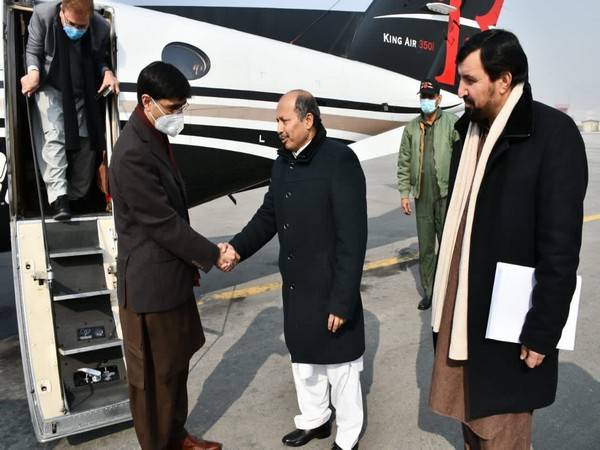
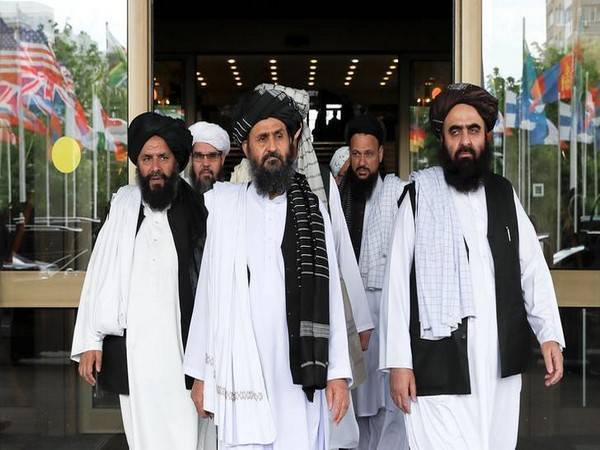
Pakistan’s National Security Adviser Moeed Yusuf arrived in Kabul and met the Taliban government’s Acting Foreign Minister Mullah Amir Khan Muttaqi on Saturday.

The meeting comes amid differences between the Taliban and Islamabad over the issue of Durand Line, which decides the border between Afghanistan and Pakistan.

“Our NSA Moeed Yusuf is in Kabul with an interministerial delegation,” said Ambassador of Pakistan to Afghanistan in a tweet on Saturday.

“Had a productive meeting with Acting Foreign Minister Mullah Amir Khan Muttaqi to kick off the visit,” Khan further said in the tweet.

The Taliban insists that the Durand Line “has divided one nation on both sides,” which the Islamic outfit “does not want.”

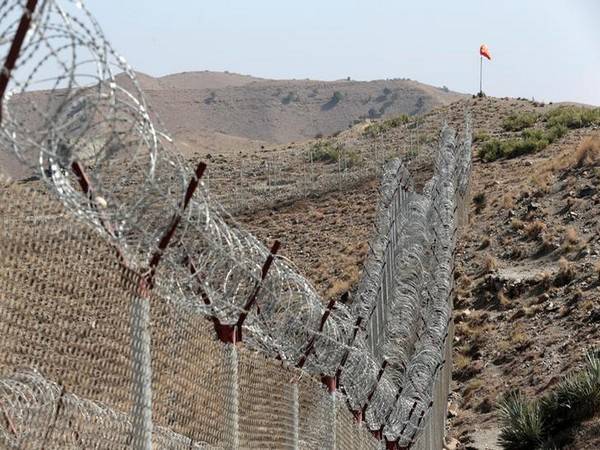
Pakistan wishes to fence the border to control the movements of Pashtuns across its border, who are scattered between the Durand Line.

Earlier, the Taliban military has tried to stop the Pakistani military from erecting barbed-wire fences and outposts in the Nangahar Province on the Durand Line.

So far, there has not been any official engagement over the matter but Pakistan’s Foreign Minister Shah Mehmood Qureshi had said that the issue will be solved diplomatically with the Taliban.
Ties may deteriorate

The Pakistan government’s continuous attempts to interfere in the internal affairs of Afghanistan may result in deteriorating its ties with the Taliban as Afghans feel Islamabad more than required in Kabul’s affairs, according to a report.

The Taliban were grateful to Islamabad for playing a supportive role in helping them grab power in Kabul as the American troops withdrew last August. But since then, the historic good ties with the Taliban have taken a few hits, according to International Forum For Right And Security (IFFRAS).

Currently, many Afghans feel that Pakistan interferes more than required in Afghan affairs. However, Islamabad tried in all 2021 to rectify this image primarily by extending crucial aid to the Afghans. But its aid could not make a lot of changes as Islamabad’s all trade routes along the border with Afghanistan were closed, inconveniencing many Afghans for whom Pakistan is the biggest market for agricultural products, said IFFRAS.
The border closure resulted in the waste of tons of Afghan vegetables and fruits. The closure, causing inconvenience to Afghans, has made the Taliban officials in Afghanistan unhappy.

Recently, the Imran Khan government’s announcement to send the trained Pakistani professionals to Afghanistan also drew criticism.

“Pakistan Prime Minister directed the authorities concerned to explore bilateral cooperation with friendly countries as well to stave off humanitarian crisis in Afghanistan by exporting qualified and trained manpower especially in medical, IT, finance and accounting,” Imran Khan’s office had said in a tweet earlier in January.

The remarks drew criticism from Afghanistan with the former and current leaders of the Kabul regime saying Afghanistan does not need foreign manpower. Earlier, the Pakistan government had urged the Taliban to trade in Pakistani rupees, a request which was rejected by Kabul.

The Taliban and Pakistan have a lot of differences. It ranges from disagreements over Durand Line, border closure, Tehreek-i-Taliban Pakistan (TTP) and many others.
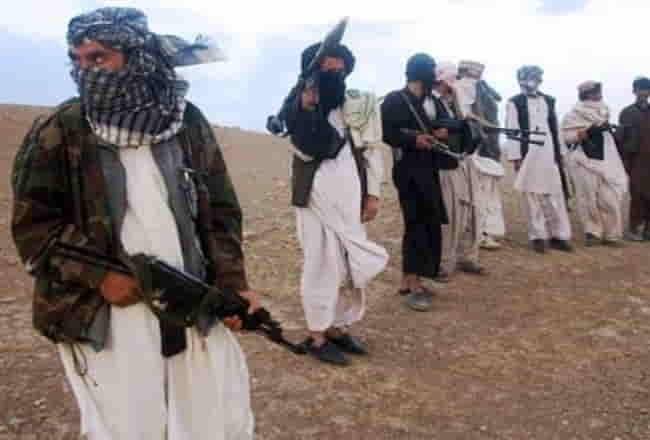
Recently, TTP has scaled up its attack in Pakistan following the breakdown of its talks with Islamabad. The Imran Khan government faced a lot of criticism over its talks with proscribed group TTP, which attacked a Peshawar Army School in 2014 and claimed the lives of over a hundred children.

A new threat of the Islamic State also looms around Pakistan. If Islamabad does not play its cards cleverly in neighbouring Afghanistan in 2022, it may end up losing the trust of both the ruling Taliban and the Islamist terror group, ISIS-Khorasan, waiting in the wings to spread orthodox Islamist law in both countries, according to IFFRAS.

Further IFFRAS said that as to the threat from the IS and ISIS-K, Pakistan thinks if in the near future the growing economic crisis in Afghanistan makes the Afghans and the moderate Taliban rise against the hardliners, the IS would want to woo them to their side. In that event, Pakistan would escape the blame of the international community because the IS is not its creation but an Arab phenomenon. (ANI)
ALSO READ: China-Pak tensions raise questions behind Dasu compensation

Previous Story

Pakistan questions India’s disarmament claims

Next Story

Imran likely to seek more loans in upcoming China trip

Previous Story

Pakistan questions India’s disarmament claims

Next Story

Imran likely to seek more loans in upcoming China trip

Latest from -Top News

Pakistan Risks Overstretching Itself in Yemen War

Pakistan’s expanding military role in Saudi Arabia amid the Yemen conflict could strain its defence resources and fragile finances…reports Asian Lite News Desk Pakistan’s military involvement in the war in Yemen may prove unsustainable because of mounting financial pressures and competing security demands, according to a new report. Islamabad’s growing military presence in Saudi Arabia risks stretching its defence resources while exposing the country to greater strategic and economic challenges. An article by Andrew Wilson in One World Outlook describes Pakistan’s involvement as a case of “fiscal and strategic overreach”, arguing that the country lacks the financial flexibility to sustain an expanded military commitment. Pakistan’s external finances depend heavily on an International Monetary Fund (IMF) programme, financial support from Gulf countries and remittances from Pakistani workers in the region. The report argues that deeper military involvement in the conflict could place additional pressure on these sources of financial stability. It also warns that deploying troops and military equipment abroad could weaken Pakistan’s capacity to address security challenges along its eastern border and deal with two domestic insurgencies. The move could also draw Islamabad into a conflict it has sought to approach cautiously. A Reuters report in May, citing Pakistani security and government sources, said Islamabad had deployed around 8,000 troops, a squadron of approximately 16 aircraft, mostly JF-17 fighter jets, two drone squadrons and a Chinese HQ-9 air-defence battery to Saudi Arabia. According to those sources, Riyadh was financing the deployment, with Pakistani personnel operating the equipment. The sources also said a confidential agreement contemplated the possibility of deploying up to 80,000 troops. Islamabad has not confirmed those figures, although it has acknowledged its military presence in Saudi Arabia, including the deployment of fighter jets at King Abdulaziz Air Base from April. The One World Outlook article argues that Saudi financial support can cover allowances and operating expenses but cannot easily replace military equipment needed elsewhere or resolve the political and strategic challenges of participating in the Yemen conflict. Pakistan’s defence budget is another concern. For the 2026-27 financial year, the federal government allocated PKR 3 trillion, or approximately $10.8 billion, to defence services. The allocation represents an 18 per cent increase from the original PKR 2.55 trillion provision and amounts to around 2.1 per cent of projected gross domestic product (GDP). Defence spending accounts for approximately 16 per cent of the federal government’s PKR 18.8 trillion expenditure. Military pensions are budgeted separately at PKR 822 billion, while debt servicing costs stand at approximately PKR 8 trillion, more than two-and-a-half times the defence allocation. The report argues that these competing financial obligations leave little room for additional military expenditure without placing further pressure on public finances. Pakistan’s reliance on IMF assistance also limits its fiscal flexibility. The country must meet the conditions attached to the programme, including a primary budget surplus target of 2 per cent of GDP and continued restraint on development spending. According to the article, these requirements make it difficult for Islamabad to finance an additional military commitment without compromising other budgetary priorities. Pakistan’s economic indicators offer limited reassurance. Economic growth for the 2025-26 financial year is estimated at between 3.6 and 3.7 per cent, while inflation reached approximately 10.3 per cent in September following an energy price shock. Foreign exchange reserves stood at around $21.5 billion at the end of September. Although this marks an improvement from the low levels recorded in 2023, the report notes that the reserves cover only a few months of imports. Financial assistance from Gulf partners remains central to Pakistan’s external stability. The article says Islamabad holds approximately $8 billion in Saudi deposits at its central bank. In July, the State Bank of Pakistan said Riyadh had extended the maturity of $5 billion in deposits to December 2028, easing the country’s immediate external financing requirements. A further $3 billion deposit was also extended in the spring. However, the article argues that these arrangements provide temporary relief rather than long-term financial independence, particularly as regional conflict threatens the stability of the Gulf economies on which Pakistan relies. The report concludes that Pakistan faces a difficult balance between supporting Saudi Arabia militarily and preserving the financial and military resources needed to address its domestic and regional challenges.

UK and Germany Ratify Kensington Treaty

Britain and Germany ratify the Kensington Treaty, agreeing new cooperation on AI, quantum research, defence and security while targeting investment, jobs and Russian hybrid threats…reports Asian Lite News Desk Britain and Germany

Economic tide is turning in Bangladesh

If there is one thing that can bring some comfort to the struggling Bangladeshi economy, it is good relations with India. Bangladesh should remember that Delhi’s backing, through easy supplies of essentials
Go toTop

Don't Miss

Taliban delegation holds talks with Gulf envoys in Doha

This will be the second time that the Muttaqi-led delegation

US special envoy urges OIC to ‘press’ Taliban for inclusive govt

The US special envoy has discussed the humanitarian situation as