May 17, 2022
5 mins read

Prepare for worst, Lankan PM tells people

The Sri Lankan PM gave a detailed account of the grave economic situation the country finds itself in, saying that the “Sri Lankan economy is extremely precarious.”…reports Asian Lite News

Sri Lankan Prime Minister Ranil Wickremesinghe in an address to the nation on Monday gave an account of the grave economic situation facing the island nation and said that the people need to be prepared to make sacrifices.

The Sri Lankan PM’s address came a day after his talks with the representatives of the World Bank and the Asian Development Bank (ADB), where he discussed the possible course of action to address the economic crisis in the country.

“The next couple of months will be the most difficult ones of our lives. We must prepare ourselves to make some sacrifices and face the challenges of this period,” Wickremesinghe said.

The Sri Lankan PM also said that he did not request to take up the position of the Prime Minister last week, but took over on the invite of President Gotabaya Rajapaksa in face of the challenging situation facing the country.
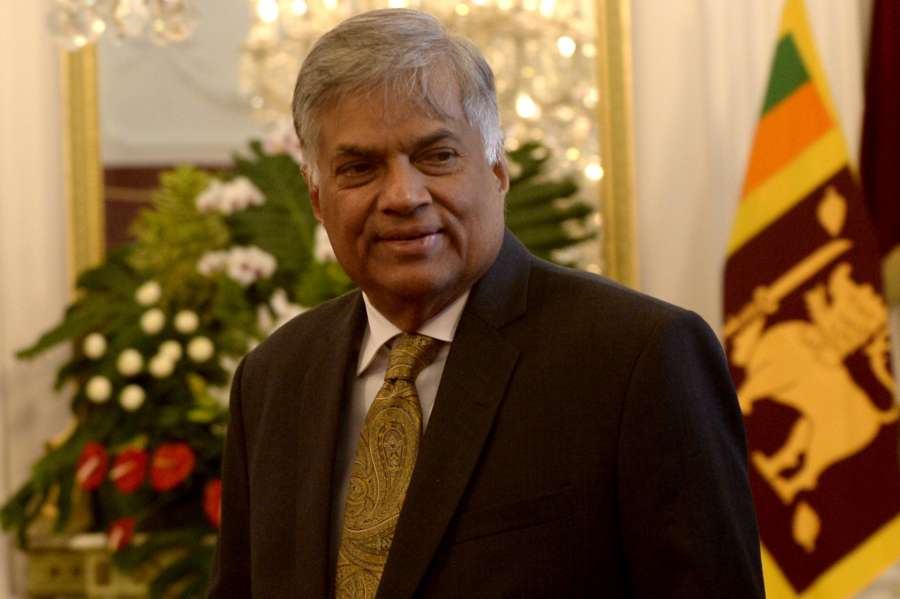
“Last Thursday, I accepted office as the Prime Minister. I did not request this position. In face of the challenging situation facing the country, the President invited me to take up this position. I assumed this duty not only as a political leader, but also as national leader who has benefited from free education at the Faculty of Law of the University of Colombo,” PM Wickremesinghe said.

The Sri Lankan PM gave a detailed account of the grave economic situation the country finds itself in, saying that the “Sri Lankan economy is extremely precarious.”

“In November 2019, our foreign exchange reserves were at USD 7.5 billion. However, today, it is a challenge for the treasury to find USD 1 million. The Ministry of finance is finding it difficult to raise USD 5 million required to import gas,” the Sri Lankan PM said.

Saying that he had no desire to hide the truth from the public, Wickremesinghe prepared the nation for a number of drastic economic steps that his government might take in the coming days to address the economic crisis.

“I have no desire to hide the truth and to lie to the public. Although these facts are unpleasant and terrifying, this is the true situation. For a short period, our future will be even more difficult than the tough times that we have passed. We will face considerable challenges and adversity. However, this period will not be long,” Wickremesinghe said.

“In the coming months, our foreign allies will assist us. They have already pledged their support. Therefore, we will have to patiently bear the next couple of months. However, we can overcome this situation. Doing so will require taking a new path,” he added.

“Against my own wishes, I am compelled to permit printing money in order to pay state-sector employees and to pay for essential goods and services. However, we must remember that printing money leads to the depreciation of the rupee,” Wickremesinghe said.

The Sri Lankan PM also announced that the government plans “to present a new alternative budget to the development budget proposed for 2022,” adding that the intention is “to present it as a concessionary budget.”

“I am undertaking a dangerous challenge. In the Caucasian Chalk Circle, Grusha crossed the broken rope bridge carrying a child that was not her own. This is an even more difficult undertaking. The precipice is deep and its bottom cannot be seen. The bridge is made of thin glass and there is no handrail. I am wearing shoes with sharp nails that cannot be removed. My task is to safely take the child to the other side. I am accepting this challenge for our nation,” the Sri Lankan PM said in an emotional appeal to the nation.

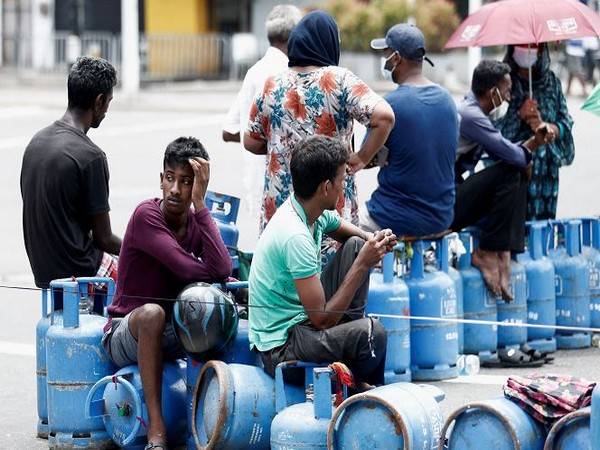
He said that his government will “build a nation without queues for kerosene, gas, and fuel; a nation free of power outages, a nation with plentiful resources where agriculture can freely flourish; a nation where the future of the youth is secure; a nation where people’s labour need not be wasted in queues and in struggles; a nation where everyone can lead their lives freely with three square meals a day.”
PM Wickremesinghe also emphasized that a national government needs to be established soon in Sri Lanka to address the ongoing crisis.

“This will enable us to discuss with all parties and to arrive at decisions for short-, medium-, and long-term action plans that will enable us to rebuild our nation within a specified time frame,” he said.

Earlier today, the Sri Lankan government announced the imposition of a fresh curfew from 8 pm on Monday till 5 am Tuesday in light of raging violence across the country.

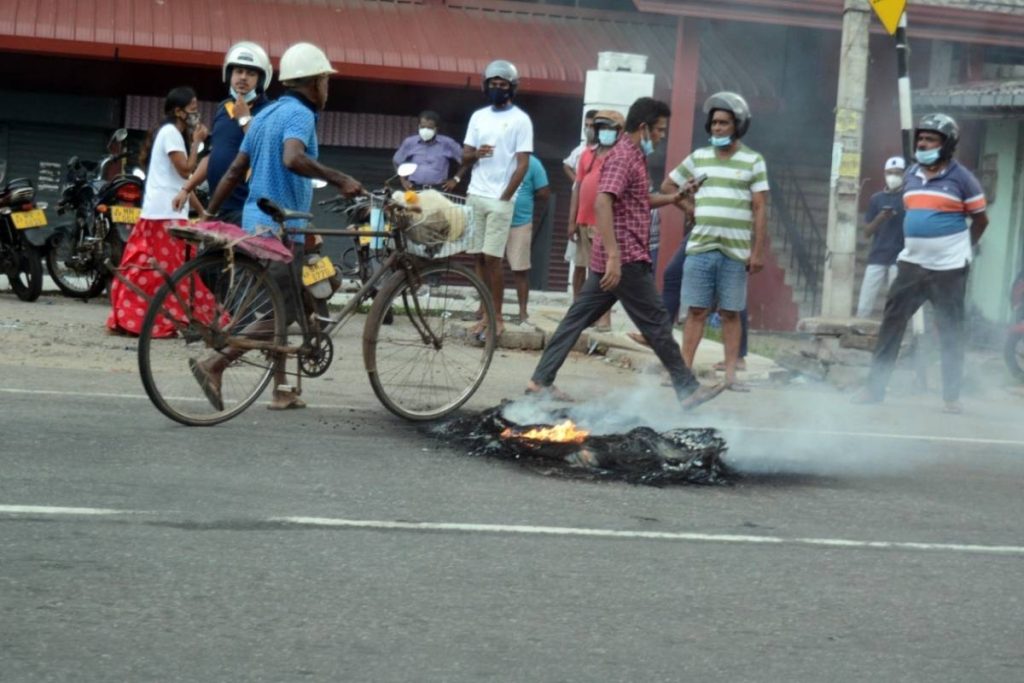
Sri Lanka is facing its worst economic crisis since independence with food and fuel shortages, soaring prices and power cuts affecting a large number of the citizens, resulting in massive protests over the government’s handling of the situation.

The recession is attributed to foreign exchange shortages caused by a fall in tourism during the COVID-19 pandemic, as well as reckless economic policies including the government’s last year’s move to ban chemical fertilizers in a bid to make Sri Lanka’s agriculture “100 per cent organic”.

Due to an acute shortage of foreign exchange, Sri Lanka recently defaulted on the entirety of its foreign debt amounting to about USD 51 billion.

The economic situation led to huge protests with demands for the resignation of Prime Minister Mahinda Rajapaksa and President Gotabaya Rajapaksa, with the former finally succumbing to public pressure and resigning on Monday, soon after the protests outside the Prime Minister’s residence turned violent. (ANI)
ALSO READ: Chinese teachers leave Pakistan

Previous Story

Pak rupee hits new fresh low

Next Story

84% of illegal remittance of Xiaomi India were to Qualcomm

Previous Story

Pak rupee hits new fresh low

Next Story

84% of illegal remittance of Xiaomi India were to Qualcomm

Latest from -Top News

Pakistan Risks Overstretching Itself in Yemen War

Pakistan’s expanding military role in Saudi Arabia amid the Yemen conflict could strain its defence resources and fragile finances…reports Asian Lite News Desk Pakistan’s military involvement in the war in Yemen may prove unsustainable because of mounting financial pressures and competing security demands, according to a new report. Islamabad’s growing military presence in Saudi Arabia risks stretching its defence resources while exposing the country to greater strategic and economic challenges. An article by Andrew Wilson in One World Outlook describes Pakistan’s involvement as a case of “fiscal and strategic overreach”, arguing that the country lacks the financial flexibility to sustain an expanded military commitment. Pakistan’s external finances depend heavily on an International Monetary Fund (IMF) programme, financial support from Gulf countries and remittances from Pakistani workers in the region. The report argues that deeper military involvement in the conflict could place additional pressure on these sources of financial stability. It also warns that deploying troops and military equipment abroad could weaken Pakistan’s capacity to address security challenges along its eastern border and deal with two domestic insurgencies. The move could also draw Islamabad into a conflict it has sought to approach cautiously. A Reuters report in May, citing Pakistani security and government sources, said Islamabad had deployed around 8,000 troops, a squadron of approximately 16 aircraft, mostly JF-17 fighter jets, two drone squadrons and a Chinese HQ-9 air-defence battery to Saudi Arabia. According to those sources, Riyadh was financing the deployment, with Pakistani personnel operating the equipment. The sources also said a confidential agreement contemplated the possibility of deploying up to 80,000 troops. Islamabad has not confirmed those figures, although it has acknowledged its military presence in Saudi Arabia, including the deployment of fighter jets at King Abdulaziz Air Base from April. The One World Outlook article argues that Saudi financial support can cover allowances and operating expenses but cannot easily replace military equipment needed elsewhere or resolve the political and strategic challenges of participating in the Yemen conflict. Pakistan’s defence budget is another concern. For the 2026-27 financial year, the federal government allocated PKR 3 trillion, or approximately $10.8 billion, to defence services. The allocation represents an 18 per cent increase from the original PKR 2.55 trillion provision and amounts to around 2.1 per cent of projected gross domestic product (GDP). Defence spending accounts for approximately 16 per cent of the federal government’s PKR 18.8 trillion expenditure. Military pensions are budgeted separately at PKR 822 billion, while debt servicing costs stand at approximately PKR 8 trillion, more than two-and-a-half times the defence allocation. The report argues that these competing financial obligations leave little room for additional military expenditure without placing further pressure on public finances. Pakistan’s reliance on IMF assistance also limits its fiscal flexibility. The country must meet the conditions attached to the programme, including a primary budget surplus target of 2 per cent of GDP and continued restraint on development spending. According to the article, these requirements make it difficult for Islamabad to finance an additional military commitment without compromising other budgetary priorities. Pakistan’s economic indicators offer limited reassurance. Economic growth for the 2025-26 financial year is estimated at between 3.6 and 3.7 per cent, while inflation reached approximately 10.3 per cent in September following an energy price shock. Foreign exchange reserves stood at around $21.5 billion at the end of September. Although this marks an improvement from the low levels recorded in 2023, the report notes that the reserves cover only a few months of imports. Financial assistance from Gulf partners remains central to Pakistan’s external stability. The article says Islamabad holds approximately $8 billion in Saudi deposits at its central bank. In July, the State Bank of Pakistan said Riyadh had extended the maturity of $5 billion in deposits to December 2028, easing the country’s immediate external financing requirements. A further $3 billion deposit was also extended in the spring. However, the article argues that these arrangements provide temporary relief rather than long-term financial independence, particularly as regional conflict threatens the stability of the Gulf economies on which Pakistan relies. The report concludes that Pakistan faces a difficult balance between supporting Saudi Arabia militarily and preserving the financial and military resources needed to address its domestic and regional challenges.

UK and Germany Ratify Kensington Treaty

Britain and Germany ratify the Kensington Treaty, agreeing new cooperation on AI, quantum research, defence and security while targeting investment, jobs and Russian hybrid threats…reports Asian Lite News Desk Britain and Germany

Economic tide is turning in Bangladesh

If there is one thing that can bring some comfort to the struggling Bangladeshi economy, it is good relations with India. Bangladesh should remember that Delhi’s backing, through easy supplies of essentials
Go toTop

Don't Miss

Lanka sees significant jump in remittances

The South Asian country got $437.5 million in remittances in

Asia Cup Final Controversy Sparks Calls for Probe

The chairman of the organisation, C. Kamantha Thushara, complained that