On Friday, European Union countries agreed to cap the price of Russian seaborne oil at USD 60 a barrel….reports Asian Lite News
Russia refused to accept a price cap on Russian oil which European Union along with G7 and others have set a deal for a USD 60 per barrel, Kremlin Spokesman Dmitry Peskov said.
According to TASS Russian News Agency, Kremlin Spokesman Dmitry Peskov said, “We are assessing the situation. Certain preparations for such a cap were made. We won’t accept the price cap and we will inform you how the work will be organized once the assessment is over.”
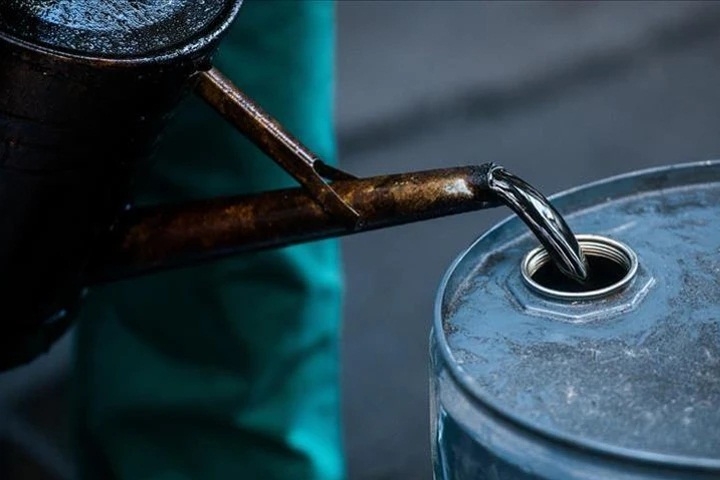
On Friday, European Union countries agreed to cap the price of Russian seaborne oil at USD 60 a barrel.
Taking to Twitter, the president of the European Commission, Ursula von der Leyen said, “The EU agreement on an oil price cap, coordinated with G7 and others, will reduce Russia’s revenues significantly. It will help us stabilise global energy prices, benefitting emerging economies around the world.”
Leyen also shared the video on her Twitter account in which she said, “As you know the EU and other major G7 partners will have a full import ban on Russian seaborne oil as of December 5. But we need to ensure that emerging and developing countries continue to have access to some Russian crude oil at limited prices and thus, today the EU the G7 and other global partners have agreed to introduce a global price cap on seaborne oil from Russia.”
Talking about the objectives, the European Commission president said that firstly, it will strengthen the effect of our sanctions, secondly, it will diminish Russia’s revenues and thirdly, at the same time, it will stabilise global energy markets because it will allow some Russian seaborne oil to be traded, brokered, transported by EU operators to third countries, as long as it is solid below the cap. “So this price cap will benefit directly emerging and developing economies, and it will be adjustable over time so that we can react to market developments. Together with our partners, we stand united and firm in our opposition to Russia’s atrocious war,” she added.
According to CNN, the West’s biggest economies agreed earlier this year to establish a price cap after lobbying by the United States and vowed to hash out the details by early December. But setting a number had proved difficult. Capping the price of Russian oil between USD 65 and USD 70 a barrel, a range previously under discussion, wouldn’t have caused much pain for the Kremlin. Urals crude, Russia’s benchmark, has already been trading within or close to that range. EU countries such as Poland and Estonia had pushed for the cap to be lower.
7.5 billion of Russian assets have been frozen in Switzerland
Switzerland has frozen a total of 7.5 billion Swiss francs in Russian assets, in connection with the sanctions imposed over Russia’s war in Ukraine.
The amount, which has been fluctuating for months, is nearly one billion francs more than the figure provided by the State Secretariat for Economic Affairs (SECO) in July.
Switzerland, a favoured destination for wealthy Russians, has also seen 15 Russian properties seized.
Erwin Bollinger, in charge of bilateral economic relations at SECO, stressed to reporters that the amount frozen at any given time does not necessarily “reflect the efficacy of the sanctions”.
That is because Swiss authorities seeking to implement the string of sanctions on Russia sometimes freeze assets as a precautionary measure, which may be released again once clarifications have been completed.
Traditionally-neutral Switzerland decided four days after Russia invaded Ukraine in February to align itself with the neighbouring European Union’s sanctions against Moscow.
As with their EU counterparts, Swiss banks are banned from accepting deposits from Russian nationals or people or entities based in Russia of more than 100,000 francs, and have been ordered to declare all existing deposits over that amount.
In all, 46.1 billion francs in such deposits have been reported, but SECO stressed that this could “not be equated with the total amount of funds of Russian origin held in Switzerland.”