February 21, 2022
4 mins read

UP registers 60%, Punjab 65% polling

Punjab voted to elect MLAs to its 117-member legislative and recorded a turnout lesser than 2017, as per the Election Commission of India, reports Asian Lite News

The voting percentage on Sunday in the third phase Assembly polls in Uttar Pradesh was 60.46 per cent and 63.44 per cent in Punjab, the Election Commission said.

In Uttar Pradesh, third phase polling was held in 59 Assembly seats spread over 16 districts. Lalitpur district recorded the highest polling at 67.37 per cent followed by Etah with 63 per cent, and Mahoba 62.01 per cent till 5 p.m.

Tough battle in Punjab

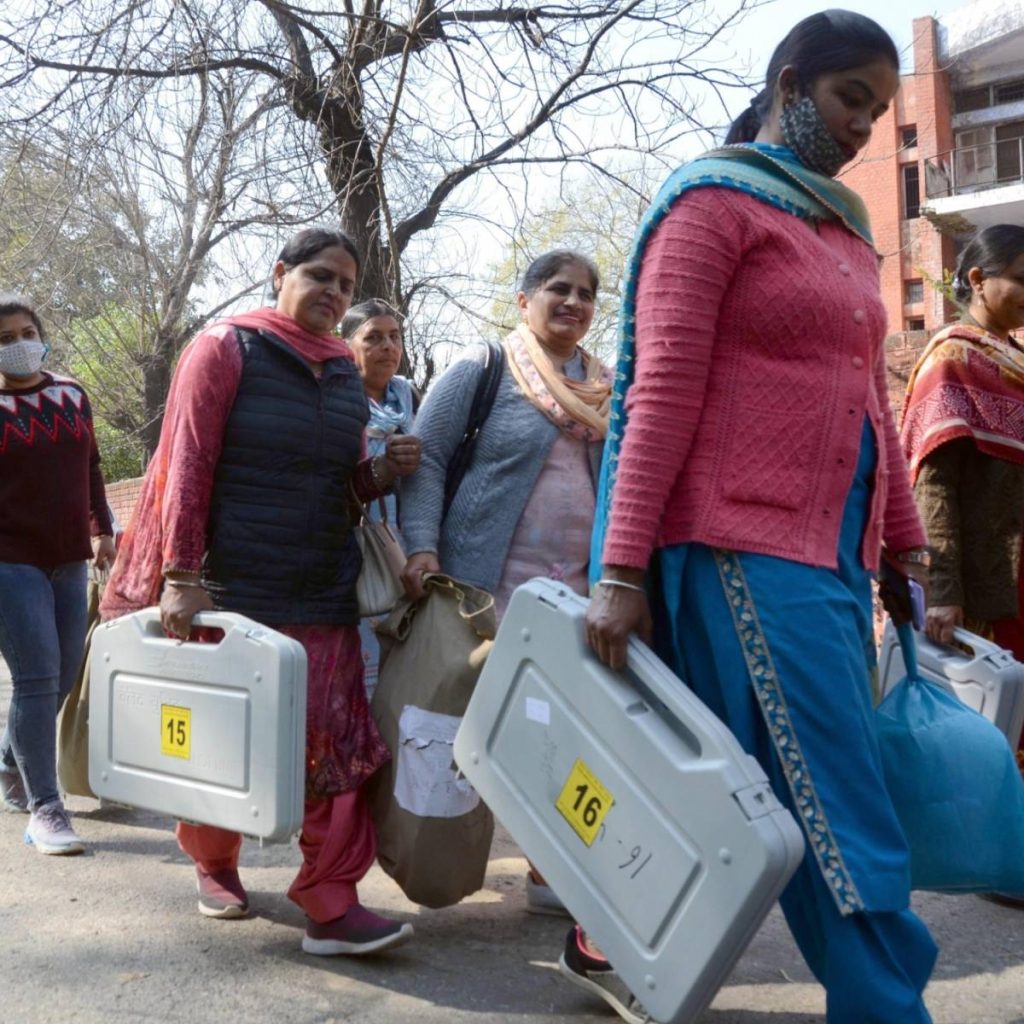
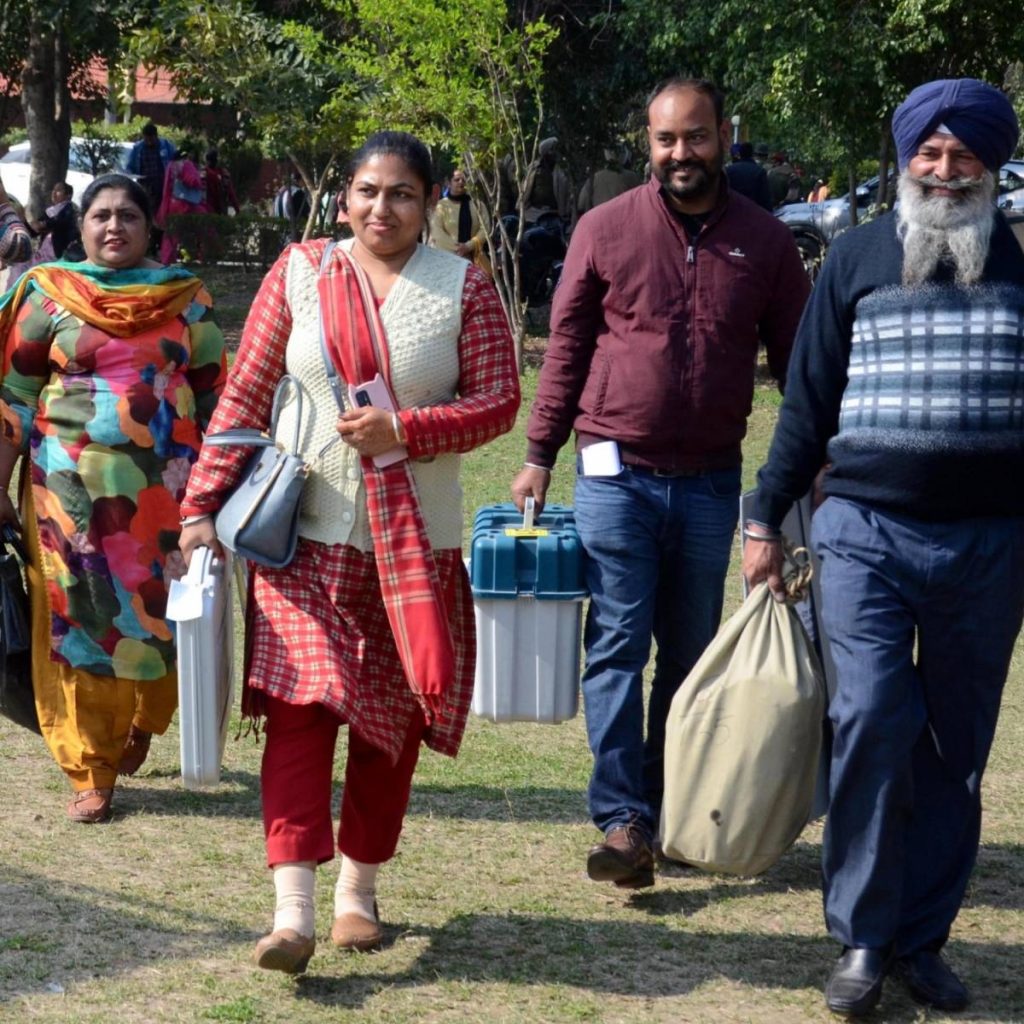
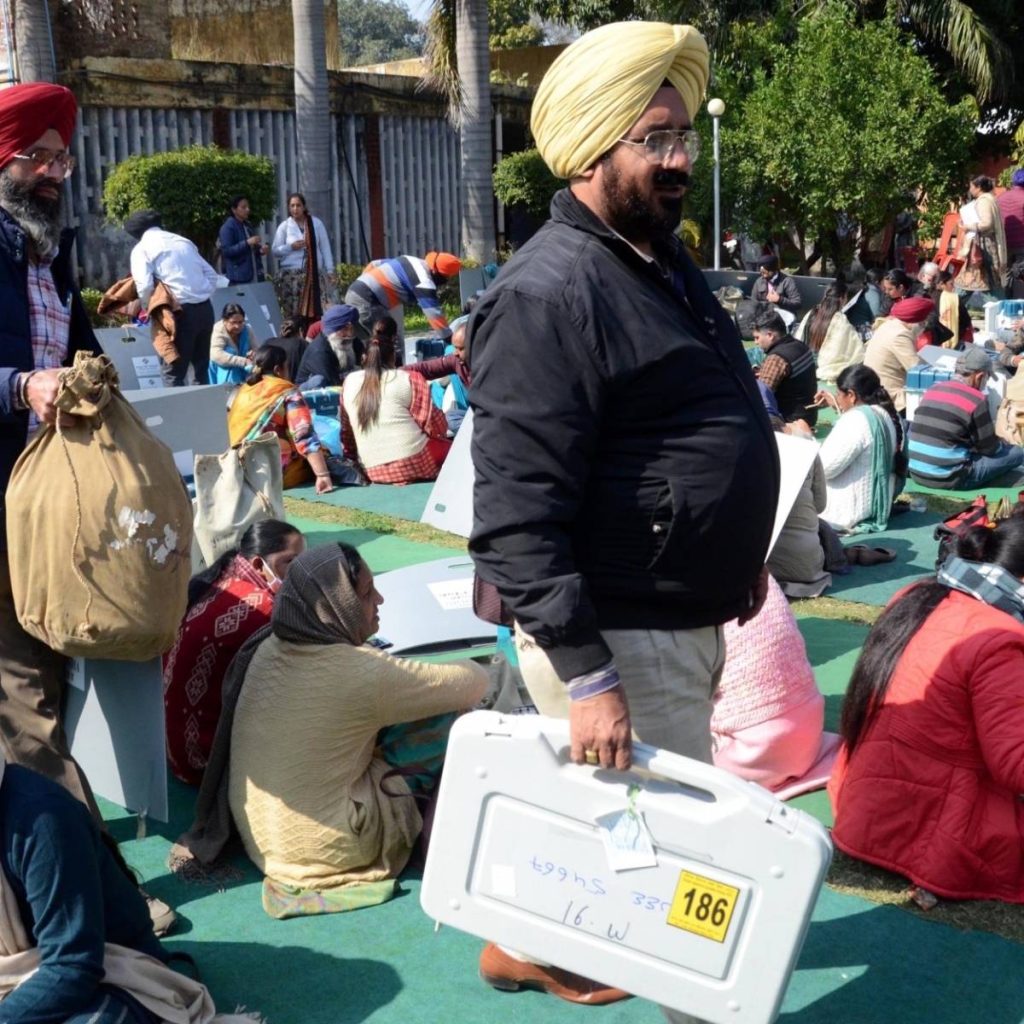
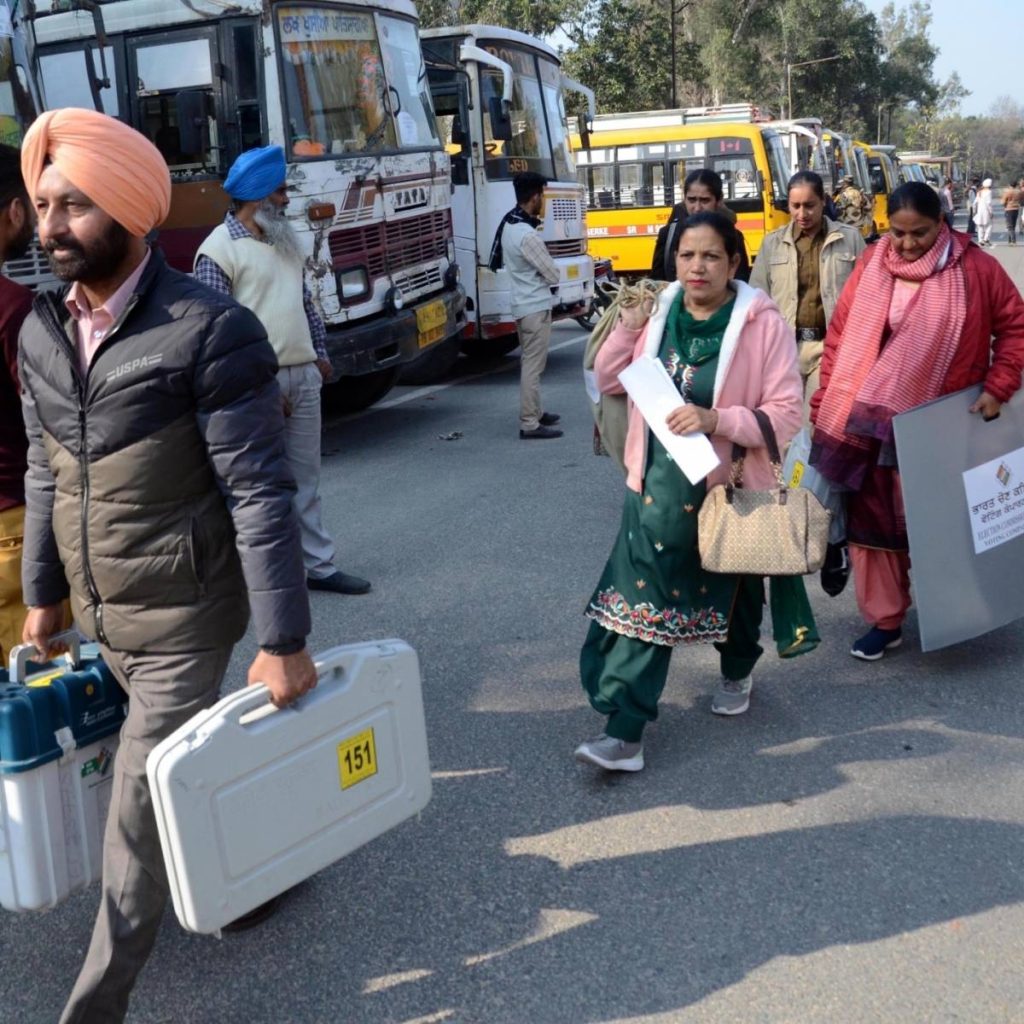
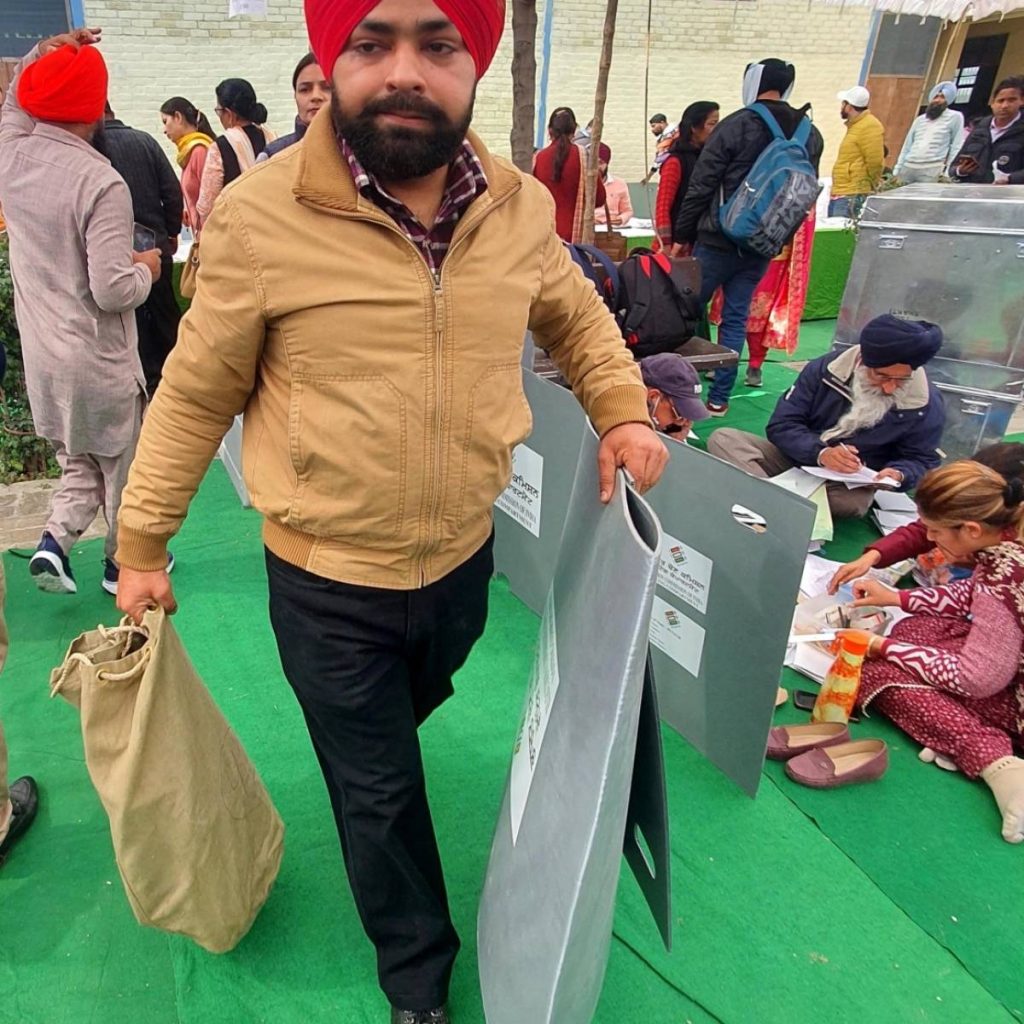
Punjab voted to elect MLAs to its 117-member legislative assembly on Sunday. The state recorded 65.32 per cent voter turnout compared to 77.36 per cent in 2017, as per the Election Commission of India (ECI).

Trends show that voter turnout was slow in the early hours of polling on Sunday and picked up pace towards the evening. Voter turnout was 57.58 per cent as of 3 pm with urban pockets witnessing lower participation compared to rural Punjab.

The state is witnessing a multi-cornered fight with Congress, Aam Aadmi Party, Akali Dal-BSP and BJP-Punjab Lok Congress in the fray. This resulted in a high-decibel campaign with drugs, corruption and employment emerging as key issues.

The 2022 Punjab Assembly polls are being viewed as a prestige battle for the Congress, which is contesting to retain power in the state. Congress won 80 of 117 seats in Punjab in 2017.

Its main contender, the AAP, has been trying to advertise its ‘Delhi model’ in a bid to vote the voters of Punjab. The Aam Aadmi Party has declared Lok Sabha MP Bhagwant Mann as its chief ministerial candidate.

However, the AAP was also seen engaging in damage control in the run-up to the election after former AAP leader Kumar Vishwas accused party chief Arvind Kejriwal of having ties with pro-Khalistani separatists. Kejriwal has categorically denied the charges.

Battle in Malwa

This election in Punjab is also a prestige battle for Captain Amarinder Singh, who brought the Congress to power in the state in 2017 and served as chief minister until September of last year. Congress then chose Chamkaur Sahib MLA Charanjit Singh Channi as Captain’s successor.

Captain Amarinder Singh later floated his own party – Punjab Lok Congress – and entered into an alliance with the BJP and Shiromani Akali Dal (Sanyukt).

All eyes are now on Patiala, which is seen as Captain Amarinder Singh’s bastion. A princely state during British rule, Patiala has gained a reputation in Punjab’s political circles as a power centre.

Led by Captain Amarinder Singh, the Congress had won seven out of the eight seats in Patiala in Punjab’s Malwa belt in 2017 with the remaining one seat going to Shiromani Akali Dal (SAD).

However, the AAP had emerged as the second biggest party in Malwa region in the previous assembly polls.

Long battle in UP

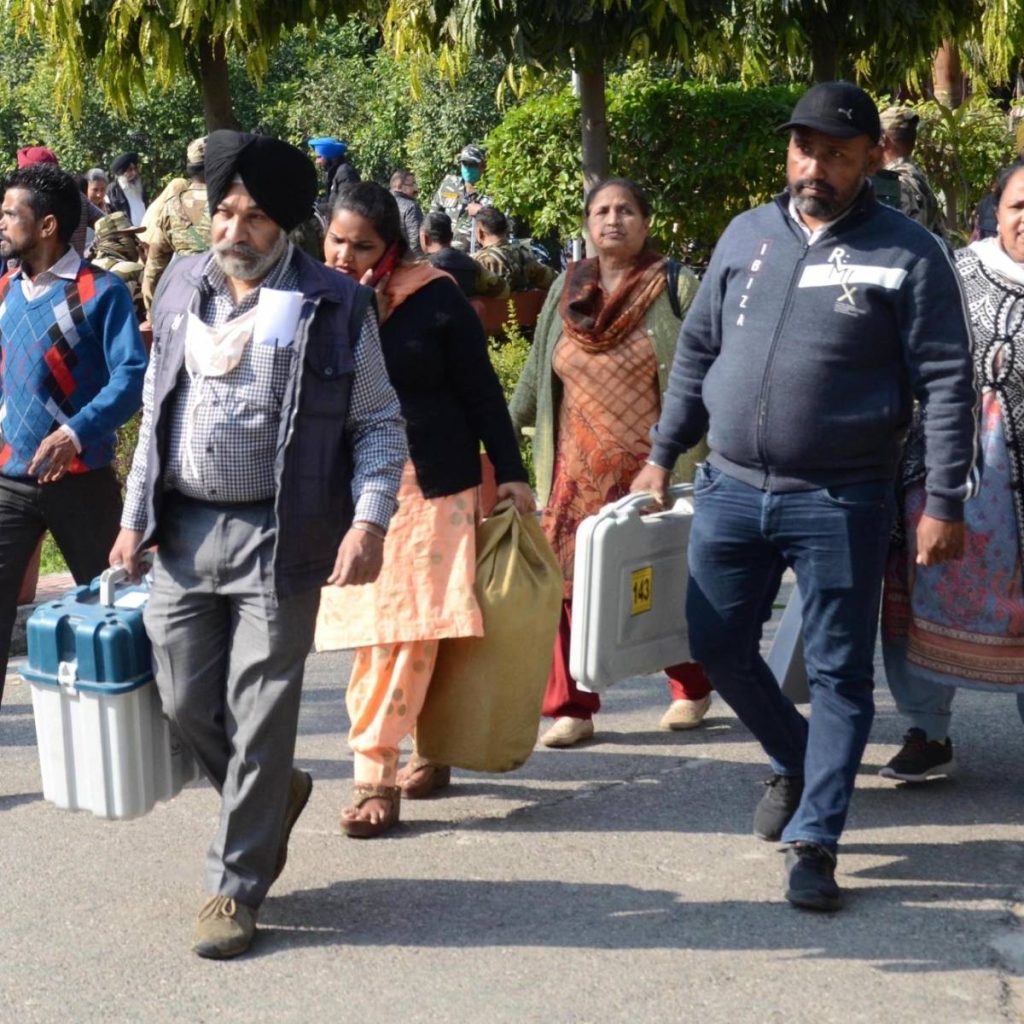
An average of 60.46 per cent voting was recorded in 59 Assembly constituencies Uttar Pradesh in the third phase of elections on Sunday.

As many as 627 candidates are in the fray in this phase, in which over 2.15 crore people are eligible to vote in 16 districts.

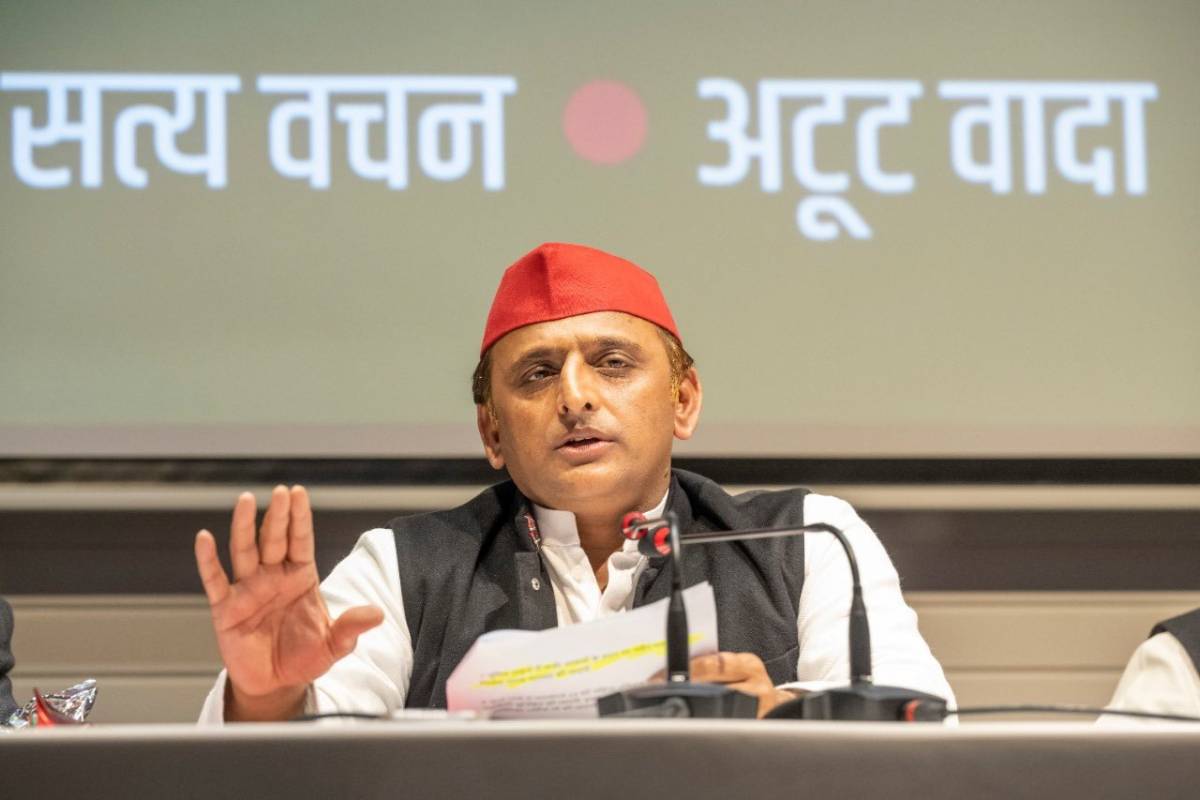
Among the high-profile candidates is Samajwadi Party chief Akhilesh Yadav who is contesting from Karhal assembly seat. The BJP has fielded Union minister S P Singh Baghel against him. Akhilesh Yadav’s uncle Shivpal Singh Yadav is contesting from his traditional Jaswantnagar seat.

Among the prominent political leaders who cast their votes on Sunday are Akhilesh Yadav, Dimple Yadav, Shivpal Singh Yadav, Ramgopal Yadav, Congress leader Salman Khurshid, UP BJP chief Swatantra Dev Singh and UP minister Satish Mahana.

https://www.youtube.com/watch?v=seXzxpSsTTY

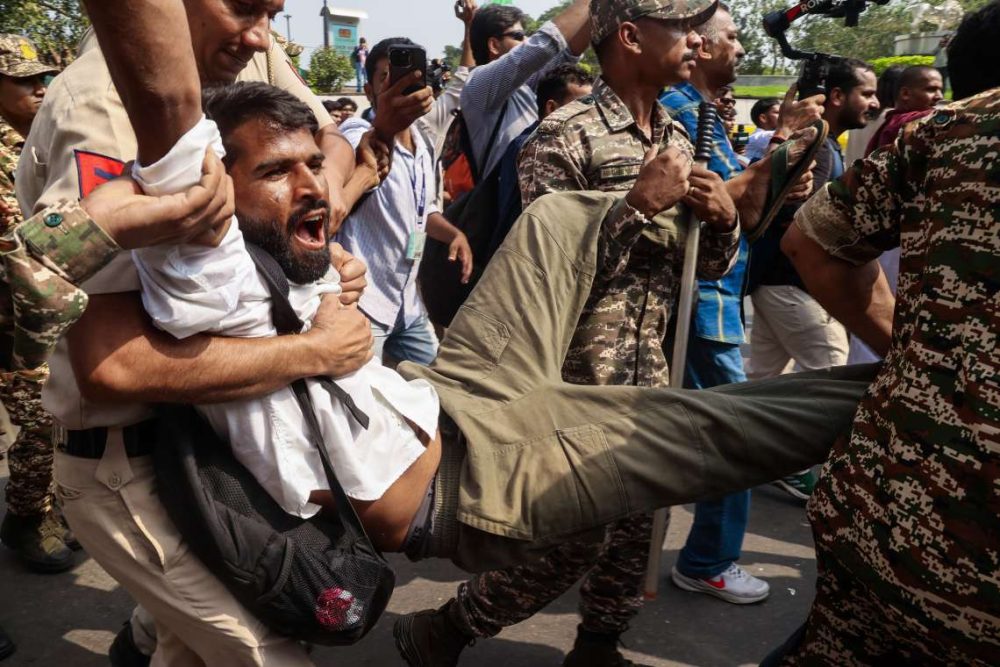
Meanwhile, Kanpur Mayor Pramila Pandey and former BJP office-bearer Nawab Singh have landed in trouble for posting videos in which they are seen casting their vote inside the polling booth.

Pandey took her mobile phone inside the polling booth at Hudson School, and clicked a selfie while exercising her right following which an FIR has been lodged against her, said a senior official.

The Election Commission has banned the use of mobile phones inside polling stations.

The mayor has shared a video that has gone viral on social media platforms.

District Magistrate Neha Sharma said the Kanpur Mayor has violated the rules of the Election Commission by revealing the name of the party she voted for.

Former city president of BJP’s Yuva Morcha was also allegedly caught while violating rules. Singh also took a mobile inside the booth and shot a video while casting vote.
In the 2017 UP Assembly elections, the polling percentage in these 16 districts was 62.21 per cent, the Election Commission said.

In the 2017 Assembly elections, the BJP had won 49 of the 59 seats while the SP had settled for nine. The Congress had got one seat while the Bahujan Samaj Party (BSP) drew a blank.

The 2022 assembly elections in Uttar Pradesh will be held in seven phases. The results are scheduled to be announced on March 10.

ALSO READ-Punjab goes to polls
Previous Story

Ethiopia’s mega dam begins power generation

Next Story

Quad is not Asian NATO, says Jaishankar

Previous Story

Ethiopia’s mega dam begins power generation

Next Story

Quad is not Asian NATO, says Jaishankar

Latest from -Top News

Pakistan Risks Overstretching Itself in Yemen War

Pakistan’s expanding military role in Saudi Arabia amid the Yemen conflict could strain its defence resources and fragile finances…reports Asian Lite News Desk Pakistan’s military involvement in the war in Yemen may prove unsustainable because of mounting financial pressures and competing security demands, according to a new report. Islamabad’s growing military presence in Saudi Arabia risks stretching its defence resources while exposing the country to greater strategic and economic challenges. An article by Andrew Wilson in One World Outlook describes Pakistan’s involvement as a case of “fiscal and strategic overreach”, arguing that the country lacks the financial flexibility to sustain an expanded military commitment. Pakistan’s external finances depend heavily on an International Monetary Fund (IMF) programme, financial support from Gulf countries and remittances from Pakistani workers in the region. The report argues that deeper military involvement in the conflict could place additional pressure on these sources of financial stability. It also warns that deploying troops and military equipment abroad could weaken Pakistan’s capacity to address security challenges along its eastern border and deal with two domestic insurgencies. The move could also draw Islamabad into a conflict it has sought to approach cautiously. A Reuters report in May, citing Pakistani security and government sources, said Islamabad had deployed around 8,000 troops, a squadron of approximately 16 aircraft, mostly JF-17 fighter jets, two drone squadrons and a Chinese HQ-9 air-defence battery to Saudi Arabia. According to those sources, Riyadh was financing the deployment, with Pakistani personnel operating the equipment. The sources also said a confidential agreement contemplated the possibility of deploying up to 80,000 troops. Islamabad has not confirmed those figures, although it has acknowledged its military presence in Saudi Arabia, including the deployment of fighter jets at King Abdulaziz Air Base from April. The One World Outlook article argues that Saudi financial support can cover allowances and operating expenses but cannot easily replace military equipment needed elsewhere or resolve the political and strategic challenges of participating in the Yemen conflict. Pakistan’s defence budget is another concern. For the 2026-27 financial year, the federal government allocated PKR 3 trillion, or approximately $10.8 billion, to defence services. The allocation represents an 18 per cent increase from the original PKR 2.55 trillion provision and amounts to around 2.1 per cent of projected gross domestic product (GDP). Defence spending accounts for approximately 16 per cent of the federal government’s PKR 18.8 trillion expenditure. Military pensions are budgeted separately at PKR 822 billion, while debt servicing costs stand at approximately PKR 8 trillion, more than two-and-a-half times the defence allocation. The report argues that these competing financial obligations leave little room for additional military expenditure without placing further pressure on public finances. Pakistan’s reliance on IMF assistance also limits its fiscal flexibility. The country must meet the conditions attached to the programme, including a primary budget surplus target of 2 per cent of GDP and continued restraint on development spending. According to the article, these requirements make it difficult for Islamabad to finance an additional military commitment without compromising other budgetary priorities. Pakistan’s economic indicators offer limited reassurance. Economic growth for the 2025-26 financial year is estimated at between 3.6 and 3.7 per cent, while inflation reached approximately 10.3 per cent in September following an energy price shock. Foreign exchange reserves stood at around $21.5 billion at the end of September. Although this marks an improvement from the low levels recorded in 2023, the report notes that the reserves cover only a few months of imports. Financial assistance from Gulf partners remains central to Pakistan’s external stability. The article says Islamabad holds approximately $8 billion in Saudi deposits at its central bank. In July, the State Bank of Pakistan said Riyadh had extended the maturity of $5 billion in deposits to December 2028, easing the country’s immediate external financing requirements. A further $3 billion deposit was also extended in the spring. However, the article argues that these arrangements provide temporary relief rather than long-term financial independence, particularly as regional conflict threatens the stability of the Gulf economies on which Pakistan relies. The report concludes that Pakistan faces a difficult balance between supporting Saudi Arabia militarily and preserving the financial and military resources needed to address its domestic and regional challenges.
Go toTop

Don't Miss

Punjab: AAP’s First List of 8 Candidates Announced

Former MLA Gurpreet Singh has been given the ticket from

Congress appoints Hooda, Shukla as special observer for Punjab

The prominent faces in the polls are Channi (Congress), 58;