August 14, 2023
4 mins read

UK charities call for safe routes for asylum seekers

Enver Solomon, chief executive of the Refugee Council, said the latest “preventable deaths” underlined the need for the Home Office to act…reports Asian Lite News

The government’s controversial asylum policy faced renewed criticism when at least six people died after a small boat crossing the Channel capsized and sank.

Another two people are still believed to be missing after the sinking, prompting fresh calls for the government to urgently introduce safe routes for asylum seekers to prevent further tragedies.

As the search for survivors continued, anger quickly switched to the Home Office’s reluctance to introduce measures that would deter migrants from risking their lives crossing the world’s busiest shipping lane.

The tragedy also created a dreadful ending for Rishi Sunak’s “small boats week”, which was meant to reinvigorate his stuttering strategy to tackle Channel crossings, but has been repeatedly marred by blunders and humiliation, including the forced evacuation of the Bibby Stockholm barge and record small boat arrivals.

In the hours that followed, British and French coastguards rescued about 65 people from the vessel. France’s Maritime Prefecture of the Channel and the North Sea said it believed two were possibly still missing at sea. Of those rescued, six were recovered in serious condition, one of whom was flown by helicopter to a Calais hospital and later declared dead. The remaining five were taken on to a boat, but subsequently died.

Reports from the French lifeboats arriving at the scene described numerous people in the sea, many screaming for help.

The Dover lifeboat quickly joined the rescue operation, with 10 survivors later seen being brought off the vessel as it returned to Kent, some on stretchers, though the extent of injuries and exact numbers remained unclear.

Enver Solomon, chief executive of the Refugee Council, said the latest “preventable deaths” underlined the need for the Home Office to act.

“These tragic incidents can and must be prevented. We know that people risk their lives to cross the Channel as a direct consequence of safe routes being so limited and ineffective.

“But instead of putting in place these routes and treating those seeking refuge with compassion and fairness, the government has introduced draconian and unworkable new laws that slams our door in the face of vulnerable men, women and children.”

Steve Smith, chief executive of refugee charity Care4Calais, said the “terrible loss of life demonstrates yet again the need for a system of safe passage to the UK for refugees”.

Later, the charity Freedom from Torture released a statement accusing ministers of “hostile” attitudes towards refugees.

The current Home Office position pledges to bring in new routes, yet it is unclear when and in what form it would do so.

“We are committed to providing routes, including exploring new routes, to safety for vulnerable people across the globe, but we must first grip the rise in illegal migration and stop the boats,” says the Home Office website.

Following Saturday’s tragedy, a statement from the Home Office focused on tackling people smugglers rather than reviewing its current approach. “This incident is sadly another reminder of the extreme dangers of crossing the Channel in small boats and how vital it is that we break the people smugglers’ business model and stop the boats,” it said.

Home secretary Suella Braverman chaired a meeting with Border Force officials on Saturday morning, and described the incident as a “tragic loss of life”.

In France, an investigation has been opened by the Boulogne prosecutor’s office.

French National Assembly member for Calais, Pierre-Henri Dumont, said authorities were interviewing the migrants who were able to speak and not too unwell, to establish what happened and where they had come from.

On Saturday night, rescuers were still scouring the water for survivors and bodies. A French Navy aircraft and a helicopter had been deployed to help the search.

On Thursday, 755 people crossed the English Channel in small boats, the highest daily number so far this year, taking the total since 2018 past 100,000.

Rescue crews said it was the seventh time last week that they had had to pull people from the water.

People boarding the Bibby Stockholm barge last week before they were later evacuated due to the discovery of Legionella bacteria.

Although the incident happened in French territory, it is normal for British and French rescue teams to work together to save as many people as possible.

The sinking came a day after fresh Home Office humiliation when asylum seekers on the Bibby Stockholm barge were evacuated following the discovery of legionella bacteria in the water supply.

ALSO READ-Kerala To Host Zayed Charity Marathon

Previous Story

70 Indians sue US govt for denying them H-1B visas

Next Story

Taiwan will not back down to threats, says VP William Lai  

Previous Story

70 Indians sue US govt for denying them H-1B visas

Next Story

Taiwan will not back down to threats, says VP William Lai  

Latest from -Top News

Pakistan Risks Overstretching Itself in Yemen War

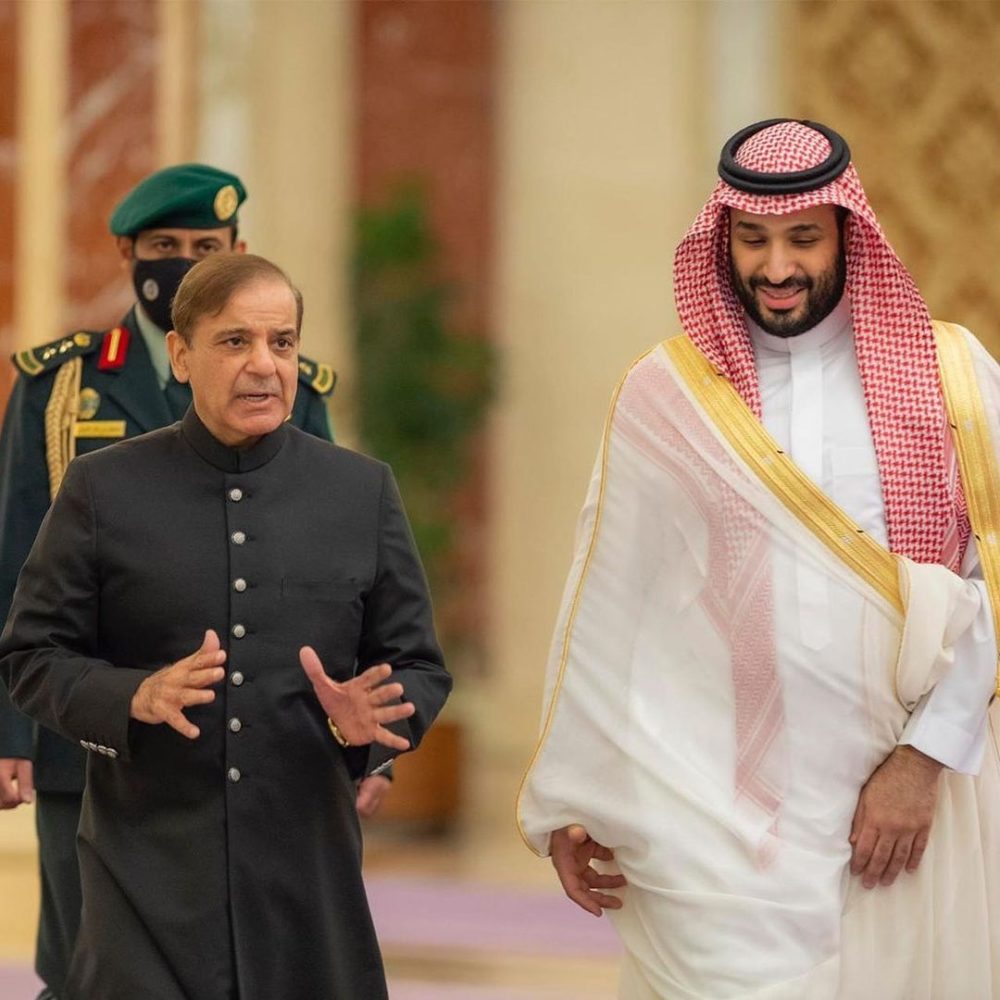
Pakistan’s expanding military role in Saudi Arabia amid the Yemen conflict could strain its defence resources and fragile finances…reports Asian Lite News Desk Pakistan’s military involvement in the war in Yemen may prove unsustainable because of mounting financial pressures and competing security demands, according to a new report. Islamabad’s growing military presence in Saudi Arabia risks stretching its defence resources while exposing the country to greater strategic and economic challenges. An article by Andrew Wilson in One World Outlook describes Pakistan’s involvement as a case of “fiscal and strategic overreach”, arguing that the country lacks the financial flexibility to sustain an expanded military commitment. Pakistan’s external finances depend heavily on an International Monetary Fund (IMF) programme, financial support from Gulf countries and remittances from Pakistani workers in the region. The report argues that deeper military involvement in the conflict could place additional pressure on these sources of financial stability. It also warns that deploying troops and military equipment abroad could weaken Pakistan’s capacity to address security challenges along its eastern border and deal with two domestic insurgencies. The move could also draw Islamabad into a conflict it has sought to approach cautiously. A Reuters report in May, citing Pakistani security and government sources, said Islamabad had deployed around 8,000 troops, a squadron of approximately 16 aircraft, mostly JF-17 fighter jets, two drone squadrons and a Chinese HQ-9 air-defence battery to Saudi Arabia. According to those sources, Riyadh was financing the deployment, with Pakistani personnel operating the equipment. The sources also said a confidential agreement contemplated the possibility of deploying up to 80,000 troops. Islamabad has not confirmed those figures, although it has acknowledged its military presence in Saudi Arabia, including the deployment of fighter jets at King Abdulaziz Air Base from April. The One World Outlook article argues that Saudi financial support can cover allowances and operating expenses but cannot easily replace military equipment needed elsewhere or resolve the political and strategic challenges of participating in the Yemen conflict. Pakistan’s defence budget is another concern. For the 2026-27 financial year, the federal government allocated PKR 3 trillion, or approximately $10.8 billion, to defence services. The allocation represents an 18 per cent increase from the original PKR 2.55 trillion provision and amounts to around 2.1 per cent of projected gross domestic product (GDP). Defence spending accounts for approximately 16 per cent of the federal government’s PKR 18.8 trillion expenditure. Military pensions are budgeted separately at PKR 822 billion, while debt servicing costs stand at approximately PKR 8 trillion, more than two-and-a-half times the defence allocation. The report argues that these competing financial obligations leave little room for additional military expenditure without placing further pressure on public finances. Pakistan’s reliance on IMF assistance also limits its fiscal flexibility. The country must meet the conditions attached to the programme, including a primary budget surplus target of 2 per cent of GDP and continued restraint on development spending. According to the article, these requirements make it difficult for Islamabad to finance an additional military commitment without compromising other budgetary priorities. Pakistan’s economic indicators offer limited reassurance. Economic growth for the 2025-26 financial year is estimated at between 3.6 and 3.7 per cent, while inflation reached approximately 10.3 per cent in September following an energy price shock. Foreign exchange reserves stood at around $21.5 billion at the end of September. Although this marks an improvement from the low levels recorded in 2023, the report notes that the reserves cover only a few months of imports. Financial assistance from Gulf partners remains central to Pakistan’s external stability. The article says Islamabad holds approximately $8 billion in Saudi deposits at its central bank. In July, the State Bank of Pakistan said Riyadh had extended the maturity of $5 billion in deposits to December 2028, easing the country’s immediate external financing requirements. A further $3 billion deposit was also extended in the spring. However, the article argues that these arrangements provide temporary relief rather than long-term financial independence, particularly as regional conflict threatens the stability of the Gulf economies on which Pakistan relies. The report concludes that Pakistan faces a difficult balance between supporting Saudi Arabia militarily and preserving the financial and military resources needed to address its domestic and regional challenges.

UK and Germany Ratify Kensington Treaty

Britain and Germany ratify the Kensington Treaty, agreeing new cooperation on AI, quantum research, defence and security while targeting investment, jobs and Russian hybrid threats…reports Asian Lite News Desk Britain and Germany

Economic tide is turning in Bangladesh

If there is one thing that can bring some comfort to the struggling Bangladeshi economy, it is good relations with India. Bangladesh should remember that Delhi’s backing, through easy supplies of essentials
Go toTop

Don't Miss

EU excludes Covishield from ‘Green Pass’ list

Meanwhile, SII has begun manufacturing Novavax’s protein-based vaccine Covovax, CEO

London schools hit by pupil drop crisis

London primary schools face steep fall in reception numbers as