January 22, 2023
4 mins read

3 active-duty Marines charged in Jan. 6 Capitol riot

No defense lawyers for the men were listed in the court docket, so it was not immediately clear whether they have attorneys to comment on their behalf….reports Asian Lite News

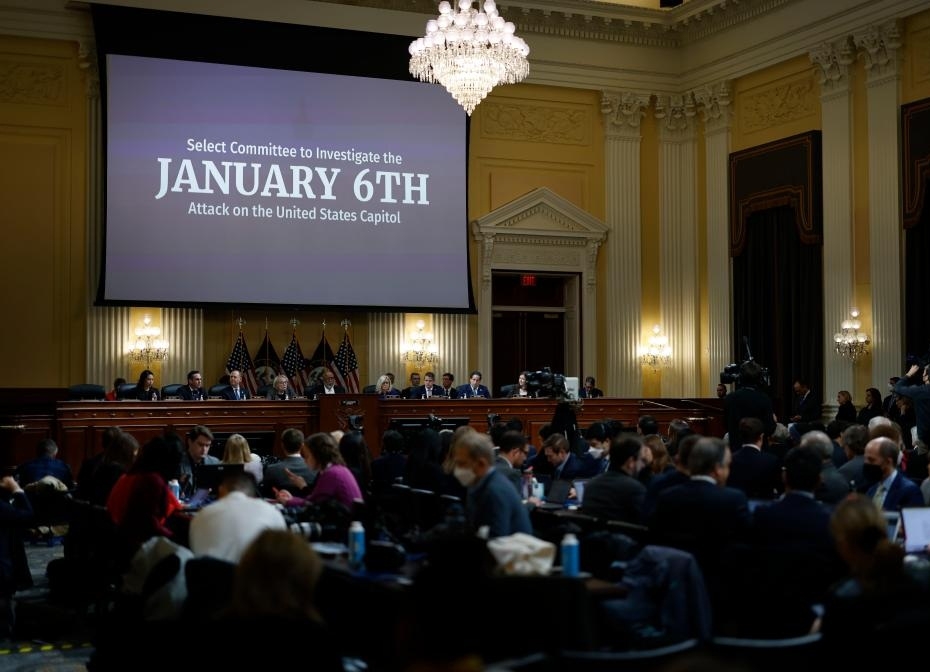
A Marine who said he was waiting for “Civil war 2” and two other active-duty members of the military have been charged with participating in the riot at the U.S. Capitol, authorities said in newly filed court papers.

Micah Coomer, Joshua Abate and Dodge Dale Hellonen were arrested this week on misdemeanor charges after their fellow Marines helped investigators identify them in footage among the pro-Trump mob on Jan. 6, 2021, according to court papers.

Dozens of people charged in the riot have military backgrounds, but these three are among only a handful on active duty. A Marine Corps officer seen on camera scuffling with police and helping other members of the mob force their way into the Capitol was charged in 2021.

No defense lawyers for the men were listed in the court docket, so it was not immediately clear whether they have attorneys to comment on their behalf.

Their service records show they are all active-duty Marines. Maj. Kevin Stephensen, a spokesman for the Marine Corps, said it is aware of the allegations and “is fully cooperating with appropriate authorities in support of the investigation.”

Coomer, of Indiana, is stationed in Southern California’s Camp Pendleton; Abate, of Virginia, is at Fort Meade in Maryland; and Hellonen, of Michigan, is stationed at North Carolina’s Camp Lejeune, according to the Marines.

The men spent about 52 minutes inside the Capitol, authorities say. At one point while in the rotunda, they put a red “Make American Great Again” hat on a statue to take pictures with it, according to court papers. Hellonen was carrying a “Don’t Tread on Me” flag, authorities said.

Coomer posted photos on Instagram that appeared to be taken inside the Capitol with the caption “Glad to be apart of history,” according to court documents. Days after the 2020 election, he and another person discussed over Instagram message how he believed the election was rigged.

And in late January 2021, he told another person in a message that “everything in this country is corrupt.”

“We honestly need a fresh restart. I’m waiting for the boogaloo,” Coomer wrote in a message detailed in court documents. When asked by the person what’s “a boogaloo,” Coomer responded “Civil war 2,” authorities said.

The boogaloo is an anti-government, pro-gun extremist movement. Its name is a reference to a slang term for a sequel — in this case, a second U.S. civil war. The movement is named after “Breakin’ 2: Electric Boogaloo,” a 1984 sequel to a movie about breakdancing.

Supporters have shown up at protests over COVID-19 lockdown orders and protests over racial injustice, carrying rifles and wearing tactical gear over Hawaiian shirts. The shirts are a reference to “big luau,” a riff on the term “boogaloo” sometimes favored by group members.

During an interview related to his security clearance in June, Abate acknowledged walking through the Capitol with two “buddies,” investigators said. Abate said they “walked around and tried not to get hit with tear gas.”

The Pentagon said Abate was assigned to the Marine Cryptologic Support Battalion, which supports the National Security Agency. One of the largest U.S. intelligence agencies, the NSA spies on electronic communications around the world and has a critical role in deterring cyberattacks and foreign influence operations.

A spokesperson for the NSA declined to answer questions about when the agency learned of Abate’s statement that he had entered the Capitol or if it took action prior to his arrest to restrict his access to classified information.

The trio face charges including illegal entry and disorderly conduct.

Among Jan. 6 defendants with military backgrounds are members of the far-right extremist group the Oath Keepers, accused of plotting to violently keep President Donald Trump in power. The group’s leader, Stewart Rhodes, a former Army paratrooper, was convicted of seditious conspiracy in November.

A Navy reservist from Virginia accused of storming the Capitol was convicted this week on charges that he illegally possessed silencers disguised to look like innocuous cleaning supplies. Hatchet Speed is scheduled to go on trial in his Jan. 6 case later this year.

And a former U.S. Army reservist described by prosecutors as a Nazi sympathizer was convicted of storming the Capitol to obstruct Congress from certifying President Joe Biden’s electoral victory. Timothy Hale-Cusanelli, who was employed as a security contractor at a Navy base, was sentenced to four years in prison in September.

Nearly 1,000 people have been charged so far in the riot and the tally increases by the week. Almost 500 people have pleaded guilty to riot-related charges and more than three dozen have been convicted at trial.

ALSO READ: EU envoy calls India’s G20 Presidency ‘an influential voice’

Previous Story

Serbia agrees to consider Western proposal on Kosovo

Next Story

China excavates resource-rich Balochistan while locals remain poor

Previous Story

Serbia agrees to consider Western proposal on Kosovo

Next Story

China excavates resource-rich Balochistan while locals remain poor

Latest from -Top News

Pakistan Risks Overstretching Itself in Yemen War

Pakistan’s expanding military role in Saudi Arabia amid the Yemen conflict could strain its defence resources and fragile finances…reports Asian Lite News Desk Pakistan’s military involvement in the war in Yemen may prove unsustainable because of mounting financial pressures and competing security demands, according to a new report. Islamabad’s growing military presence in Saudi Arabia risks stretching its defence resources while exposing the country to greater strategic and economic challenges. An article by Andrew Wilson in One World Outlook describes Pakistan’s involvement as a case of “fiscal and strategic overreach”, arguing that the country lacks the financial flexibility to sustain an expanded military commitment. Pakistan’s external finances depend heavily on an International Monetary Fund (IMF) programme, financial support from Gulf countries and remittances from Pakistani workers in the region. The report argues that deeper military involvement in the conflict could place additional pressure on these sources of financial stability. It also warns that deploying troops and military equipment abroad could weaken Pakistan’s capacity to address security challenges along its eastern border and deal with two domestic insurgencies. The move could also draw Islamabad into a conflict it has sought to approach cautiously. A Reuters report in May, citing Pakistani security and government sources, said Islamabad had deployed around 8,000 troops, a squadron of approximately 16 aircraft, mostly JF-17 fighter jets, two drone squadrons and a Chinese HQ-9 air-defence battery to Saudi Arabia. According to those sources, Riyadh was financing the deployment, with Pakistani personnel operating the equipment. The sources also said a confidential agreement contemplated the possibility of deploying up to 80,000 troops. Islamabad has not confirmed those figures, although it has acknowledged its military presence in Saudi Arabia, including the deployment of fighter jets at King Abdulaziz Air Base from April. The One World Outlook article argues that Saudi financial support can cover allowances and operating expenses but cannot easily replace military equipment needed elsewhere or resolve the political and strategic challenges of participating in the Yemen conflict. Pakistan’s defence budget is another concern. For the 2026-27 financial year, the federal government allocated PKR 3 trillion, or approximately $10.8 billion, to defence services. The allocation represents an 18 per cent increase from the original PKR 2.55 trillion provision and amounts to around 2.1 per cent of projected gross domestic product (GDP). Defence spending accounts for approximately 16 per cent of the federal government’s PKR 18.8 trillion expenditure. Military pensions are budgeted separately at PKR 822 billion, while debt servicing costs stand at approximately PKR 8 trillion, more than two-and-a-half times the defence allocation. The report argues that these competing financial obligations leave little room for additional military expenditure without placing further pressure on public finances. Pakistan’s reliance on IMF assistance also limits its fiscal flexibility. The country must meet the conditions attached to the programme, including a primary budget surplus target of 2 per cent of GDP and continued restraint on development spending. According to the article, these requirements make it difficult for Islamabad to finance an additional military commitment without compromising other budgetary priorities. Pakistan’s economic indicators offer limited reassurance. Economic growth for the 2025-26 financial year is estimated at between 3.6 and 3.7 per cent, while inflation reached approximately 10.3 per cent in September following an energy price shock. Foreign exchange reserves stood at around $21.5 billion at the end of September. Although this marks an improvement from the low levels recorded in 2023, the report notes that the reserves cover only a few months of imports. Financial assistance from Gulf partners remains central to Pakistan’s external stability. The article says Islamabad holds approximately $8 billion in Saudi deposits at its central bank. In July, the State Bank of Pakistan said Riyadh had extended the maturity of $5 billion in deposits to December 2028, easing the country’s immediate external financing requirements. A further $3 billion deposit was also extended in the spring. However, the article argues that these arrangements provide temporary relief rather than long-term financial independence, particularly as regional conflict threatens the stability of the Gulf economies on which Pakistan relies. The report concludes that Pakistan faces a difficult balance between supporting Saudi Arabia militarily and preserving the financial and military resources needed to address its domestic and regional challenges.

UK and Germany Ratify Kensington Treaty

Britain and Germany ratify the Kensington Treaty, agreeing new cooperation on AI, quantum research, defence and security while targeting investment, jobs and Russian hybrid threats…reports Asian Lite News Desk Britain and Germany

Economic tide is turning in Bangladesh

If there is one thing that can bring some comfort to the struggling Bangladeshi economy, it is good relations with India. Bangladesh should remember that Delhi’s backing, through easy supplies of essentials
Go toTop

Don't Miss

US condemns North Korea missile launch

The missile, launched by the Academy of Defence Science on

In first Oval Office address, Biden boasts of debt-ceiling win

The Senate’s approval of the Bill on Thursday practically guarantees