May 22, 2023
4 mins read

Bizmen hit by China’s undeclared ‘blockade’ of border with Nepal

Tatopani is considered as a crucial transit point connecting cities in China….reports Asian Lite News

For the past eight years, all border crossings between Nepal and China have remained largely closed. This undeclared “blockade” by Beijing has left importers and businessmen in Nepal desperate, EPardafas reported.

The markets near the Chinese border became deserted, resulting in disappointment am e” by Beijing has left importers and businessmen in Nepal desperate, EPardafas reported. ong the business community. Three years back, Chinese President Xi Jinping during his visit to Nepal expressed his willingness to prioritize the development of a comprehensive communication network between the two nations, as per the EPardafas report. Xi’s statement gathered enthusiasm among Nepali businessmen, who expressed hope for improved trade and economic opportunities. However, the closure of all border crossings of Nepal with China after the earthquake caused a crisis for not only significant businessmen but also small shopkeepers near the border.

Nepal shares a 1,414 km border with China, which comprises six checkpoints – Rasuwagadhi in Rasuwa, Tatopani in Sindhupalchowk, Hilsa in Humla, Korla in Mustang, Kimathanka in Sankhuwasabha, and Olangchungola in Taplejung, as per the EPardafas report. However, only Rasuwagadhi and Tatopani checkpoints are partially operational, according to the news report.

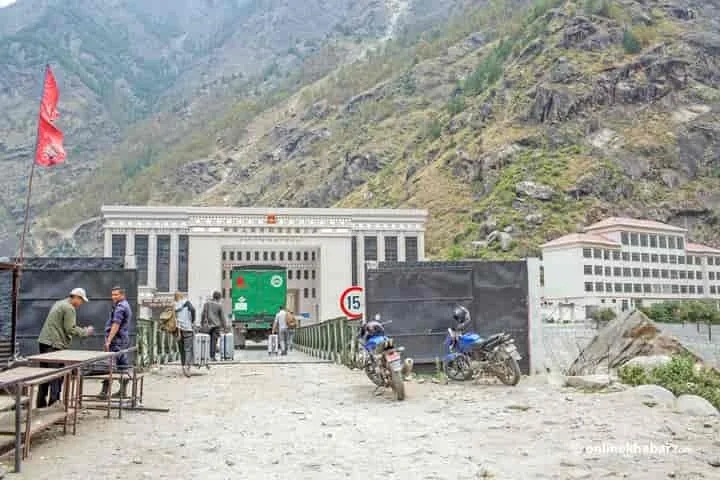
Tatopani, which used to be a bustling market, has remained quiet for eight years. Hom Bahadur Basnet, the President of the Sindhupalchowk Chamber of Commerce and Industry, said that the border was closed and traffic was stopped by China after the earthquake.

Before the earthquake, the checkpoint was operational and domestic tourists used to come for hot baths, sightseeing, and buying inexpensive goods at the border market. However, all activities have come to a halt. Some professionals have left the region, while others have migrated to Kathmandu. Tatopani is considered as a crucial transit point connecting cities in China.

Hom Bahadur Basnet said that around 2000 truck drivers, co-drivers, and thousands of businessmen in Tatopani have lost their jobs due to the non-operation of the checkpoint. The business community has repeatedly requested the Chinese government to fully operationalize the border crossing in both directions by submitting memorandums.

Even though it was declared that the checkpoint would operate smoothly from May 1. However, the situation remains unchanged. The situation at Rasuwagadi mirrors that of Tatopani, EPardafas reported.

Rasuwa Industry and Commerce Association President Kesang Nirpu Tamang said that disruptions at the checkpoint have adversely affected the market and businesses in Rasuwagadi, EPardafas reported.

Tiptala in Taplejung is an important crossing point that affects the daily lives of local residents. Despite the lack of a road connection, locals used to transport goods from Chauri to China and import essentials like salt, rice, pulses, oil, and clothes. However, locals have been forced to buy at inflated prices due to the border closure caused by COVID-19.

Humla’s Hilsa has recently resumed operations after a closure due to the COVID-19 pandemic. Namgyal Lama, the president of the Humla Industry and Commerce Association, stressed that the closure of the crossing had far-reaching consequences, affecting the local community and businesses.

The North Tatopani border crossing was initially reported to have been fully reopened on May 1. However, the reality is that the border crossing has only been partially opened for exports. Dayadand KC, an officer at the Tatopani Customs Office, said that exports have almost come to a standstill, and imports are sporadic as well, as per the news report.

Earlier, the People of Nepal had a reliable source of income through the export of food grains, vegetables, and even medicinal herbs like Satuwa to Khasa. However, currently, Nepali traders can only bring things like apples, garlic, and clothes to the Miteri bridge from Khasa, with a daily capacity of 6-7 containers.

In the current financial year, the Tatopani Customs Office had set a target to collect revenue amounting to 4 billion 62 million Nepali rupees. However, as of now, they have been able to collect only 2 billion 20 million Nepali rupees, according to the news report.

Businessmen have reported that in the past, China’s imposition of the blockade caused the loss of millions of rupees. The Nepal Himalayan Cross Border Commerce Association has said that the goods bought from China are currently stuck in the border region, resulting in substantial financial losses for businessmen. (ANI)

ALSO READ: History repeats itself in Pakistan with Imran Khan’s arrest

Previous Story

PoK ecology threatened by military, CPEC

Next Story

Vietnam slams China, Philippines for activities in SCS

Previous Story

PoK ecology threatened by military, CPEC

Next Story

Vietnam slams China, Philippines for activities in SCS

Latest from -Top News

Pakistan Risks Overstretching Itself in Yemen War

Pakistan’s expanding military role in Saudi Arabia amid the Yemen conflict could strain its defence resources and fragile finances…reports Asian Lite News Desk Pakistan’s military involvement in the war in Yemen may prove unsustainable because of mounting financial pressures and competing security demands, according to a new report. Islamabad’s growing military presence in Saudi Arabia risks stretching its defence resources while exposing the country to greater strategic and economic challenges. An article by Andrew Wilson in One World Outlook describes Pakistan’s involvement as a case of “fiscal and strategic overreach”, arguing that the country lacks the financial flexibility to sustain an expanded military commitment. Pakistan’s external finances depend heavily on an International Monetary Fund (IMF) programme, financial support from Gulf countries and remittances from Pakistani workers in the region. The report argues that deeper military involvement in the conflict could place additional pressure on these sources of financial stability. It also warns that deploying troops and military equipment abroad could weaken Pakistan’s capacity to address security challenges along its eastern border and deal with two domestic insurgencies. The move could also draw Islamabad into a conflict it has sought to approach cautiously. A Reuters report in May, citing Pakistani security and government sources, said Islamabad had deployed around 8,000 troops, a squadron of approximately 16 aircraft, mostly JF-17 fighter jets, two drone squadrons and a Chinese HQ-9 air-defence battery to Saudi Arabia. According to those sources, Riyadh was financing the deployment, with Pakistani personnel operating the equipment. The sources also said a confidential agreement contemplated the possibility of deploying up to 80,000 troops. Islamabad has not confirmed those figures, although it has acknowledged its military presence in Saudi Arabia, including the deployment of fighter jets at King Abdulaziz Air Base from April. The One World Outlook article argues that Saudi financial support can cover allowances and operating expenses but cannot easily replace military equipment needed elsewhere or resolve the political and strategic challenges of participating in the Yemen conflict. Pakistan’s defence budget is another concern. For the 2026-27 financial year, the federal government allocated PKR 3 trillion, or approximately $10.8 billion, to defence services. The allocation represents an 18 per cent increase from the original PKR 2.55 trillion provision and amounts to around 2.1 per cent of projected gross domestic product (GDP). Defence spending accounts for approximately 16 per cent of the federal government’s PKR 18.8 trillion expenditure. Military pensions are budgeted separately at PKR 822 billion, while debt servicing costs stand at approximately PKR 8 trillion, more than two-and-a-half times the defence allocation. The report argues that these competing financial obligations leave little room for additional military expenditure without placing further pressure on public finances. Pakistan’s reliance on IMF assistance also limits its fiscal flexibility. The country must meet the conditions attached to the programme, including a primary budget surplus target of 2 per cent of GDP and continued restraint on development spending. According to the article, these requirements make it difficult for Islamabad to finance an additional military commitment without compromising other budgetary priorities. Pakistan’s economic indicators offer limited reassurance. Economic growth for the 2025-26 financial year is estimated at between 3.6 and 3.7 per cent, while inflation reached approximately 10.3 per cent in September following an energy price shock. Foreign exchange reserves stood at around $21.5 billion at the end of September. Although this marks an improvement from the low levels recorded in 2023, the report notes that the reserves cover only a few months of imports. Financial assistance from Gulf partners remains central to Pakistan’s external stability. The article says Islamabad holds approximately $8 billion in Saudi deposits at its central bank. In July, the State Bank of Pakistan said Riyadh had extended the maturity of $5 billion in deposits to December 2028, easing the country’s immediate external financing requirements. A further $3 billion deposit was also extended in the spring. However, the article argues that these arrangements provide temporary relief rather than long-term financial independence, particularly as regional conflict threatens the stability of the Gulf economies on which Pakistan relies. The report concludes that Pakistan faces a difficult balance between supporting Saudi Arabia militarily and preserving the financial and military resources needed to address its domestic and regional challenges.

UK and Germany Ratify Kensington Treaty

Britain and Germany ratify the Kensington Treaty, agreeing new cooperation on AI, quantum research, defence and security while targeting investment, jobs and Russian hybrid threats…reports Asian Lite News Desk Britain and Germany

Economic tide is turning in Bangladesh

If there is one thing that can bring some comfort to the struggling Bangladeshi economy, it is good relations with India. Bangladesh should remember that Delhi’s backing, through easy supplies of essentials
Go toTop

Don't Miss

Beijing-Islamabad-Taliban Nexus More Visible Now

In tune with Beijing’s demand, Taliban’s spokesperson Suhail Shaheen publicly

Florida enacts law to counter CCP influence

The legislation prohibits land purchases by the CCP, blocks access