July 18, 2023
4 mins read

RBI Governor meets World Bank President during G20 meet

Talking about private sector investment, Banga said that there is no easy answer to private sector capital…reports Asian Lite News

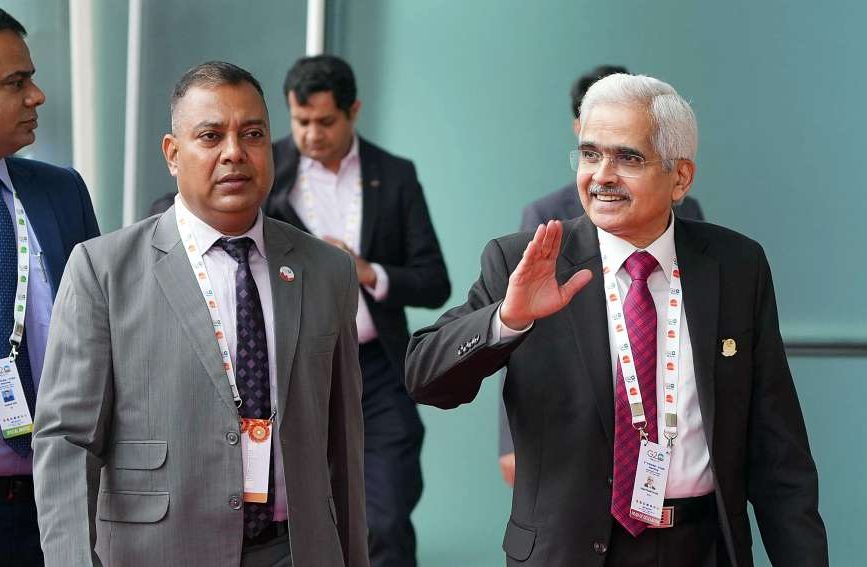
Reserve Bank of India Governor Shaktikanta Das met World Bank President Ajay Banga during the G20 Summit in Gandhinagar, Gujarat and discussed various issues.

Taking to Twitter, the Reserve Bank of India said, “Governor @DasShaktikanta and Ajay Banga, President, @WorldBank met at #Gandhinagar during the #G20summit and held discussions on a range of issues.” Indian-American Ajay Banga, who is in Gandhinagar in Gujarat to attend the third G20 Finance Ministers and Central Bank Governors Meeting, had earlier spoken with ANI on Monday and said that he is more optimistic today about India economically than he has been for a long time and lauded the government’s initiatives towards digitization of infrastructure.

The World Bank President referred to IMF and World Bank predictions about the world getting a little challenging for a year or so and asserted that a forecast is not destiny.

In an interview on the sidelines of the meeting, Banga said digitisation has made it easier for people to access services and he is a “big fan” of it.

“You can’t just do digitization of lending without digitizing the infrastructure. What India has done over the last 15-20 years, is digitising the infrastructure. And that is enabling all these terrific applications to be built, which makes it easier for people to access services online. So I’m a big fan of it,” he said.

“I am more optimistic today about India as a whole, economically, than I have been for a long time,” he added.

Banga is the first person of Indian origin to head either the World Bank or the International Monetary Fund.

“The fact is that the world economy is in a difficult place. It has outperformed what everybody thought. But it does not mean it won’t be more challenging. The IMF forecast, the World Bank forecast is that the world will get a little challenging for a year or so but as I said in my speech this morning, the forecast is not equal to destiny. We can change destiny. And that’s what you should think about,” he added.

The World Bank President also stated that India has enormous opportunities for financing for cities. “…Nobody has ever done enough on everything,” Banga added.

Talking about private sector investment, Banga said that there is no easy answer to private sector capital.

“What I’m trying to do is to set up a private sector investment Lab,” he said.

The Lab is headed by Mark Carney and Shriti Vadera and 15 CEOs have agreed to become a part of it.  The investment lab is co-Chaired by Mark Carney, UN Special Envoy on Climate Action and Finance and Co-Chair of GFANZ, and Shriti Vadera, Chair of Prudential plc.

The Lab will meet regularly and report directly to Ajay Banga and World Bank Group leadership.

Banga said they will meet every month and “they will give us some ideas to help reduce the friction for the private sector to invest in the emerging markets”.

“So I don’t have the answers for you yet. But over the next few months, we will learn more.”

The World Bank last week named 15 Chief Executive Officers and Chairs who will make up the Private Sector Investment Lab.

“The World Bank is on a mission to create a world free of poverty – but on a livable planet. Achieving this vision demands that we build a better bank, but also reimagine partnerships and pull in the private sector to confront – and beat – intertwined development challenges like poverty, climate, and fragility, Banga had said.

“The business leaders who are lending their time, talents, and expertise to this work are a crucial piece of the puzzle, and I am beyond grateful to have them onboard. Results won’t come overnight, but if successful this group has the potential to unlock significant investment that will deliver jobs and better quality of life for people living throughout the Global South – the surest way to drive a nail into the coffin of poverty.”

Banga, a finance and development expert,  took over as World Bank President last month. (ANI)

ALSO READ-Banga calls for greater role for private sector in climate fight

Previous Story

I’m more optimistic today about India, says Banga

Next Story

High-level panel reviews preparations for G20 Summit in September

Previous Story

I’m more optimistic today about India, says Banga

Next Story

High-level panel reviews preparations for G20 Summit in September

Latest from -Top News

Nepal Floods Cause $1.66 Billion In Damage, Says World Bank

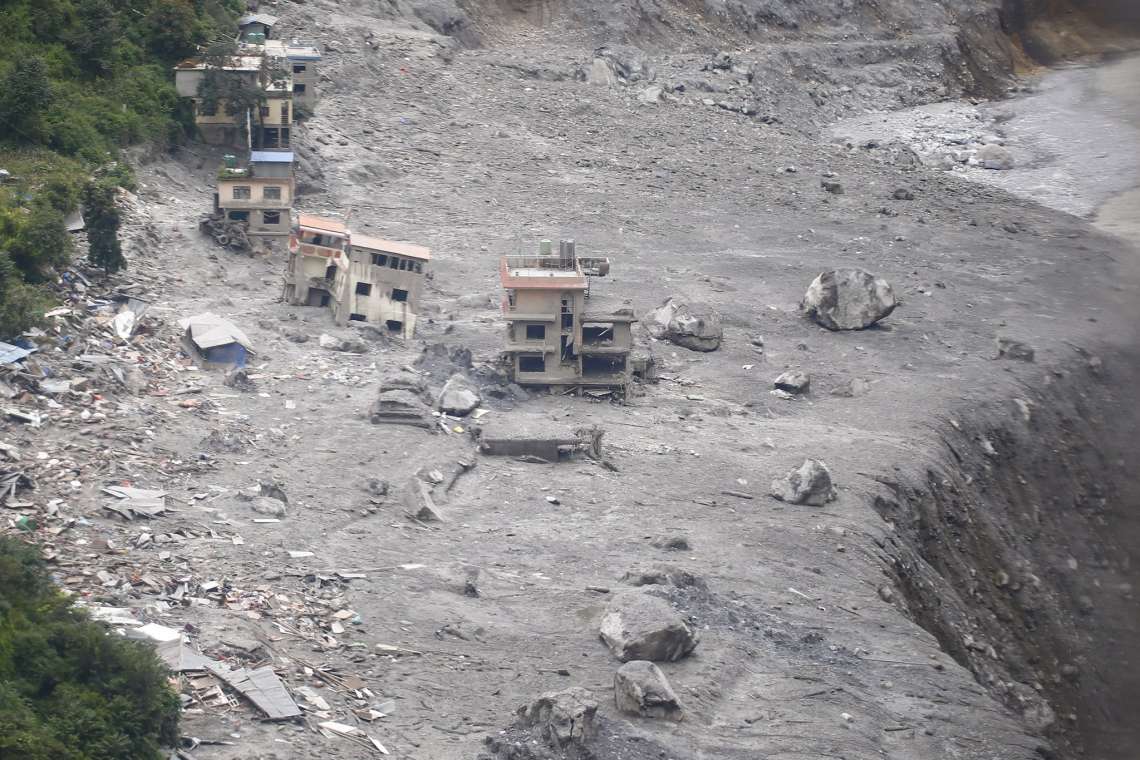
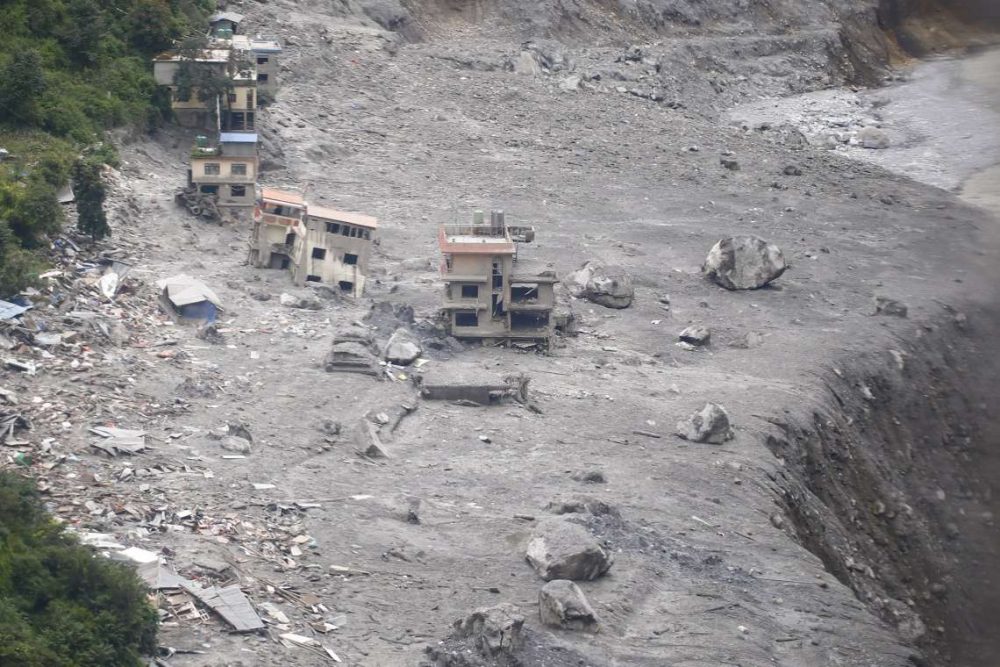
Nepal’s August 2026 floods caused an estimated US$1.66 billion in direct physical damage, with infrastructure accounting for 83 per cent of the total…reports Asian Lite News Desk Nepal’s devastating floods in August 2026 caused an estimated US$1.66 billion in direct physical damage, with infrastructure accounting for 83 per cent of the total, according to a World Bank report. The estimate, included in the World Bank’s Nepal Development Update unveiled this week, is close to the Nepal government’s preliminary Rapid Damage and Needs Assessment (RDNA), which put physical damage at US$1.81 billion. The government’s assessment also estimated losses beyond physical assets at US$883.32 million, taking the total economic effects of the disaster to approximately US$2.7 billion. The World Bank’s Global Rapid Post-Disaster Damage Estimation (GRADE) found that infrastructure suffered the greatest damage, estimated at US$1.38 billion, or 83 per cent of the total. Residential buildings accounted for US$185 million, or 11 per cent, while non-residential buildings sustained damage worth US$101 million, or 6 per cent. The floods along the Bhotekoshi and Trishuli rivers caused extensive damage to hydropower projects, solar energy facilities, electricity transmission infrastructure and transport networks. The energy sector, particularly hydropower, was among the worst affected. The August 2026 floods affected 12 hydropower projects and one solar project, involving 281.1 MW of operational capacity and 395.02 MW of capacity under construction. Damage to transmission lines and substations also disrupted the transmission of 149.6 MW of electricity to the national grid. The total affected capacity reached approximately 430.7 MW, equivalent to 10.6 per cent of Nepal’s installed hydropower and solar capacity at the end of fiscal year 2025-26, which concluded in mid-July. The disaster also severely damaged transport infrastructure along the 82-km Rasuwa trade corridor, which connects Kathmandu with the Rasuwagadhi border point with China. More than 55 km of the corridor was damaged, including 40 km that was completely destroyed. The floods also damaged 37 motorable bridges and 68 suspension bridges. The disaster resulted in significant human losses along the affected corridor and beyond. According to Nepal’s National Disaster Risk Reduction and Management Authority, 1,455 people had been confirmed dead, while 5,285 remained missing following the disaster. The World Bank report found that the physical damage was concentrated in three districts in central Nepal: Rasuwa, Nuwakot and Dhading. Rasuwa was the worst-affected district, accounting for US$1.07 billion, or 64 per cent, of the total direct damage. Nuwakot recorded an estimated US$551 million in damage, while Dhading suffered approximately US$39 million. “The findings highlight the concentration of physical damage in a small number of districts and the disproportionate impact on infrastructure, underscoring the scale of the reconstruction challenge facing the affected areas,” the World Bank said. The global development financier said the floods had demonstrated the scale and complexity of disaster risks in Nepal’s Himalayan environment. The event also showed how a single extreme weather event could trigger cascading impacts across sectors and geographical areas. The report said recovery efforts should extend beyond restoring infrastructure to its pre-disaster condition. While the principle of “Build Back Better” remained relevant, the World Bank stressed that rebuilding infrastructure to higher engineering standards in the same locations might not always be sufficient. “In some cases, simply rebuilding the same infrastructure in the same location to a higher engineering standard may not be sufficient. Nepal may need to build differently — based on a better understanding of risk, more careful decisions about location and design, greater redundancy in critical networks, stronger monitoring and early warning, and a more integrated approach to infrastructure development in the Himalayas,” the report said. The World Bank said Nepal’s recovery strategy should incorporate improved risk assessment, more informed infrastructure planning, stronger monitoring systems and better early warning mechanisms. The report emphasised that reconstruction should not only restore damaged assets but also reduce the impact of future disasters, particularly in the country’s vulnerable Himalayan regions.

Vaccine Delays Fuel Bangladesh Measles Outbreak

More than 32,000 suspected cases and over 250 deaths have been reported since mid-March, with children making up most of the fatalities….reports Asian Lite News Desk Bangladesh’s measles outbreak has intensified, with

Tsai: Stand With Taiwan, Strengthen The Indo-Pacific

The former president said stronger international partnerships would help Taiwan withstand mounting military, cyber and economic pressure while reinforcing democratic resilience….repots Asian Lite News Desk Former Taiwan President Tsai Ing-wen has called
Go toTop

Don't Miss

World Bank President welcomes private sector in climate fight
Ajay Banga, the World Bank’s new President made a pitch

RBI Eyes Status Quo on Rates

According to credit rating agency CARE Ratings, the RBI will