December 10, 2023
3 mins read

Sri Lanka Records $1.8 B Tourism Revenue This Year

Sri Lanka welcomed 151,496 international tourists in November, the highest monthly number of visitors it received in 2023, official data showed…reports Asian Lite News

Sri Lanka recorded $1.8 billion tourism revenue till November this year, 78.3 per cent up from the corresponding period previous year, as per Central Bank of Sri Lanka (CBSL) data.

The revenue earned from tourism increased to 205.3 million dollars in November 2023, which is over twice the revenue in November 2022, according to the latest data.

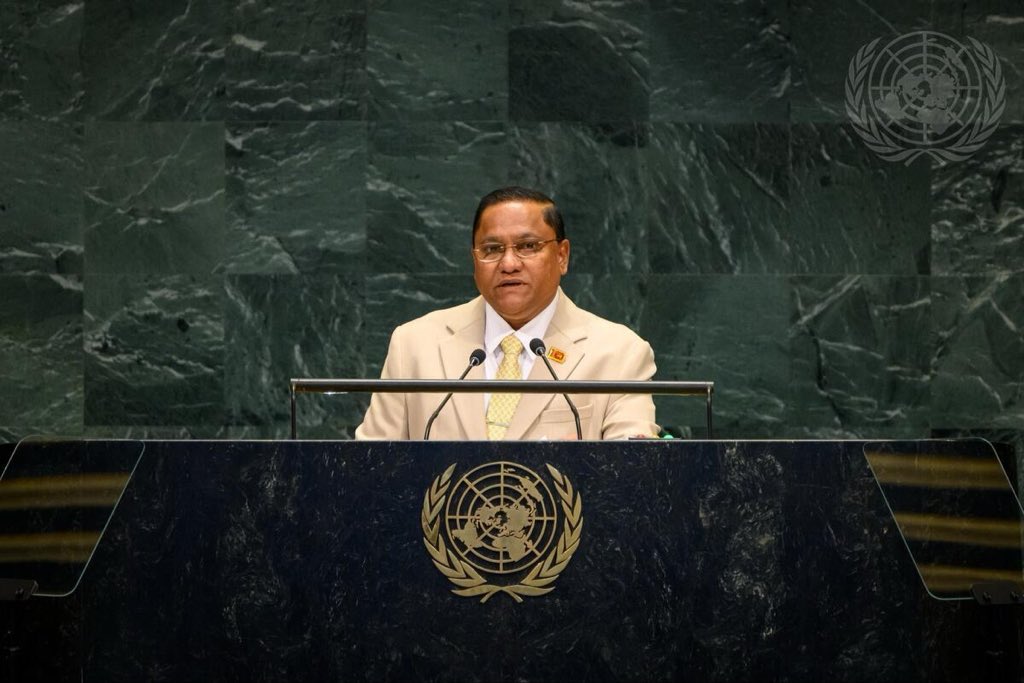
Minister of Foreign Affairs Ali Sabry told parliament on Thursday that the tourist arrivals will spike in 2024 with more airlines coming into the country, Xinhua news agency reported.

Sri Lanka welcomed 151,496 international tourists in November, the highest monthly number of visitors it received in 2023, official data showed.

Sri Lanka’s cumulative tourist arrivals for the first 11 months of the year stand at 1.27 million, according to the Sri Lanka Tourism Development Authority.

Tourism is one of Sri Lanka’s top foreign revenue generators. In late November, the government waived visa fees for nationals from China, India, Indonesia, Russia, Thailand, Malaysia, and Japan to boost tourism in the coming season.

Commission for strengthening national unity

The Sri Lankan government will be establishing an independent commission to develop legislation for strengthening and safeguarding ‘national unity’ through truth, transitional justice, and social cohesion, Colombo Gazette reported.

The island nation has established an interim secretariat for truth and reconciliation and its key objective is to look into the reconciliation efforts of the country’s past conflicts.

The Interim Secretariat for Truth and Reconciliation Mechanism (ISTRM) is working to build the necessary legal and policy framework, operational procedures and guidelines for the Commission, Colombo Gazette reported.

The Sri Lankan government has decided to establish an independent Commission for Truth, Unity and Reconciliation.

“The proposed commission will be established through an Act of Parliament, currently in the drafting process as a concept paper in consultation with relevant stakeholders. The concept paper, used to prepare the final draft of the Bill for Parliament, will soon be available for comments to ensure an inclusive process in developing legislation that strengthens and safeguards national unity through truth, transitional justice, reconciliation, reparation and social cohesion,” the statement read.

According to the Colombo Gazette, a key objective of this process is to establish the truth regarding post-conflict grievances of Sri Lankan citizens, facilitating reconciliation, reparation and sustainable peace.

The proposed Commission acknowledges every Sri Lankan’s inalienable right to ascertain the truth, a pivotal aspect for individuals and communities to heal from past conflicts.

Additionally, the Commission also aims to ensure and strengthen national unity, peace, the rule of law, coexistence, equality, tolerance, respect for diversity and reconciliation among the Sri Lankan people.

This commitment extends to preventing any “recurrence of disharmony and future conflict” between the multi-ethnic and diverse communities.

The Commission is expected to review, consider and facilitate the implementation of recommendations made by past Commissions related to Sri Lanka’s post-conflict reconciliation efforts, including the Lessons Learnt and Reconciliation Commission (LLRC), Colombo Gazette reported.

Findings from the Consultation Task Force on Reconciliation Mechanisms, established in 2006 by the Government of Sri Lanka, will also be considered.

“The Sri Lankan government is committed to ensuring that the proposed independent Commission acts impartially, free from any political influence. With a victim-centric ethos, the proposed Commission will be a sanctuary for voices to be heard, pain to be acknowledged and dignity to be reclaimed, providing closure to victims and paving the path for national unity and social cohesion,” the statement read.

Pending the enactment of the proposed new law, the Government has initiated the establishment of an interim body, the Interim Secretariat for Truth and Reconciliation Mechanism (ISTRM).

The ISTRM is working to build the necessary legal and policy framework, operational procedures and guidelines for the Commission. The objective of the ISTRM is to lay the foundation for a home-grown solution for truth, reconciliation and national unity.

The interim body is currently engaging with the public and stakeholders to ensure the Commission is built with their participation and consultation, shaping this transformative mechanism and ultimately paving the way for sustainable peace and national unity, Colombo Gazette reported. (IANS/ANI)

ALSO READ-Lanka Gears Up for FAO Conference
Previous Story

Gilgit Baltistan Grapples With Prolonged Blackouts

Next Story

Next Year’s FAO Conference to be Hosted by Sri Lanka

Previous Story

Gilgit Baltistan Grapples With Prolonged Blackouts

Next Story

Next Year’s FAO Conference to be Hosted by Sri Lanka

Latest from -Top News

Pakistan Risks Overstretching Itself in Yemen War

Pakistan’s expanding military role in Saudi Arabia amid the Yemen conflict could strain its defence resources and fragile finances…reports Asian Lite News Desk Pakistan’s military involvement in the war in Yemen may prove unsustainable because of mounting financial pressures and competing security demands, according to a new report. Islamabad’s growing military presence in Saudi Arabia risks stretching its defence resources while exposing the country to greater strategic and economic challenges. An article by Andrew Wilson in One World Outlook describes Pakistan’s involvement as a case of “fiscal and strategic overreach”, arguing that the country lacks the financial flexibility to sustain an expanded military commitment. Pakistan’s external finances depend heavily on an International Monetary Fund (IMF) programme, financial support from Gulf countries and remittances from Pakistani workers in the region. The report argues that deeper military involvement in the conflict could place additional pressure on these sources of financial stability. It also warns that deploying troops and military equipment abroad could weaken Pakistan’s capacity to address security challenges along its eastern border and deal with two domestic insurgencies. The move could also draw Islamabad into a conflict it has sought to approach cautiously. A Reuters report in May, citing Pakistani security and government sources, said Islamabad had deployed around 8,000 troops, a squadron of approximately 16 aircraft, mostly JF-17 fighter jets, two drone squadrons and a Chinese HQ-9 air-defence battery to Saudi Arabia. According to those sources, Riyadh was financing the deployment, with Pakistani personnel operating the equipment. The sources also said a confidential agreement contemplated the possibility of deploying up to 80,000 troops. Islamabad has not confirmed those figures, although it has acknowledged its military presence in Saudi Arabia, including the deployment of fighter jets at King Abdulaziz Air Base from April. The One World Outlook article argues that Saudi financial support can cover allowances and operating expenses but cannot easily replace military equipment needed elsewhere or resolve the political and strategic challenges of participating in the Yemen conflict. Pakistan’s defence budget is another concern. For the 2026-27 financial year, the federal government allocated PKR 3 trillion, or approximately $10.8 billion, to defence services. The allocation represents an 18 per cent increase from the original PKR 2.55 trillion provision and amounts to around 2.1 per cent of projected gross domestic product (GDP). Defence spending accounts for approximately 16 per cent of the federal government’s PKR 18.8 trillion expenditure. Military pensions are budgeted separately at PKR 822 billion, while debt servicing costs stand at approximately PKR 8 trillion, more than two-and-a-half times the defence allocation. The report argues that these competing financial obligations leave little room for additional military expenditure without placing further pressure on public finances. Pakistan’s reliance on IMF assistance also limits its fiscal flexibility. The country must meet the conditions attached to the programme, including a primary budget surplus target of 2 per cent of GDP and continued restraint on development spending. According to the article, these requirements make it difficult for Islamabad to finance an additional military commitment without compromising other budgetary priorities. Pakistan’s economic indicators offer limited reassurance. Economic growth for the 2025-26 financial year is estimated at between 3.6 and 3.7 per cent, while inflation reached approximately 10.3 per cent in September following an energy price shock. Foreign exchange reserves stood at around $21.5 billion at the end of September. Although this marks an improvement from the low levels recorded in 2023, the report notes that the reserves cover only a few months of imports. Financial assistance from Gulf partners remains central to Pakistan’s external stability. The article says Islamabad holds approximately $8 billion in Saudi deposits at its central bank. In July, the State Bank of Pakistan said Riyadh had extended the maturity of $5 billion in deposits to December 2028, easing the country’s immediate external financing requirements. A further $3 billion deposit was also extended in the spring. However, the article argues that these arrangements provide temporary relief rather than long-term financial independence, particularly as regional conflict threatens the stability of the Gulf economies on which Pakistan relies. The report concludes that Pakistan faces a difficult balance between supporting Saudi Arabia militarily and preserving the financial and military resources needed to address its domestic and regional challenges.

UK and Germany Ratify Kensington Treaty

Britain and Germany ratify the Kensington Treaty, agreeing new cooperation on AI, quantum research, defence and security while targeting investment, jobs and Russian hybrid threats…reports Asian Lite News Desk Britain and Germany

Economic tide is turning in Bangladesh

If there is one thing that can bring some comfort to the struggling Bangladeshi economy, it is good relations with India. Bangladesh should remember that Delhi’s backing, through easy supplies of essentials
Go toTop

Don't Miss

Lankan inflation hit 70.2 in August

Official figures released earlier this month had revealed that the

Sri Lanka’s key Tamil party to pick presidential nominee on Sunday

Sri Lanka is currently gearing up for the crucial Presidential