Besides China, no other country has so far landed on the far side of the Moon….reports Asian Lite News
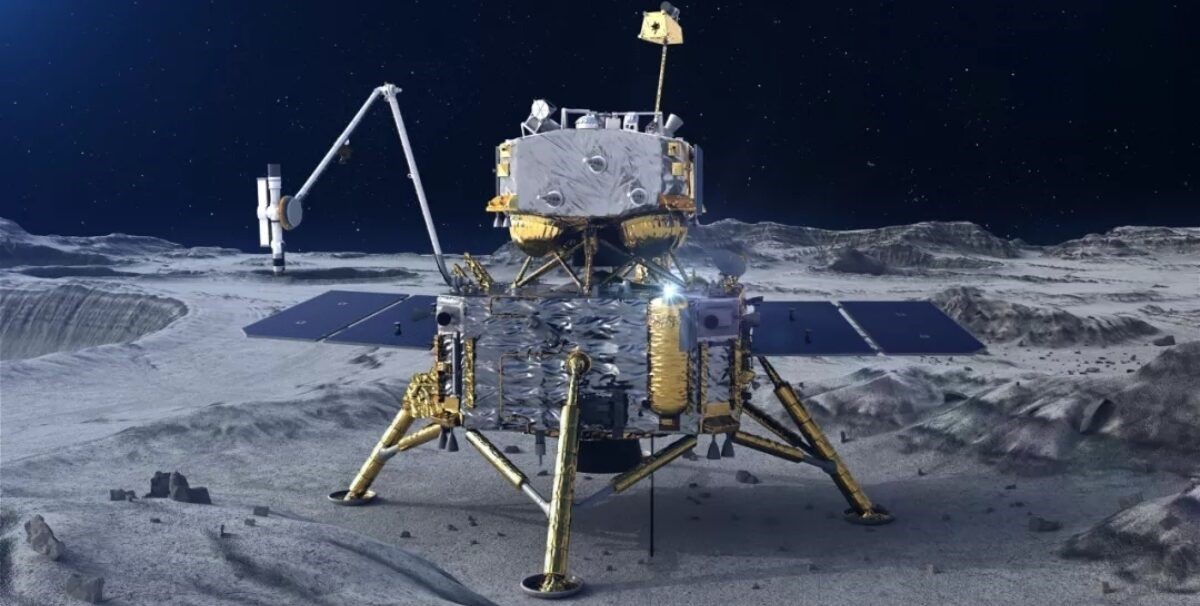
China is expected to launch its next lunar sample-return mission, Chang’e-6, planned to the far side of the Moon, in May, according to a media report.
The China Central Television (CCTV) reported that to make the spacecraft ready for launch, engineers working on China’s Chang’e-6 mission have foregone family reunions over the Lunar New Year or Spring Festival.
“We must ensure that the probe is in good condition, and each step we take is quality guaranteed,” Zhang Yang, managing engineer of Chang’e-6, was quoted as saying.
“This is the first time that I am not celebrating the Spring Festival with my family, and I wish all my family members good health in the Year of the Dragon,” Zhu Rongkuan, a young engineer on the team, was quoted as saying.
During the 53-day-long mission, the lander will seek to touch down in the Apollo basin on the far side of the moon and collect up to 2 kg of lunar materials using a scoop and a drill.
Besides China, no other country has so far landed on the far side of the Moon.
The far side of the Moon, which cannot be seen from Earth, is covered in craters, but unlike the near side is not dominated by large lunar mare, or darker imprints of ancient lava flows.
The country’s Chang’e-5 lunar probe went on to become the first to land on the “far” side of the Moon in 2019.
In December 2020, Chang’e-5 lunar probe brought back 1,731 grams of samples from the Moon, marking China’s first successful extraterrestrial sampling and return, and the completion of its three-step lunar exploration programme.
China is also planning the Chang’e-7 probe around 2026 to implement resource exploration of the lunar south pole, and to construct a permanent lunar base in the 2030s.
For this, it has roped in nations like Russia, Belarus, Pakistan, Azerbaijan, Venezuela and South Africa.
It is in direct competition with the NASA-led Artemis Programme, which aims to place astronauts on the lunar surface by 2030, and has the support of 29 nations to date, including India, Australia, Brazil, Canada, France, Germany, Japan, South Korea and the UK.
ALSO READ: Guterres calls for global order that works for everyone