July 9, 2024
3 mins read

DMCC briefs WTO on Future of Trade Report

The report outlined how a new era of global regionalisation will lead businesses to restructure their supply chains amid escalating geopolitical tensions…reports Asian Lite News

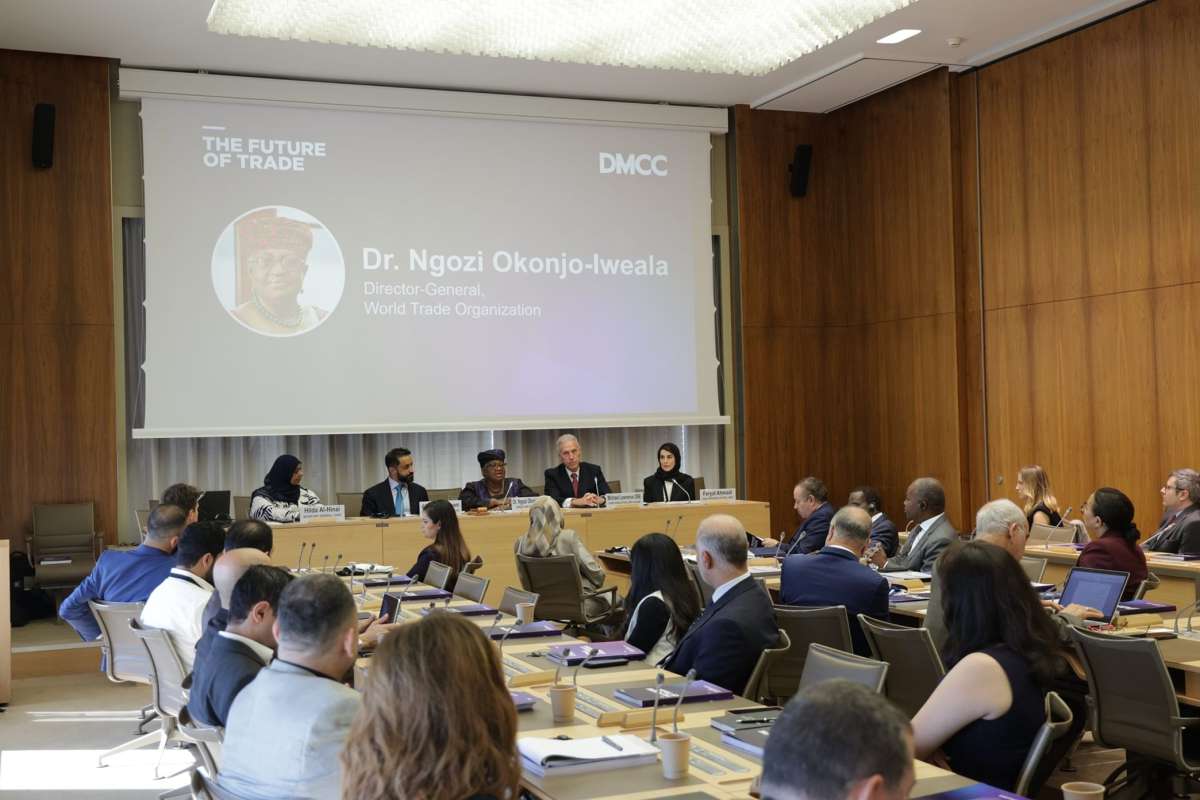
DMCC – the world’s flagship free zone and Government of Dubai Authority on commodities trade and enterprise – briefed a select group of trade experts on its latest Future of Trade 2024 report at an event held at the World Trade Organisation headquarters in Geneva, Switzerland.

The briefing featured high-level officials and regulators including WTO Director-General Dr. Ngozi Okonjo-Iweala.

The report outlined how a new era of global regionalisation will lead businesses to restructure their supply chains amid escalating geopolitical tensions, conflicts, climate change, economic nationalism and trade protectionism. There will be opportunities to diversify export markets and sourcing networks.

DMCC recognised the role of the WTO in providing the open and stable global trading environment required to capitalise on new trade opportunities, and called on the WTO to provide leadership and innovation to meet new challenges to international trade. In particular, the rapid advances of technology such as AI and environmental goods trade to facilitate the green transition will present economic opportunities. In that regard, the WTO is needed to facilitate global consensus and standards to ensure trade resilience.

Addressing delegates, Ahmed Bin Sulayem, Executive Chairman and Chief Executive Officer, DMCC, said, “Since joining the WTO almost thirty years ago, the UAE’s relationship has developed from one of integration to participation, and now, one of leadership and influence. Through the adoption of the WTO’s Trade Facilitation Agreement, the WTO’s framework has played a strategic role in Dubai’s emergence as a global trade hub and a centre for finance, tourism and logistics, and therefore features prominently in our 2024 Future of Trade report. With over 75 percent of the global goods trade made directly on WTO terms, the world depends on an efficient WTO to ensure a fair trade landscape, especially as businesses contend with new disruptive forces like AI and climate change. Combined with the UAE’s growing Comprehensive Economic Partnership Agreements (CEPAs), DMCC looks forward to continuing its engagement with the WTO and supporting greater global trade facilitation.”

Ngozi Okonjo-Iweala, Director-General of the WTO, said, “The Future of Trade report rightly highlights that amid all the challenges facing global trade in the decade ahead, there are also opportunities. Trade can deliver benefits to people and places that missed out on the recent wave of globalisation. It can be an even stronger force for decarbonising our economies; and for making supply chains more diversified and hence more resilient in our increasingly shock-prone world. At the WTO, we are working and reforming to build the enabling environment for seizing these opportunities. Recent successes with multilateral agreements and decisions at our 12th and 13th Ministerial Meetings provide the underpinnings needed by members to capitalise on emerging opportunities”.

Feryal Ahmadi, Chief Operating Officer, DMCC, added, “DMCC is delighted to be at the WTO in Geneva to present our Future of Trade 2024 report. During this period of profound change, it is essential that businesses, governments and regulators work together to harmonise standards and ensure innovative regulatory frameworks for today’s trade challenges. Here we believe the WTO has a key role to play in promoting and maintaining global trade stability, thereby sustaining trade resilience and economic growth in the long term.”

As part of the Future of Trade’s Commodities Trade Index, Switzerland rose to third place for the first time since the index was established in 2018. Switzerland scored strongly on its locational and institutional advantages, signalling its status as one of the most important players in the global commodities trade landscape. As major trade hubs, DMCC highlighted the growing interconnectivity of Switzerland and UAE across goods and services as key for ensuring future economic growth.

The Future of Trade is the flagship thought leadership report series from DMCC on the changing nature of global trade. The report examines the impact of global economic trends, geopolitics, technology, sustainability and finance on the future of the trade landscape. The report series has been viewed and downloaded over 1.9 million times to date, underscoring DMCC’s growing recognition as a leading voice on international trade.

ALSO READ: UAE Embassy in Paris hosts 10th edition of Majlon
Previous Story

Etihad doubles down on North America

Next Story

Zelensky slams Modi’s Moscow visit

Previous Story

Etihad doubles down on North America

Next Story

Zelensky slams Modi’s Moscow visit

Latest from -Top News

Pakistan Risks Overstretching Itself in Yemen War

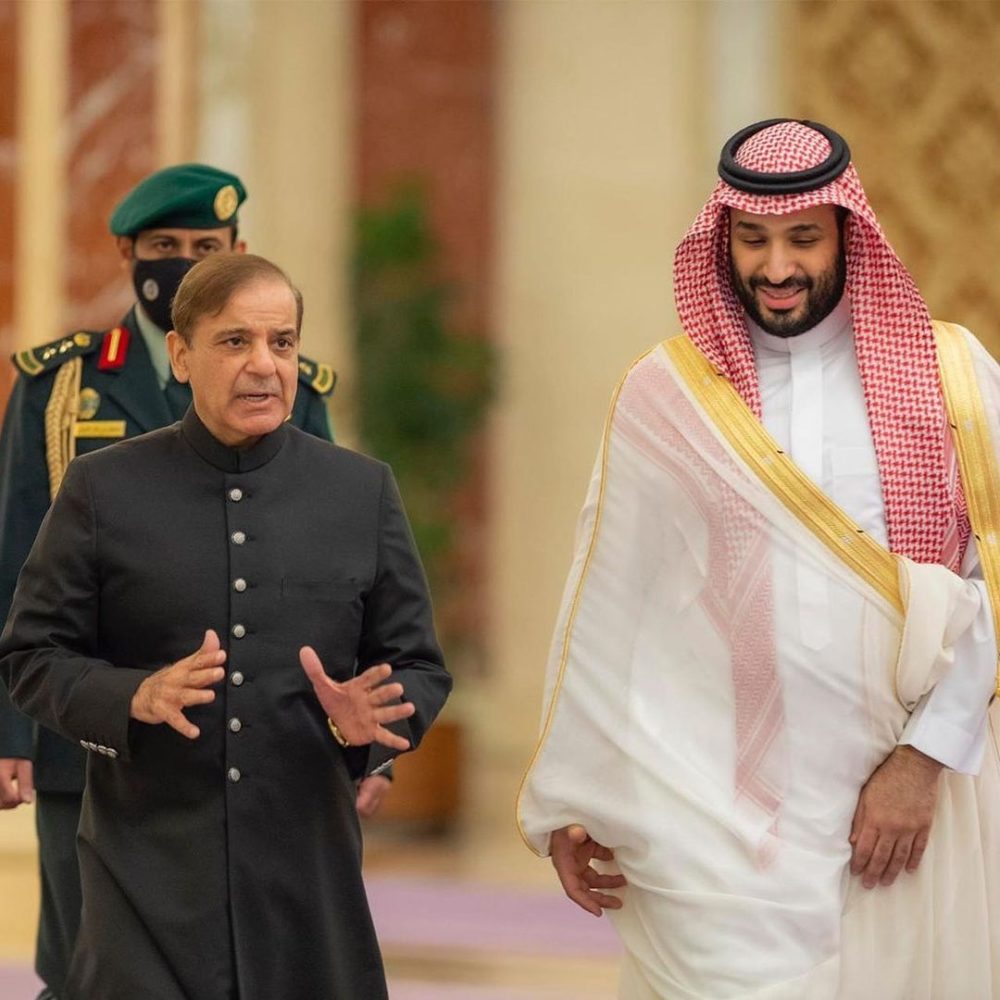
Pakistan’s expanding military role in Saudi Arabia amid the Yemen conflict could strain its defence resources and fragile finances…reports Asian Lite News Desk Pakistan’s military involvement in the war in Yemen may prove unsustainable because of mounting financial pressures and competing security demands, according to a new report. Islamabad’s growing military presence in Saudi Arabia risks stretching its defence resources while exposing the country to greater strategic and economic challenges. An article by Andrew Wilson in One World Outlook describes Pakistan’s involvement as a case of “fiscal and strategic overreach”, arguing that the country lacks the financial flexibility to sustain an expanded military commitment. Pakistan’s external finances depend heavily on an International Monetary Fund (IMF) programme, financial support from Gulf countries and remittances from Pakistani workers in the region. The report argues that deeper military involvement in the conflict could place additional pressure on these sources of financial stability. It also warns that deploying troops and military equipment abroad could weaken Pakistan’s capacity to address security challenges along its eastern border and deal with two domestic insurgencies. The move could also draw Islamabad into a conflict it has sought to approach cautiously. A Reuters report in May, citing Pakistani security and government sources, said Islamabad had deployed around 8,000 troops, a squadron of approximately 16 aircraft, mostly JF-17 fighter jets, two drone squadrons and a Chinese HQ-9 air-defence battery to Saudi Arabia. According to those sources, Riyadh was financing the deployment, with Pakistani personnel operating the equipment. The sources also said a confidential agreement contemplated the possibility of deploying up to 80,000 troops. Islamabad has not confirmed those figures, although it has acknowledged its military presence in Saudi Arabia, including the deployment of fighter jets at King Abdulaziz Air Base from April. The One World Outlook article argues that Saudi financial support can cover allowances and operating expenses but cannot easily replace military equipment needed elsewhere or resolve the political and strategic challenges of participating in the Yemen conflict. Pakistan’s defence budget is another concern. For the 2026-27 financial year, the federal government allocated PKR 3 trillion, or approximately $10.8 billion, to defence services. The allocation represents an 18 per cent increase from the original PKR 2.55 trillion provision and amounts to around 2.1 per cent of projected gross domestic product (GDP). Defence spending accounts for approximately 16 per cent of the federal government’s PKR 18.8 trillion expenditure. Military pensions are budgeted separately at PKR 822 billion, while debt servicing costs stand at approximately PKR 8 trillion, more than two-and-a-half times the defence allocation. The report argues that these competing financial obligations leave little room for additional military expenditure without placing further pressure on public finances. Pakistan’s reliance on IMF assistance also limits its fiscal flexibility. The country must meet the conditions attached to the programme, including a primary budget surplus target of 2 per cent of GDP and continued restraint on development spending. According to the article, these requirements make it difficult for Islamabad to finance an additional military commitment without compromising other budgetary priorities. Pakistan’s economic indicators offer limited reassurance. Economic growth for the 2025-26 financial year is estimated at between 3.6 and 3.7 per cent, while inflation reached approximately 10.3 per cent in September following an energy price shock. Foreign exchange reserves stood at around $21.5 billion at the end of September. Although this marks an improvement from the low levels recorded in 2023, the report notes that the reserves cover only a few months of imports. Financial assistance from Gulf partners remains central to Pakistan’s external stability. The article says Islamabad holds approximately $8 billion in Saudi deposits at its central bank. In July, the State Bank of Pakistan said Riyadh had extended the maturity of $5 billion in deposits to December 2028, easing the country’s immediate external financing requirements. A further $3 billion deposit was also extended in the spring. However, the article argues that these arrangements provide temporary relief rather than long-term financial independence, particularly as regional conflict threatens the stability of the Gulf economies on which Pakistan relies. The report concludes that Pakistan faces a difficult balance between supporting Saudi Arabia militarily and preserving the financial and military resources needed to address its domestic and regional challenges.
Go toTop

Don't Miss

UAE to raise budget spending by Dh1.23b

Federal National Council (FNC) said the UAE’s revenue estimates for

BR Shetty’s travel ban upheld in Indian court

Shetty and his business empire have been embroiled in alleged