January 15, 2024
4 mins read

Thousands march in London for Gaza ‘day of action’

Around 1,700 police were on duty for the march, the latest in a series of demonstrations that have been held in London most Saturdays since the Israel-Hamas war began last year…reports Asian Lite News

Hundreds of thousands of pro-Palestine protesters marched in central London on Saturday as part of a global day of action to oppose Israel’s bombing campaign in Gaza.

The day was organized by a coalition including the Friends of Al-Aqsa, Palestinian Forum in Britain, Stop the War Coalition, Campaign for Nuclear Disarmament, Palestine Solidarity Campaign and Muslim Association of Britain.

Around 1,700 police were on duty for the march, the latest in a series of demonstrations which have been held in London most Saturdays since the Israel-Hamas war began last year.

“The call of Jan. 13 designated by peace activists as a global day of action for Gaza has already attracted 40 countries organizing protests,” said Ismail Patel, chairman of the Friends of Al-Aqsa. He added Saturday was significant because it was the “eve of 100 days since the present crisis faced by the Palestinians. It is also a day after the International Court of Justice will deliver an interim order on the case brought by South Africa against Israel.”

The international court concluded two days of hearings on Friday. The proceedings by the South African government are also endorsed by other nations.

“With Israel continuing with its slaughter of Palestinians and most of the world’s governments remaining passive, peace activists are urging civil society to demand an immediate ceasefire and an end to occupation,” Patel said. “It is up to the people of the world to guide the political leaders and help end the genocide in Gaza.”

In a joint statement, the organizing coalition said: “Israel’s unrelenting attacks bear all the hallmarks of genocide under international law, as they demonstrate an ‘intent to destroy, in whole or in part, a national, ethnical, racial or religious group’.”

PSC director Ben Jamal said: “The world needs to charge Israel with the gravest of crimes —  genocide — not just in the International Court of Justice, but in the court of global public opinion.

“In the face of the failure of governments, including the UK, to act to uphold international law and defend fundamental human rights, people continue to take to the streets to protest, week after week (and) this Saturday, from Australia to South America, from Dhaka to Washington, people of conscience will show the world demands a full ceasefire and an end to Israel’s impunity from international law,” he added.

Jamal said London was at the forefront of these global protests, attracting hundreds of thousands of solidarity campaigners “despite government hostility and opposition indifference.”

He said the national march continued to “show the majority of British people stand with Palestinians in this dark hour of their decades of oppression.”

He added: “A permanent ceasefire must be the starting point to address the underlying causes, including Israeli military occupation and a system of oppression against the Palestinian people that is considered internationally to meet the legal definition of apartheid. We will continue to march, demonstrate and organize to demand justice for the Palestinian people.”

“Little Amal,” a giant puppet of a refugee child that has become a global symbol of human rights, joined the seventh demonstration on Saturday, accompanied by a group of Palestinian children.

“Little Amal is a global symbol of human rights and the rights of children in particular. The name Amal means ‘hope’ in Arabic,” said a PSC spokesman.

“She represents a nine-year-old Syrian refugee girl who travels alone across Europe to find her mother (and) was created in 2021 for a project in which she walked between the Syrian-Turkiye border and the UK to draw attention to the experience of refugees. Since then she has traveled the world and met millions of people.”

Palestinian Amir Nizar Zuabi, artistic director of The Walk Productions, said: “Amal has become a symbol of the vulnerability and resilience of the millions of people that met her or followed her journey.”

He said the 12-foot puppet “walks for those most vulnerable and for their bravery and resilience,” adding: “Amal is a child and a refugee and today in Gaza childhood is under attack, with an unfathomable number of children killed. Childhood itself is being targeted. That’s why we walk.”

Israel’s bombardment of the Gaza Strip has claimed the lives of more than 23,000 Palestinians, including more than 10,000 children. Thousands more are missing or presumed dead. Almost all of Gaza’s population has been displaced, with more than 60 percent of buildings damaged or destroyed. The UN has warned one in four people in Gaza are starving as Israel refuses to allow in adequate supplies and destroys food infrastructure.

The day of action involved over 40 countries across six continents, including the UK, US, Canada, France, Germany, Switzerland, Denmark, South Africa, Nigeria, Ghana, Japan, Indonesia, South Korea, Australia, Brazil, Jordan, and Turkey.

ALSO READ-India-born Banker Eyes Greener London in 2024 Mayoral Bid

Previous Story

Jaiswal, Dube Spark India’s Win Against Afghanistan

Next Story

Allegations of discrimination against British Airways

Previous Story

Jaiswal, Dube Spark India’s Win Against Afghanistan

Next Story

Allegations of discrimination against British Airways

Latest from -Top News

Pakistan Risks Overstretching Itself in Yemen War

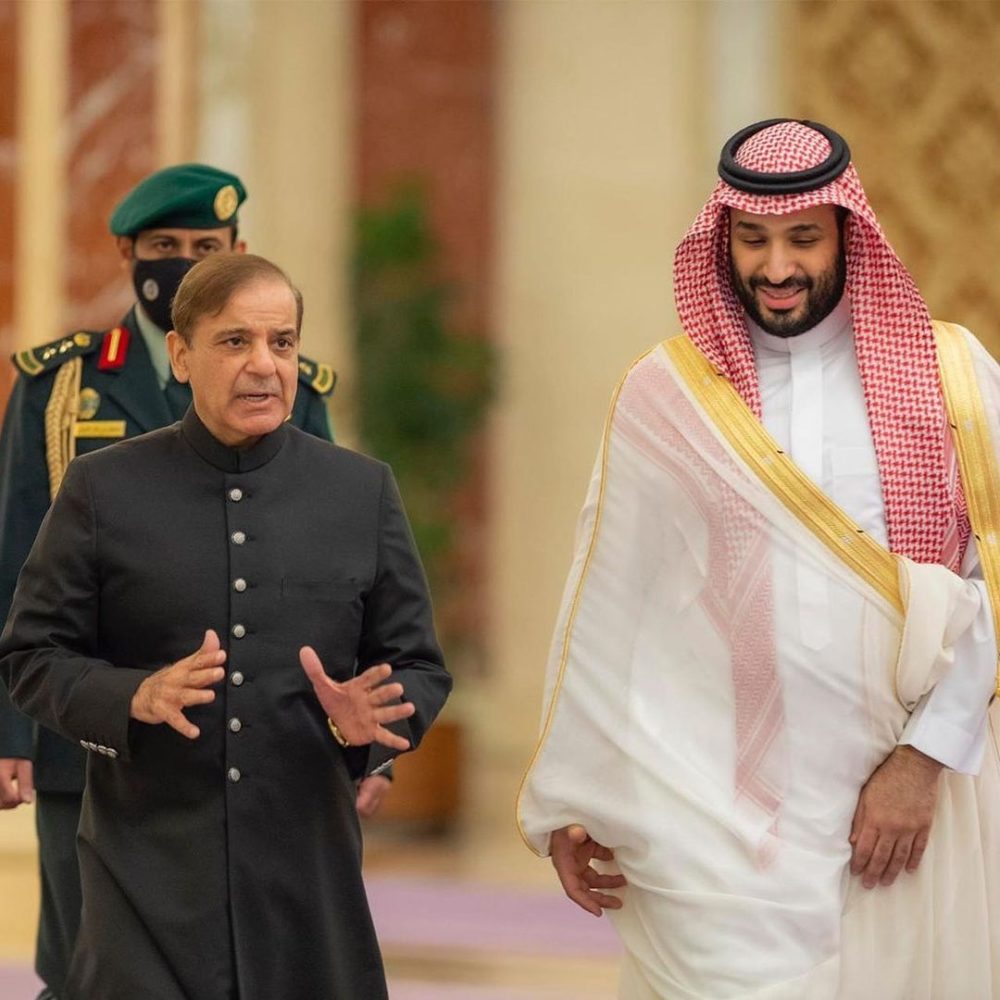
Pakistan’s expanding military role in Saudi Arabia amid the Yemen conflict could strain its defence resources and fragile finances…reports Asian Lite News Desk Pakistan’s military involvement in the war in Yemen may prove unsustainable because of mounting financial pressures and competing security demands, according to a new report. Islamabad’s growing military presence in Saudi Arabia risks stretching its defence resources while exposing the country to greater strategic and economic challenges. An article by Andrew Wilson in One World Outlook describes Pakistan’s involvement as a case of “fiscal and strategic overreach”, arguing that the country lacks the financial flexibility to sustain an expanded military commitment. Pakistan’s external finances depend heavily on an International Monetary Fund (IMF) programme, financial support from Gulf countries and remittances from Pakistani workers in the region. The report argues that deeper military involvement in the conflict could place additional pressure on these sources of financial stability. It also warns that deploying troops and military equipment abroad could weaken Pakistan’s capacity to address security challenges along its eastern border and deal with two domestic insurgencies. The move could also draw Islamabad into a conflict it has sought to approach cautiously. A Reuters report in May, citing Pakistani security and government sources, said Islamabad had deployed around 8,000 troops, a squadron of approximately 16 aircraft, mostly JF-17 fighter jets, two drone squadrons and a Chinese HQ-9 air-defence battery to Saudi Arabia. According to those sources, Riyadh was financing the deployment, with Pakistani personnel operating the equipment. The sources also said a confidential agreement contemplated the possibility of deploying up to 80,000 troops. Islamabad has not confirmed those figures, although it has acknowledged its military presence in Saudi Arabia, including the deployment of fighter jets at King Abdulaziz Air Base from April. The One World Outlook article argues that Saudi financial support can cover allowances and operating expenses but cannot easily replace military equipment needed elsewhere or resolve the political and strategic challenges of participating in the Yemen conflict. Pakistan’s defence budget is another concern. For the 2026-27 financial year, the federal government allocated PKR 3 trillion, or approximately $10.8 billion, to defence services. The allocation represents an 18 per cent increase from the original PKR 2.55 trillion provision and amounts to around 2.1 per cent of projected gross domestic product (GDP). Defence spending accounts for approximately 16 per cent of the federal government’s PKR 18.8 trillion expenditure. Military pensions are budgeted separately at PKR 822 billion, while debt servicing costs stand at approximately PKR 8 trillion, more than two-and-a-half times the defence allocation. The report argues that these competing financial obligations leave little room for additional military expenditure without placing further pressure on public finances. Pakistan’s reliance on IMF assistance also limits its fiscal flexibility. The country must meet the conditions attached to the programme, including a primary budget surplus target of 2 per cent of GDP and continued restraint on development spending. According to the article, these requirements make it difficult for Islamabad to finance an additional military commitment without compromising other budgetary priorities. Pakistan’s economic indicators offer limited reassurance. Economic growth for the 2025-26 financial year is estimated at between 3.6 and 3.7 per cent, while inflation reached approximately 10.3 per cent in September following an energy price shock. Foreign exchange reserves stood at around $21.5 billion at the end of September. Although this marks an improvement from the low levels recorded in 2023, the report notes that the reserves cover only a few months of imports. Financial assistance from Gulf partners remains central to Pakistan’s external stability. The article says Islamabad holds approximately $8 billion in Saudi deposits at its central bank. In July, the State Bank of Pakistan said Riyadh had extended the maturity of $5 billion in deposits to December 2028, easing the country’s immediate external financing requirements. A further $3 billion deposit was also extended in the spring. However, the article argues that these arrangements provide temporary relief rather than long-term financial independence, particularly as regional conflict threatens the stability of the Gulf economies on which Pakistan relies. The report concludes that Pakistan faces a difficult balance between supporting Saudi Arabia militarily and preserving the financial and military resources needed to address its domestic and regional challenges.

UK and Germany Ratify Kensington Treaty

Britain and Germany ratify the Kensington Treaty, agreeing new cooperation on AI, quantum research, defence and security while targeting investment, jobs and Russian hybrid threats…reports Asian Lite News Desk Britain and Germany

Economic tide is turning in Bangladesh

If there is one thing that can bring some comfort to the struggling Bangladeshi economy, it is good relations with India. Bangladesh should remember that Delhi’s backing, through easy supplies of essentials
Go toTop

Don't Miss

Khan, Mamdani Bond Over Trump

London Mayor Sadiq Khan has said he has exchanged messages

US pullback on Gaza plan welcomed 

The Hamas movement also responded positively, stating that the reversal