May 20, 2024
3 mins read

UNRWA: Nearly 800,000 now displaced from Rafah

Following evacuation orders demanding people to flee to so-called safe zones, people mainly went to the middle areas in Gaza and Khan Younis, including to destroyed buildings, according to UNRWA…reports Asian Lite News

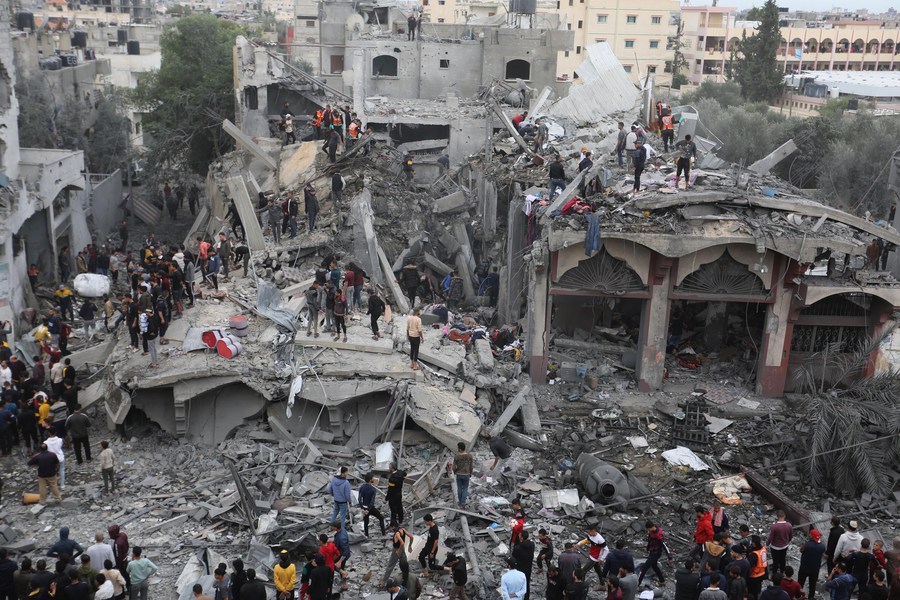
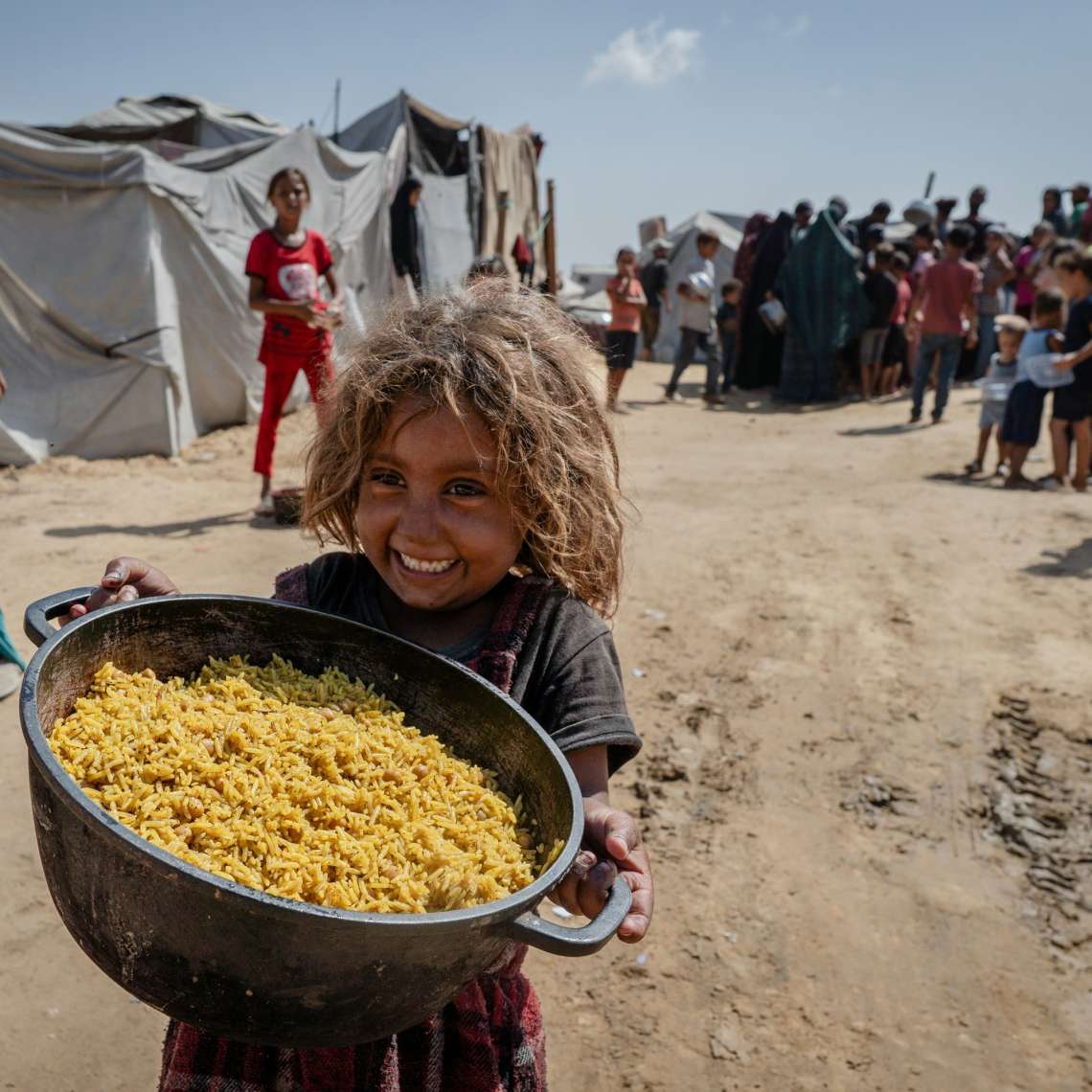
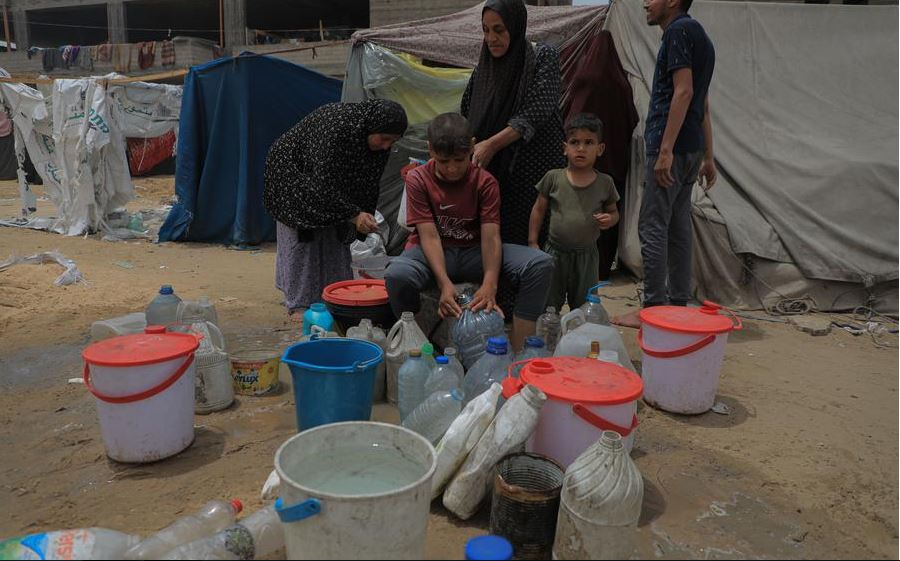
Roughly 800,000 people have been forced to flee Rafah since Israel launched a military operation in the area on 6 May, the head of UN Palestine refugee agency UNRWA said on Saturday in a renewed appeal for greater protection of civilians in Gaza, safe humanitarian access and, ultimately, a ceasefire.

“Once again, nearly half of the population of Rafah or 800,000 people are on the road,” Commissioner-General Philippe Lazzarini wrote in post on the social media platform X. formerly Twitter.

He said that following evacuation orders demanding people to flee to so-called safe zones, people mainly went to the middle areas in Gaza and Khan Younis, including to destroyed buildings.

“The claim that people in Gaza can move to ‘safe’ or ‘humanitarian’ zones is false. Each time, it puts the lives of civilians at serious risk,” Lazzarini stated.

“Gaza does not have any safe zones,” he added. “No place is safe. No one is safe.”

False accusations against UNRWA: Jordan

Jordan’s Foreign Minister Ayman Safadi has said that anyone claiming the situation in the Gaza Strip is improving is not telling the truth, and accusations against the UN Relief and Works Agency for Palestine Refugees (UNRWA) have been proven false.

He made the remarks at a joint press conference in Amman with UNRWA Commissioner-General Philippe Lazzarini, during which he said on Sunday that UNRWA is fulfilling its duty in the Palestinian enclave despite the circumstances of the Gaza conflict, Xinhua news agency reported.

Safadi confirmed that Jordan continues to stand by UNRWA, the role of which cannot be dispensed with or replaced by any other entity, according to a statement by the Jordanian Foreign Ministry.

He stressed that the investigation conducted by an independent committee confirmed that UNRWA has all the tools to ensure that its actions adhere to all principles, ethics, and charters of the United Nations.

“The accusations have been proven false and the attempt to politically assassinate UNRWA has failed,” said Safadi.

For his part, Lazzarini thanked Jordan for its support for the agency and its solidarity with Palestinian refugees.

Lazzarini stressed that despite all the international community’s calls, Israel invaded and attacked the southernmost Gaza city of Rafah on May 6, with half of Gaza’s population forced to flee.

He pointed out that the two main crossings in the south, Rafah Crossing, and Kerem Shalom Crossing, have turned into conflict zones, and there are currently no crossings to transport aid across the borders.

Lazzarini noted that “198 UNRWA employees were killed, 160 sites were completely or partially destroyed, and employees were arrested, tortured, and forced to confess to crimes they did not commit”.

Egypt demands opening of all Israeli crossings for aid

Egyptian Foreign Minister Sameh Shoukry stressed on Friday the need for Israel to open all land crossings between Israel and the Gaza Strip for full, safe, and unhindered access to humanitarian and relief aid into the war-torn area.

Shoukry made the remarks during a phone conversation with Sigrid Kaag, the United Nations Senior Humanitarian and Reconstruction Coordinator for Gaza, the Egyptian Foreign Ministry said in a statement.

The top Egyptian diplomat and the UN official touched on the dangers of Israeli military operations in Rafah, as well as the Israeli control over the Palestinian side of the Rafah crossing.

They also stressed the need to ensure safe conditions for humanitarian aid to enter the Rafah crossing and end military operations in its vicinity.

Shoukry affirmed the importance of Israel respecting and protecting humanitarian workers, not targeting the headquarters of international relief agencies, as well as ensuring the access and freedom of movement of relief crews in the Gaza Strip.

On May 7, Israel’s military started “a precise counterterrorism operation” in Rafah and assumed “operational control” over the Rafah crossing in Gaza. Since then, the crossing has been blocked against the movement of travelers and trucks carrying aid to more than 2 million Palestinians in the enclave.

ALSO READ: US Presses Israel for Gaza Strategy Amid Conflict
Previous Story

VP Mokhber to take over as interim President of Iran

Next Story

US to pull out troops from Niger by Sep. 15

Previous Story

VP Mokhber to take over as interim President of Iran

Next Story

US to pull out troops from Niger by Sep. 15

Latest from -Top News

Pakistan Risks Overstretching Itself in Yemen War

Pakistan’s expanding military role in Saudi Arabia amid the Yemen conflict could strain its defence resources and fragile finances…reports Asian Lite News Desk Pakistan’s military involvement in the war in Yemen may prove unsustainable because of mounting financial pressures and competing security demands, according to a new report. Islamabad’s growing military presence in Saudi Arabia risks stretching its defence resources while exposing the country to greater strategic and economic challenges. An article by Andrew Wilson in One World Outlook describes Pakistan’s involvement as a case of “fiscal and strategic overreach”, arguing that the country lacks the financial flexibility to sustain an expanded military commitment. Pakistan’s external finances depend heavily on an International Monetary Fund (IMF) programme, financial support from Gulf countries and remittances from Pakistani workers in the region. The report argues that deeper military involvement in the conflict could place additional pressure on these sources of financial stability. It also warns that deploying troops and military equipment abroad could weaken Pakistan’s capacity to address security challenges along its eastern border and deal with two domestic insurgencies. The move could also draw Islamabad into a conflict it has sought to approach cautiously. A Reuters report in May, citing Pakistani security and government sources, said Islamabad had deployed around 8,000 troops, a squadron of approximately 16 aircraft, mostly JF-17 fighter jets, two drone squadrons and a Chinese HQ-9 air-defence battery to Saudi Arabia. According to those sources, Riyadh was financing the deployment, with Pakistani personnel operating the equipment. The sources also said a confidential agreement contemplated the possibility of deploying up to 80,000 troops. Islamabad has not confirmed those figures, although it has acknowledged its military presence in Saudi Arabia, including the deployment of fighter jets at King Abdulaziz Air Base from April. The One World Outlook article argues that Saudi financial support can cover allowances and operating expenses but cannot easily replace military equipment needed elsewhere or resolve the political and strategic challenges of participating in the Yemen conflict. Pakistan’s defence budget is another concern. For the 2026-27 financial year, the federal government allocated PKR 3 trillion, or approximately $10.8 billion, to defence services. The allocation represents an 18 per cent increase from the original PKR 2.55 trillion provision and amounts to around 2.1 per cent of projected gross domestic product (GDP). Defence spending accounts for approximately 16 per cent of the federal government’s PKR 18.8 trillion expenditure. Military pensions are budgeted separately at PKR 822 billion, while debt servicing costs stand at approximately PKR 8 trillion, more than two-and-a-half times the defence allocation. The report argues that these competing financial obligations leave little room for additional military expenditure without placing further pressure on public finances. Pakistan’s reliance on IMF assistance also limits its fiscal flexibility. The country must meet the conditions attached to the programme, including a primary budget surplus target of 2 per cent of GDP and continued restraint on development spending. According to the article, these requirements make it difficult for Islamabad to finance an additional military commitment without compromising other budgetary priorities. Pakistan’s economic indicators offer limited reassurance. Economic growth for the 2025-26 financial year is estimated at between 3.6 and 3.7 per cent, while inflation reached approximately 10.3 per cent in September following an energy price shock. Foreign exchange reserves stood at around $21.5 billion at the end of September. Although this marks an improvement from the low levels recorded in 2023, the report notes that the reserves cover only a few months of imports. Financial assistance from Gulf partners remains central to Pakistan’s external stability. The article says Islamabad holds approximately $8 billion in Saudi deposits at its central bank. In July, the State Bank of Pakistan said Riyadh had extended the maturity of $5 billion in deposits to December 2028, easing the country’s immediate external financing requirements. A further $3 billion deposit was also extended in the spring. However, the article argues that these arrangements provide temporary relief rather than long-term financial independence, particularly as regional conflict threatens the stability of the Gulf economies on which Pakistan relies. The report concludes that Pakistan faces a difficult balance between supporting Saudi Arabia militarily and preserving the financial and military resources needed to address its domestic and regional challenges.

UK and Germany Ratify Kensington Treaty

Britain and Germany ratify the Kensington Treaty, agreeing new cooperation on AI, quantum research, defence and security while targeting investment, jobs and Russian hybrid threats…reports Asian Lite News Desk Britain and Germany

Economic tide is turning in Bangladesh

If there is one thing that can bring some comfort to the struggling Bangladeshi economy, it is good relations with India. Bangladesh should remember that Delhi’s backing, through easy supplies of essentials
Go toTop

Don't Miss

Kamala Harris calls out Israel over ‘catastrophe’ in Gaza

Washington has insisted the ceasefire deal is close and has

US tables draft resolution on Gaza  

Although it is the first US draft that supports a