November 27, 2024
4 mins read

Top European carmakers lose billions over Trump tariffs 

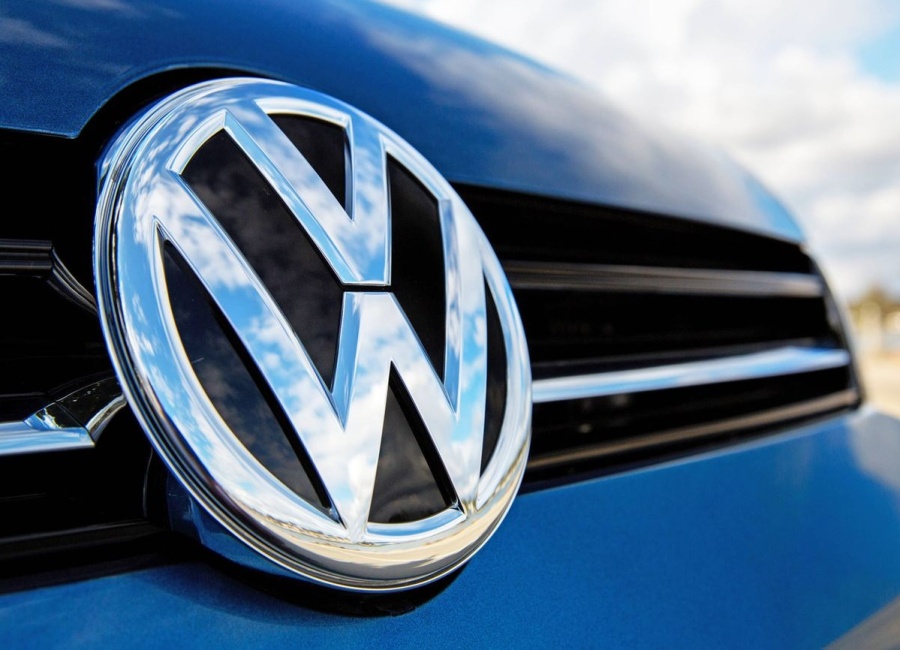
shares in Germany’s Volkswagen Group fell 2.26% to €80,40, while Stellantis’ stock dropped 4.54% to €12,24, as investors weighed how Trump’s proposed tariffs on China, Mexico and Canada could hit business in Europe…reports Asian Lite News 

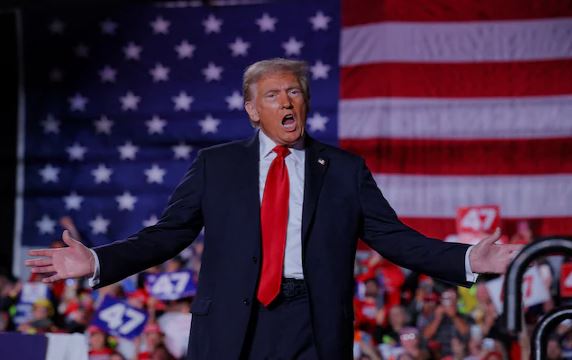
European automakers took a share price hit on Tuesday after Donald Trump threatened sweeping tariffs on China, Mexico and Canada. 

Late Tuesday morning, shares in Germany’s Volkswagen Group fell 2.26% to €80,40, while Stellantis’ stock dropped 4.54% to €12,24, as investors weighed how Trump’s proposed tariffs on China, Mexico and Canada could hit business in Europe. 

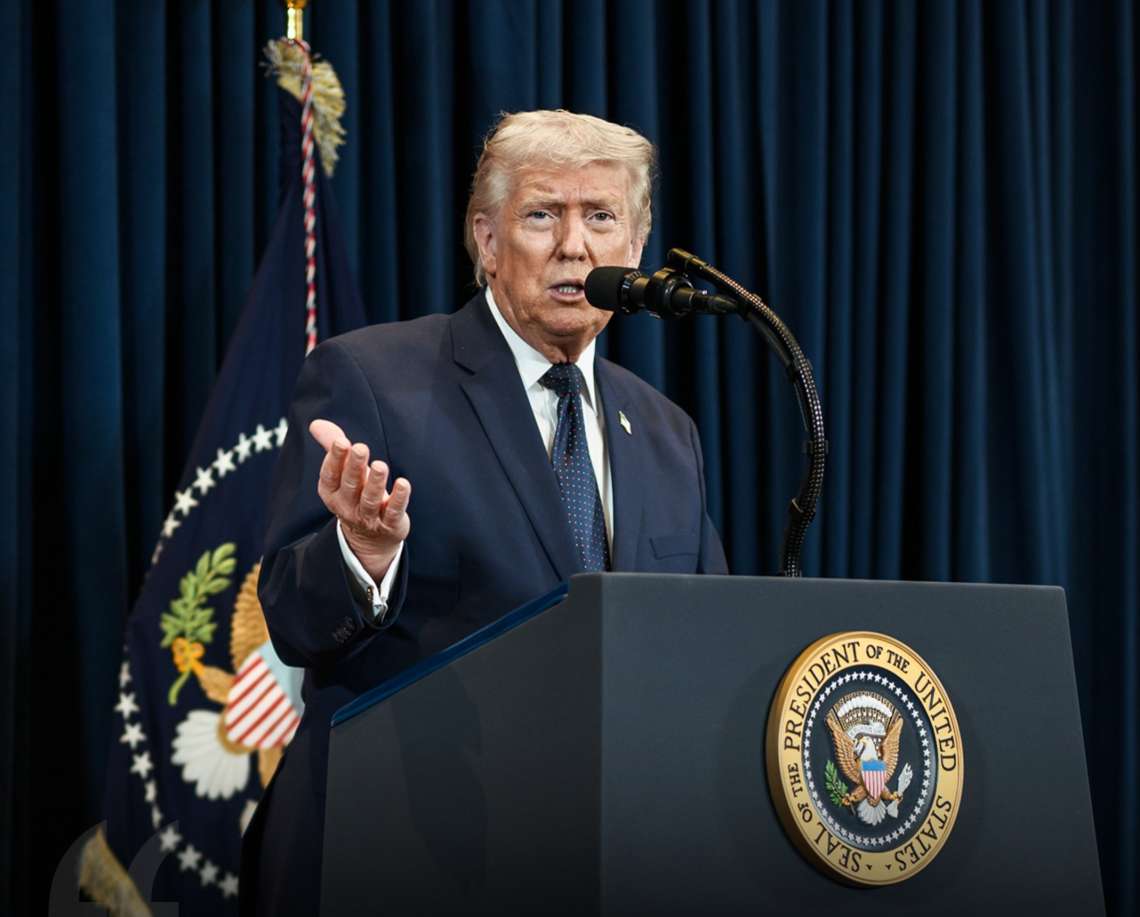
The President-elect said he would impost a 25% tax on all products entering the country from Canada and Mexico, and an additional 10% tariff on goods from China as one of his first acts as president of the US. 

The US is the largest importer of goods in the world, with Mexico, China and Canada its top three suppliers according to the latest census data. The threatened tariffs – if implemented – risk pushing prices for food, autos and other goods in the US up. 

Shares in French car parts maker Valeo also dropped by 2.54%, while BMW stock declined by 1.36% following the update on Trump’s Truth Social platform. “On January 20th, as one of my many first Executive Orders, I will sign all necessary documents to charge Mexico and Canada a 25% Tariff on ALL products coming into the United States, and its ridiculous Open Borders,” he wrote. 

According to several economic analyses, there is broad agreement that Trump’s previously proposed 10% universal tariff on all US imports may significantly disrupt European growth, intensify monetary policy divergence, and strain key trade-dependent sectors such as autos and chemicals. 

The long-term effects on Europe’s economic resilience could prove even more significant if tariffs lead to protracted trade conflicts, prompting the European Central Bank (ECB) to respond with aggressive rate cuts to cushion the impact. Data from the European Commission shows that the European Union exported €502.3bn in goods to the US in 2023, making up a fifth of all non-European Union exports. 

European exports to the US are led by machinery and vehicles (€207.6bn), chemicals (€137.4bn), and other manufactured goods (€103.7bn), which together comprise nearly 90% of the bloc’s transatlantic exports. 
ABN Amro analysts, including head of macro research Bill Diviney, warn that tariffs “would cause a collapse in exports to the US”, with trade-oriented economies such as Germany and the Netherlands most likely to be the hardest hit. 

According to the Dutch bank, Trump’s tariffs would shave approximately 1.5 percentage points off European growth, translating to a potential €260bn economic loss based on Europe’s estimated 2024 GDP of €17.4tn. 

Should Europe’s growth falter under Trump’s tariffs, the European Central Bank (ECB) may be compelled to respond aggressively, slashing rates to near zero by 2025. In contrast, the US Federal Reserve may continue raising rates, leading to “one of the biggest and most sustained monetary policy divergences” between the ECB and the Fed since the euro’s inception in 1999. 

The likely outcome: a weaker euro, which could help offset some competitive disadvantages for European exporters but would also increase import costs. 

Dirk Schumacher, head of European macro research at Natixis Corporate & Investment Banking Germany, suggests that a 10% tariff increase could reduce GDP by approximately 0.5% in Germany, 0.3% in France, 0.4% in Italy, and 0.2% in Spain. Schumacher warns that “the euro area could slide into recession in response to higher tariffs”. 

Shares of U.S. automakers General Motors and Ford Motor were down 7.5% and 1.7%, respectively. Toyota Motor’s U.S.-listed shares were down 1.7%. 

Among European automakers, Jeep maker Stellantis, and Volkswagen, were down about 4% and 2%. A basket of autos and parts stocks was the worst-performing sector in Europe, down about 1.8% versus a 0.6% fall for the broader STOXX 600. 

Last week, GM CFO Paul Jacobson said the automaker had some assets in Mexico. “We’re going to continue to work with the administration because I think our goal is very consistent with what the administration’s goal is in terms of U.S. jobs and what that can mean,” he told a Barclays conference when asked about potential tariffs. 

Ford CFO John Lawler said last week the automaker would have to see what level of tariffs were imposed and decide on pricing. In a note published last week, Evercore ISI said every 10% tariff on Mexico is a 20% earnings-per-share risk for GM, and 10% for Ford. 

“We estimate that each extra 1pp on tariff could impact pre-tax profit by ~Eu160mn or 1.4% of 2025 expectations,” Italian broker Intermonte said on Stellantis. About a quarter of vehicles sold by Stellantis in North America are made in Mexico. 

Canadian auto supplier Magna International’s U.S.-listed shares fell 3%, while peers Aptiv and Borgwarner fell about 2% each. “We view the tariff threats as more of a negotiating tactic to get the other countries to make concessions on various other issues such as illegal immigration,” said CFRA Research analyst Garrett Nelson. 

ALSO READ: Pope condemns ‘invader arrogance’ in Palestine, Ukraine 

Previous Story

Prince of Wales fires sniper rifle, machine gun 

Next Story

Opposition demands debate on Constitution   

Previous Story

Prince of Wales fires sniper rifle, machine gun 

Next Story

Opposition demands debate on Constitution   

Latest from -Top News

Nepal Floods Cause $1.66 Billion In Damage, Says World Bank

Nepal’s August 2026 floods caused an estimated US$1.66 billion in direct physical damage, with infrastructure accounting for 83 per cent of the total…reports Asian Lite News Desk Nepal’s devastating floods in August 2026 caused an estimated US$1.66 billion in direct physical damage, with infrastructure accounting for 83 per cent of the total, according to a World Bank report. The estimate, included in the World Bank’s Nepal Development Update unveiled this week, is close to the Nepal government’s preliminary Rapid Damage and Needs Assessment (RDNA), which put physical damage at US$1.81 billion. The government’s assessment also estimated losses beyond physical assets at US$883.32 million, taking the total economic effects of the disaster to approximately US$2.7 billion. The World Bank’s Global Rapid Post-Disaster Damage Estimation (GRADE) found that infrastructure suffered the greatest damage, estimated at US$1.38 billion, or 83 per cent of the total. Residential buildings accounted for US$185 million, or 11 per cent, while non-residential buildings sustained damage worth US$101 million, or 6 per cent. The floods along the Bhotekoshi and Trishuli rivers caused extensive damage to hydropower projects, solar energy facilities, electricity transmission infrastructure and transport networks. The energy sector, particularly hydropower, was among the worst affected. The August 2026 floods affected 12 hydropower projects and one solar project, involving 281.1 MW of operational capacity and 395.02 MW of capacity under construction. Damage to transmission lines and substations also disrupted the transmission of 149.6 MW of electricity to the national grid. The total affected capacity reached approximately 430.7 MW, equivalent to 10.6 per cent of Nepal’s installed hydropower and solar capacity at the end of fiscal year 2025-26, which concluded in mid-July. The disaster also severely damaged transport infrastructure along the 82-km Rasuwa trade corridor, which connects Kathmandu with the Rasuwagadhi border point with China. More than 55 km of the corridor was damaged, including 40 km that was completely destroyed. The floods also damaged 37 motorable bridges and 68 suspension bridges. The disaster resulted in significant human losses along the affected corridor and beyond. According to Nepal’s National Disaster Risk Reduction and Management Authority, 1,455 people had been confirmed dead, while 5,285 remained missing following the disaster. The World Bank report found that the physical damage was concentrated in three districts in central Nepal: Rasuwa, Nuwakot and Dhading. Rasuwa was the worst-affected district, accounting for US$1.07 billion, or 64 per cent, of the total direct damage. Nuwakot recorded an estimated US$551 million in damage, while Dhading suffered approximately US$39 million. “The findings highlight the concentration of physical damage in a small number of districts and the disproportionate impact on infrastructure, underscoring the scale of the reconstruction challenge facing the affected areas,” the World Bank said. The global development financier said the floods had demonstrated the scale and complexity of disaster risks in Nepal’s Himalayan environment. The event also showed how a single extreme weather event could trigger cascading impacts across sectors and geographical areas. The report said recovery efforts should extend beyond restoring infrastructure to its pre-disaster condition. While the principle of “Build Back Better” remained relevant, the World Bank stressed that rebuilding infrastructure to higher engineering standards in the same locations might not always be sufficient. “In some cases, simply rebuilding the same infrastructure in the same location to a higher engineering standard may not be sufficient. Nepal may need to build differently — based on a better understanding of risk, more careful decisions about location and design, greater redundancy in critical networks, stronger monitoring and early warning, and a more integrated approach to infrastructure development in the Himalayas,” the report said. The World Bank said Nepal’s recovery strategy should incorporate improved risk assessment, more informed infrastructure planning, stronger monitoring systems and better early warning mechanisms. The report emphasised that reconstruction should not only restore damaged assets but also reduce the impact of future disasters, particularly in the country’s vulnerable Himalayan regions.

Vaccine Delays Fuel Bangladesh Measles Outbreak

More than 32,000 suspected cases and over 250 deaths have been reported since mid-March, with children making up most of the fatalities….reports Asian Lite News Desk Bangladesh’s measles outbreak has intensified, with

Tsai: Stand With Taiwan, Strengthen The Indo-Pacific

The former president said stronger international partnerships would help Taiwan withstand mounting military, cyber and economic pressure while reinforcing democratic resilience….repots Asian Lite News Desk Former Taiwan President Tsai Ing-wen has called
Go toTop

Don't Miss

Hunt admits to ‘mistakes’ in budget

New Chancellor Jeremy Hunt indicated he would be tearing up

Biden Reaffirms U.S. Support for Israel’s Security

These were Biden’s first public remarks since Iran launched a