That question led to the creation of the floss-based sensor, which collects saliva through capillary action—the natural movement of fluid through narrow spaces—into the floss handle
In a groundbreaking innovation, engineers in the US have developed a dental floss device capable of detecting cortisol, a key stress hormone, through saliva in real time—offering a simple, non-invasive way to monitor stress levels during daily routines.
The device, developed by researchers at Tufts University and published in the journal ACS Applied Materials & Interfaces, looks like a typical floss pick with a string stretched between two prongs extending from a plastic handle, about the size of an index finger. However, this unassuming tool carries advanced sensing technology designed to revolutionise how stress is tracked and managed.
“Chronic stress is a major public health issue, linked to increased blood pressure, cardiovascular disease, weakened immunity, depression, and anxiety,” said Sameer Sonkusale, professor of electrical and computer engineering at Tufts and senior author of the study. “We didn’t want the process of measuring stress to become an additional source of stress. So we asked: can we create a sensor that blends seamlessly into everyday life?”
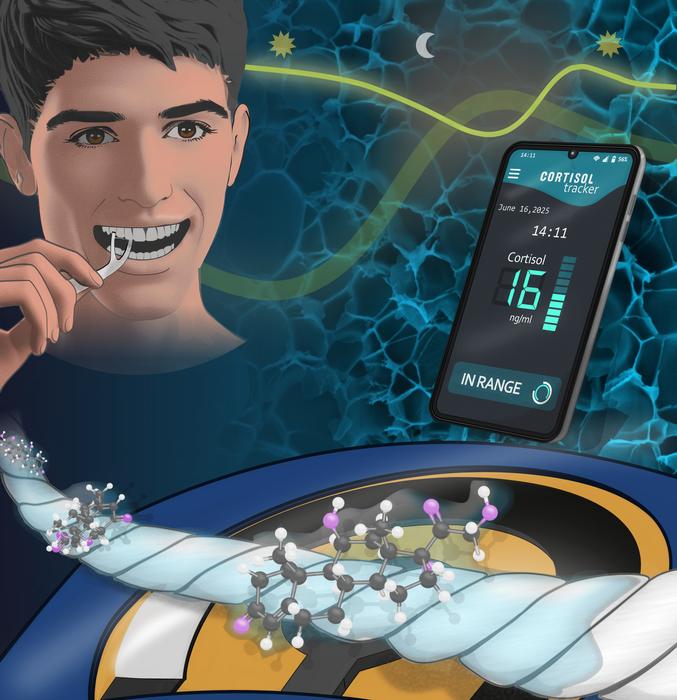
That question led to the creation of the floss-based sensor, which collects saliva through capillary action—the natural movement of fluid through narrow spaces—into the floss handle. From there, the saliva spreads across a tiny electrode-coated tab that detects cortisol levels. The key to this detection lies in a technology known as electropolymerized molecularly imprinted polymers (eMIPs), originally developed nearly three decades ago. eMIPs form highly specific molds of target molecules—in this case, cortisol—allowing for accurate and selective sensing when those molecules are present in a sample.
Notably, the floss-based sensor has demonstrated accuracy on par with leading cortisol detection technologies currently available or in development. But its unique advantage lies in its ease of use, accessibility, and ability to integrate effortlessly into daily hygiene routines.
The team also highlighted the broader potential of the eMIP technology. By tweaking the molecular imprint, the same platform could be adapted to detect other salivary biomarkers such as estrogen for fertility tracking, glucose for diabetes monitoring, or cancer-related proteins, offering an affordable and user-friendly path to broader at-home health monitoring.
“There’s also exciting potential to develop sensors that can simultaneously detect multiple biomarkers in saliva,” said Sonkusale. “That opens the door to more holistic assessments of health conditions—from cardiovascular risk and hormonal imbalances to cancer detection—through a simple, everyday tool.”
The research team is now working to commercialise the innovation and has launched a startup aimed at bringing the floss-based biosensor to market. If successful, this could mark a significant step forward in preventive and personalised healthcare, putting powerful diagnostic tools directly in the hands of consumers—no lab or medical training required.