The South Korean government said Wednesday it will send the flight data recorder from the crashed Jeju Air plane to the United States for analysis.
The exact timeline for the transferring of the flight recorder will be decided in consultation with the National Transportation Safety Board (NTSB), the Ministry of Land, Infrastructure and Transport said in a briefing.
The flight recorder, retrieved earlier from the wreckage of the Jeju Air B737-800 aircraft at Muan International Airport, reportedly sustained some external damage, missing a connector that links its data storage unit to the power supply.
“We have determined that extracting data from the damaged flight data recorder here is not possible,” said Joo Jong-wan, director of the aviation policy division at the ministry. “And so we have agreed with the NTSB to send it to the US and analyze it there.”
South Korean experts will participate in the analysis process in the US, he added.
However, the authorities have completed extracting data from the cockpit voice data recorder, found in a relatively better condition, and started converting it into voice files, the ministry said earlier.
Meanwhile, two additional investigators from aviation manufacturer Boeing Co. have joined the on-site probe into the Jeju Air crash at Muan International Airport, government sources said.
With these additions, the number of the US team members increased to 10, including six from Boeing and three from the US National Transportation Safety Board.
According to the sources, the US team expanded its presence to ensure a thorough examination of the accident.
The US team arrived in South Korea on Monday and traveled directly to Muan, where it commenced its joint investigation with the Korean team led by the Ministry of Land, Infrastructure and Transport the following day.
During their initial joint on-site investigation, investigators focused on a navigation system that assists in aircraft landings, known as a localizer.
The localizer, installed on a concrete structure, at Muan International Airport has been blamed for exacerbating the severity of casualties in the Jeju Air crash.
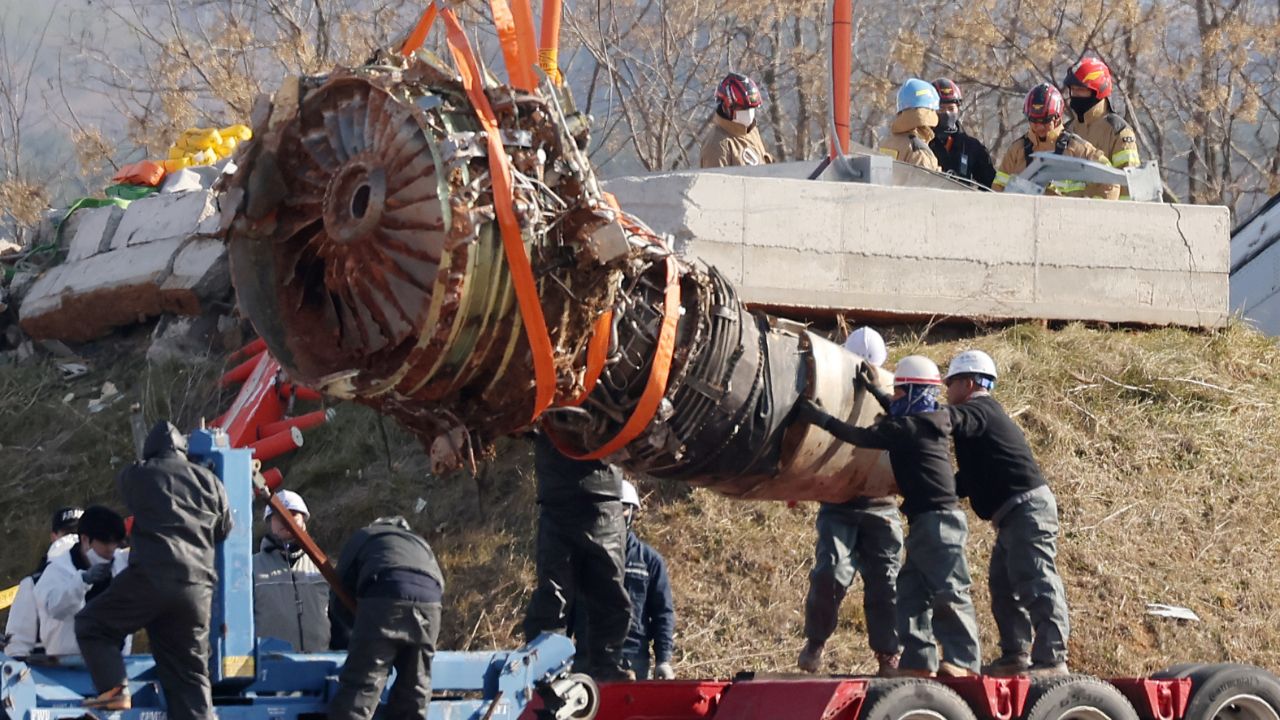
On the second day of their investigation of the accident site on Wednesday, the US officials were seen examining airplane debris scattered around the runway, including engine parts, Yonhap news agency reported.
Some were observed picking up debris, inspecting the undersides and taking photos, while others made a call with a stern expression or pointed to damaged areas, calling others over to inspect.
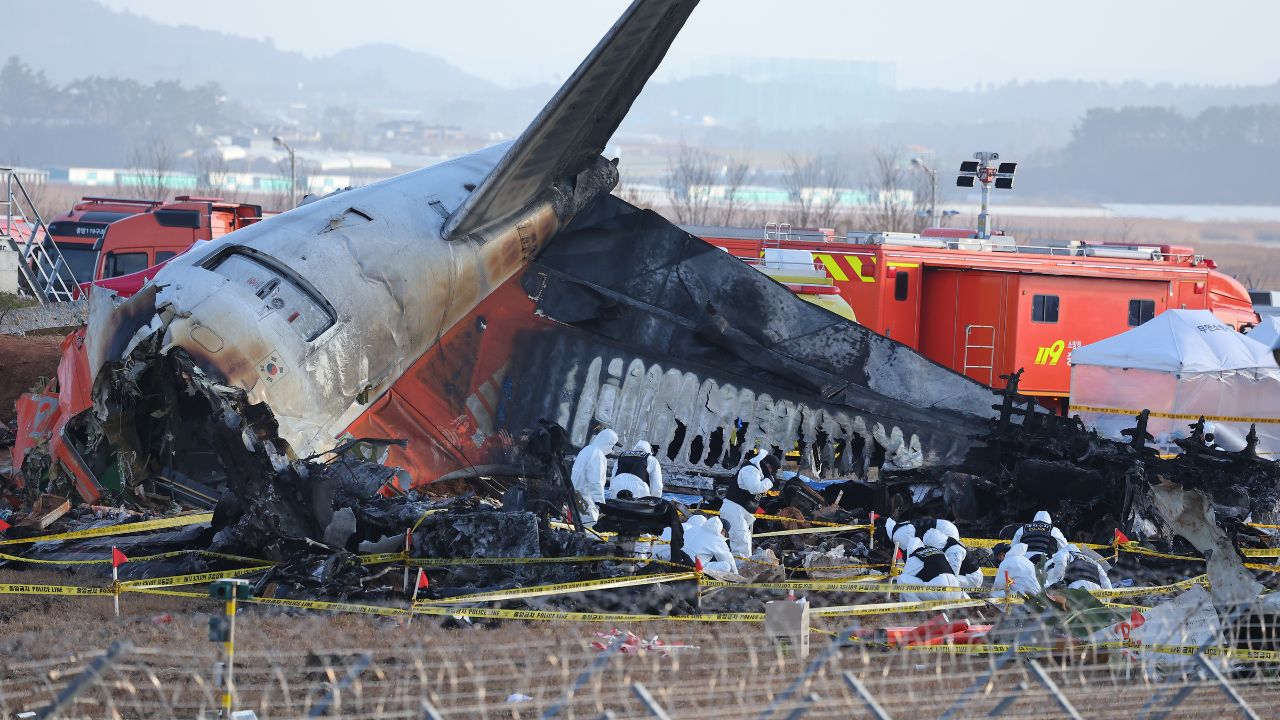
The Jeju Air B737-800 aircraft belly-landed at the airport and exploded Sunday as it crashed into the structure, claiming 179 lives out of 181 passengers on board.