Jakarta’s emergence as the world’s most populated city has renewed scrutiny of the pressures facing the Indonesian capital and its surrounding region…reports Asian Lite News
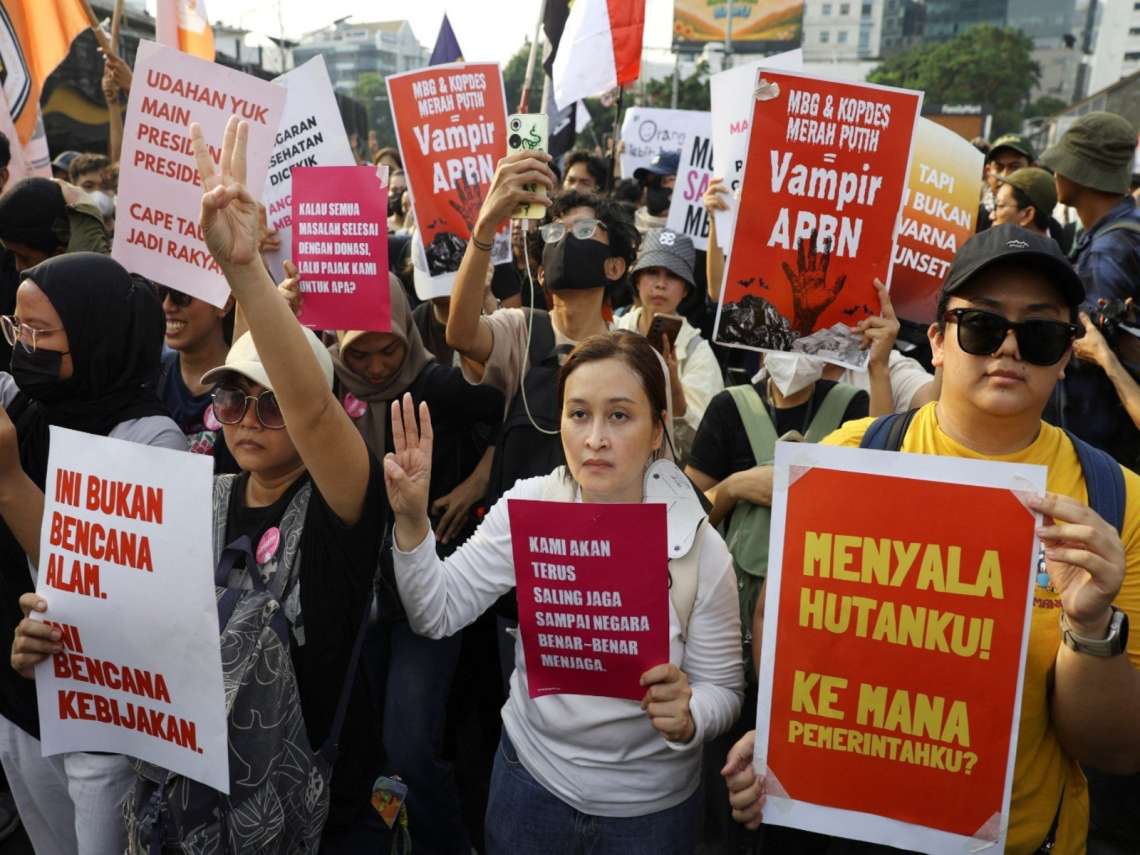
Jakarta’s rise to the top of the UN’s World Urbanization Prospects 2025 report, published earlier this month, has brought fresh attention to the mounting strains on daily life in the sprawling Indonesian capital. For many residents, the city’s new status as the world’s most populated urban area—overtaking Tokyo—has merely confirmed what they have long experienced on the ground: a place of opportunity shadowed by relentless pressure and chronic infrastructural shortcomings.
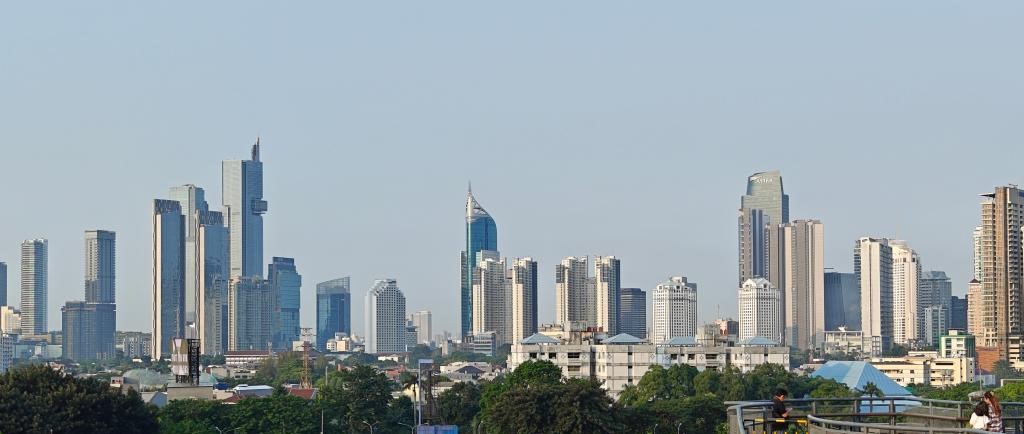
Born and raised in Jakarta, 22-year-old Handini Mawar Putri has spent her life watching the metropolis transform. She has seen skyscrapers multiply, public transport systems expand, and political leadership shift, yet says the changes have come with stark reminders of those left behind. With nearly 42 million people living across the megacity, she describes Jakarta in sharply contrasting terms: “Congested. Complicated. Chaotic. I don’t know what other words can be used to describe this city. Behind its luxuries, Jakarta also holds many miseries that are rarely highlighted and barely taken seriously.”
The Indonesian capital has long drawn international attention for issues that directly shape residents’ quality of life. Air pollution regularly reaches hazardous levels, traffic jams can immobilise large parts of the city for hours, and seasonal flooding frequently brings economic activity to a halt. In some central districts, high-end residential complexes sit just metres from densely packed kampungs, illustrating the city’s wide economic disparities. At the same time, several coastal and riverside neighbourhoods continue to sink, with parts of the city already lying below sea level.
These vulnerabilities were among the factors that prompted authorities in 2022 to begin developing Nusantara, a planned new capital on Borneo intended to reduce the administrative burden on Jakarta. Yet many residents, including Putri, say solutions must also tackle the high everyday costs of living in the current capital. “To live here, it is neither cheap nor easy, and our money as well as physical and mental health are at stake. Now that the city is gaining some spotlight, the government should make some improvements across all aspects: economy, health, public infrastructure, education, and more,” she said.
Urban specialists argue that the UN’s updated population methodology reflects a reality long recognised by planners: that Greater Jakarta has outgrown the administrative boundaries of the city itself. Elisa Sutanudjaja, executive director of the Rujak Center for Urban Studies, noted that the region had surpassed Tokyo’s population for years, even if it had not been reflected in official rankings. The latest UN criteria count “densely populated communities” linked to the capital, adding roughly 30 million people to the estimate.
The wider metropolitan region—locally known as Jabodetabekpunjur—spans the capital, five satellite cities and three regencies. Sutanudjaja said its rapid expansion has created major challenges, particularly urban sprawl. She highlighted how new housing estates have been built on farmland and environmentally sensitive terrain, raising the risk of flooding and stretching basic services. Public transport development has not kept pace with outward growth, she said, warning that mobility problems will worsen if infrastructure continues to focus mainly on central Jakarta. A shortage of affordable housing in the city core has further pushed residents outward, compounding the sprawl.
The result is an increasingly car-dependent region, a reality felt daily by residents such as 31-year-old entrepreneur David Teru. “I’m an entrepreneur who goes around the city for meetings, to meet clients … and there’s always traffic jams,” he said. “Personally, as someone who’s been working here and making a living in Jakarta, it’s pretty much an ordeal to hit the roads of Jakarta … We’re so packed here like sardines, but there’s no order.”