Pakistan’s repayment practices, financial reliability, and policy misalignment were major reasons these multinationals withdrew, divested, or scaled back their operations in Pakistan, writes Dr Sakariya Kareem
Qatar-based Al Thani Group’s decision to withdraw from Karachi’s Port Qasim Power Project, in the backdrop of unpaid dues, aligns with similar decisions by several foreign companies to leave Pakistan in recent years. Pakistan’s repayment practices, financial reliability, and policy misalignment were major reasons these multinationals withdrew, divested, or scaled back their operations in Pakistan.
Al Thani’s planned divestment of 49 percent of its stake in the Port Qasim Power Project, which is a crucial part of the China-Pakistan Economic Corridor (CPEC) programme, after the outstanding receivables crossed PKR 288 million. The company expressed discontent over the delays in clearing dues by the Pakistan government and warned about operational suspension in case of default on payments.
Imtiaz Gul, head of Islamabad-based Centre for Research and Security Studies, said Al Thani’s exit underscored Pakistan’s growing reputation for broken contracts and unpaid obligations. “No surprise foreign direct investment plummeted to a mere USD 26 million by September this year,” he said. “The Qatari group’s pullout epitomises a fractured system that is asphyxiating under the acute indifference and incompetence of a power-centric elite that loathes real reform.”

The pullout by the Qatari giant is preceded by major companies from different sectors in the recent past. Pakistan’s financial fragility, devaluation of PKR, and increasing dues led Shell Petroleum to exit the country. “To support its intention to high-grade and simplify its portfolio, Shell Petroleum Company Ltd … has initiated a sales process to sell its 77.42 percent shareholding in Shell Pakistan Ltd,” said a spokesperson for Shell Pakistan.
Economic slowdown made business difficult for Shell, said Mustafa Pasha, the Chief Investment Officer (CIO) at Lakson Investments. “The messaging is very negative, it says that people have lost confidence and are wrapping up businesses in Pakistan,” he said. “In Pakistan, the milieu for oil management companies is exceedingly arduous. The regulatory environment renders operation in the country onerous.”
It was followed by French petroleum giant TotalEnergies. “It’s concerning that Pakistan is no longer a core geography for Total,” said Adnan Sheikh, Assistant Vice President at Pak Kuwait Investment Company. These quick developments caused concerns as the country battled economic and political crises. Khurram Husain, a business analyst, said “Multinationals are voting with their feet,” said Khurram Husain, a business journalist and analyst. “The combination of policy uncertainty and macroeconomic volatility is pushing them away.”
At the political front also, the government was criticised for failing to stabilise the economy and carry out structural reforms. “TotalEnergies’ exit is a red flag. It signals to the world that Pakistan is not a safe bet for long-term investment, said Ahsan Iqbal, a senior leader of the Pakistan Muslim League-Nawaz.
Norwegian telecom company Telenor has left Pakistan by selling its entire stake due to difficult economic conditions and regulatory hurdles. “Pakistan has some of the lowest average revenue per user (ARPU) rates in the world, high spectrum costs, low service profitability, and no regulatory outlook to support in-market consolidation. The reality for the business and the industry at large simply didn’t support continued investment,” said Telenor Asia head Jon Omund Revhaug. “Our decision to exit Pakistan remains very firm.”
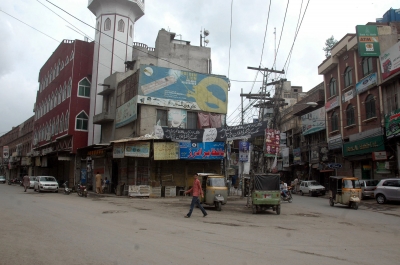
Six pharmaceutical multinationals — Bayer, ICI, Sanofi-Aventis, Pfizer, Fresenius Kabi, and Novartis– left Pakistan in the past three years, reflecting broader concerns and strategic recalibrations by global corporations. Ayesha T. Haq, Executive Director of Pharma Bureau, a representative body of multinational pharmaceuticals, said “No company can afford to run at a loss. This also destroys investors’ confidence, and companies are not inclined to incur further losses and introduce new therapies into the Pakistani market.”
Strict price control, regulatory burdens, currency risk, and economic instability drove these companies out of Pakistan. Even the consumer goods company Procter & Gamble discontinued its operation in Pakistan due to high-power costs, weak infrastructure and regulatory pressures. “I hope such exits make the rulers aware that all is not well,” said Saad Amanullah Khan, a former chief executive officer at Gillette Pakistan.
Cab aggregator Uber, tech behemoth Microsoft scaled down their operations in Pakistan in recent years. The disinvestment on a large scale has sounded an alarm for the foreign investment in Pakistan, said Ikram Ul Haq, a lawyer with expertise in economics and taxation. “The negative rating of the country and uncertain future is even forcing the local investors to move outside and with the exit of reputed MNCs, there is now little hope for any breakthrough on the FDI front,” he said.