Republican John Curtis and Democrat Jeff Merkley introduced the bill on Monday for the fourth time…reports Asian Lite News
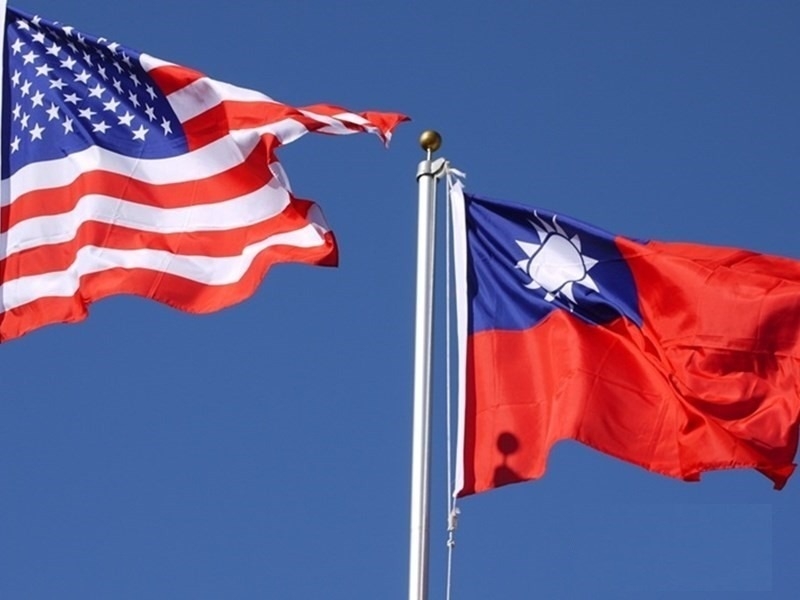
Two U.S. senators have reintroduced the Taiwan Relations Reinforcement Act, aiming to reaffirm the United States’ commitment to supporting Taiwan’s democracy and expanding its international presence, in light of increasing diplomatic and military pressure from China, according to the Central News Agency (CNA).
Republican John Curtis and Democrat Jeff Merkley introduced the bill on Monday for the fourth time, following unsuccessful attempts in 2020, 2021, and 2023, when it failed to advance beyond the Senate Committee on Foreign Relations, CNA reported.
Curtis stated, “Our alliance with Taiwan is one of the most strategically and morally significant partnerships America has in the Indo-Pacific, and we need to ensure our policies match our principles. The Taiwan Relations Reinforcement Act will deepen our relationship with Taiwan by elevating the status of our top diplomat, incentivising high-level cooperation and visits between our governments, and combating Chinese Communist Party disinformation campaigns targeting Taiwan.”
If enacted, the act would alter the role of the head of the American Institute in Taiwan (AIT), the organisation that represents US interests in Taiwan due to the lack of formal diplomatic relations.
The act would redesignate the AIT director as a “representative,” and this new position would require Senate confirmation, aligning it with the process used for all US ambassador appointments, as reported by Focus Taiwan.
The act would also mandate the US president to create an “interagency Taiwan task force,” comprising senior officials who would contribute to yearly reports to Congress outlining recommended actions to strengthen US-Taiwan relations, CNA reported.
Another part of the bill would require the US secretary of state to report to Congress on strategies for countering “sharp power operations” by the Chinese government aimed at Taiwan.
“Sharp power” refers to efforts by one country to manipulate and undermine another nation’s political system through diplomatic and political influence.
More broadly, the legislation would direct the US government to back Taiwan’s inclusion in international organisations, promote talks for a bilateral trade agreement, and invite Taiwanese officials to participate in high-level multilateral and bilateral summits, military drills, and economic discussions, as reported by CNA.
To become law, the bill must pass both the Senate and the House of Representatives and be signed by the US president. (ANI)