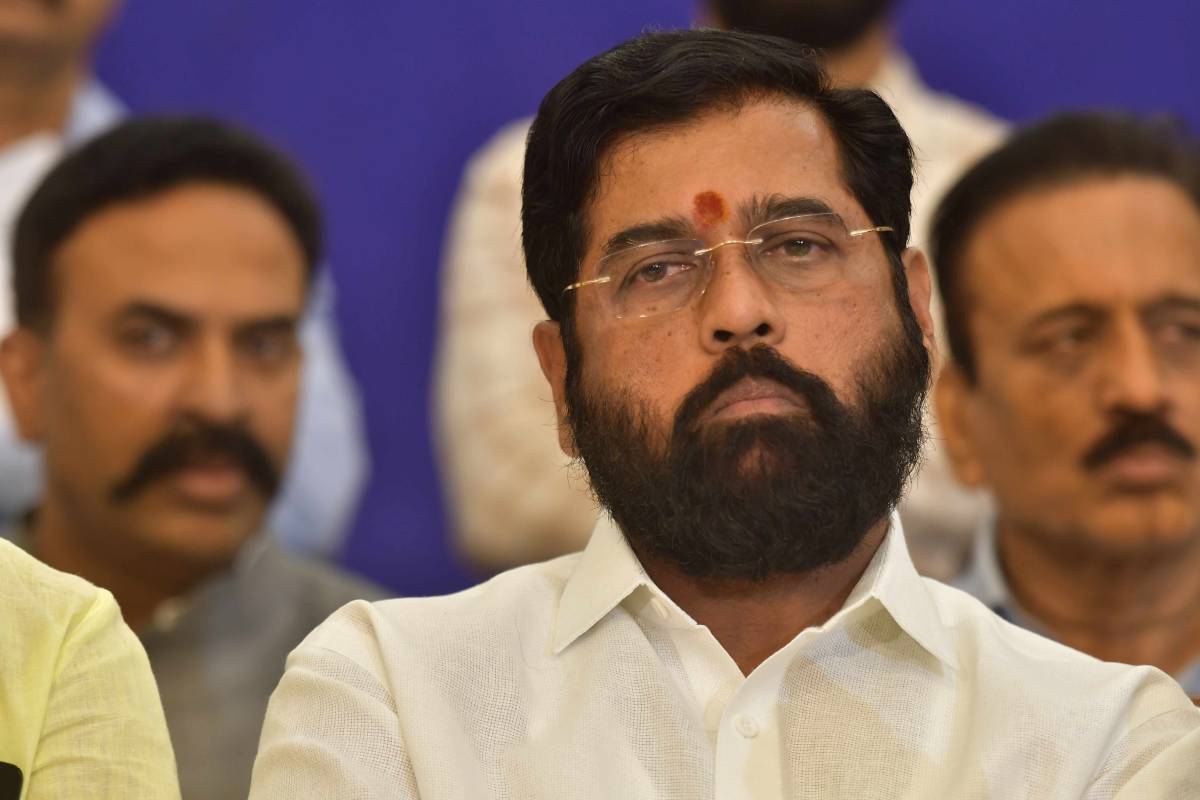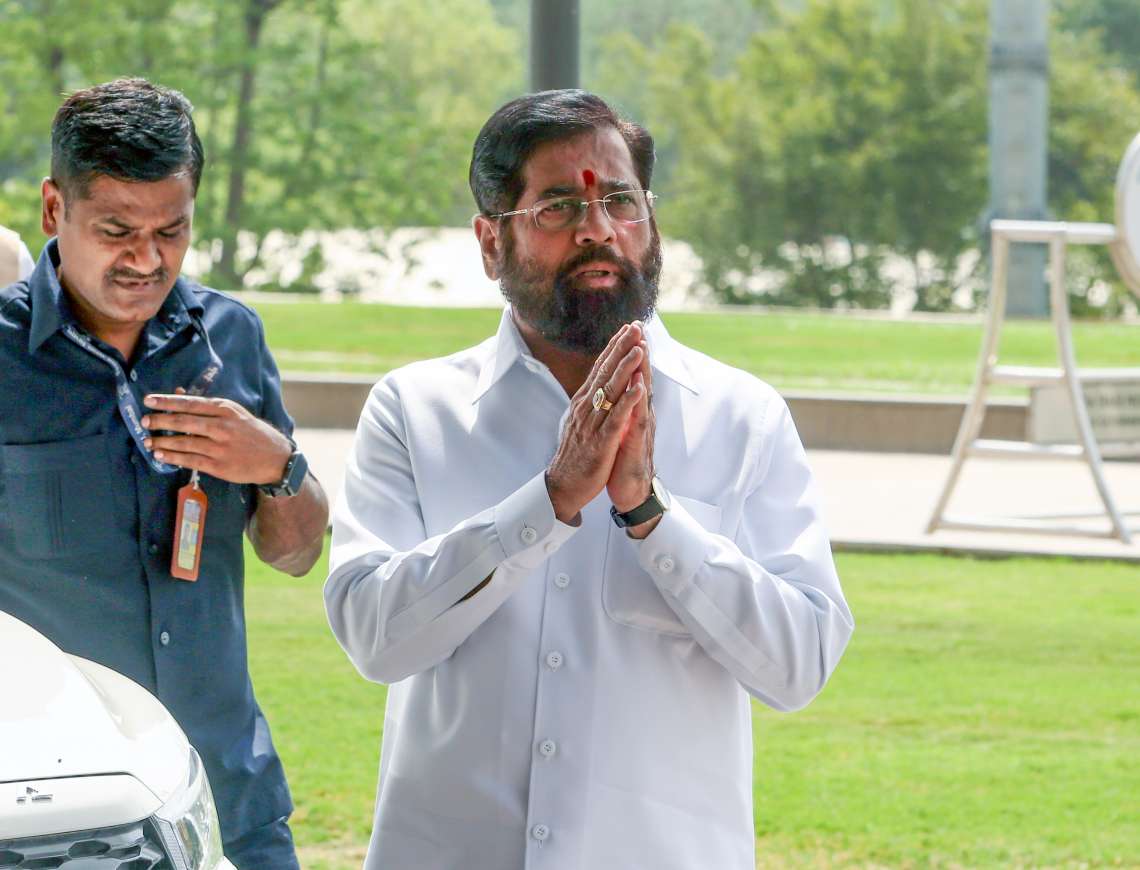
The Eknath Shinde-led Shiv Sena is adopting a cautious approach over the possibility of Members of Parliament from the Uddhav Thackeray-led Shiv Sena (UBT) joining its side, as legal questions continue to surround the anti-defection law and merger provisions.
The caution follows observations made by the Supreme Court during the Maharashtra political crisis, where the court held that the original political party and its legislative or parliamentary wing are separate entities, but the role of the original party remains crucial when determining the validity of a merger.
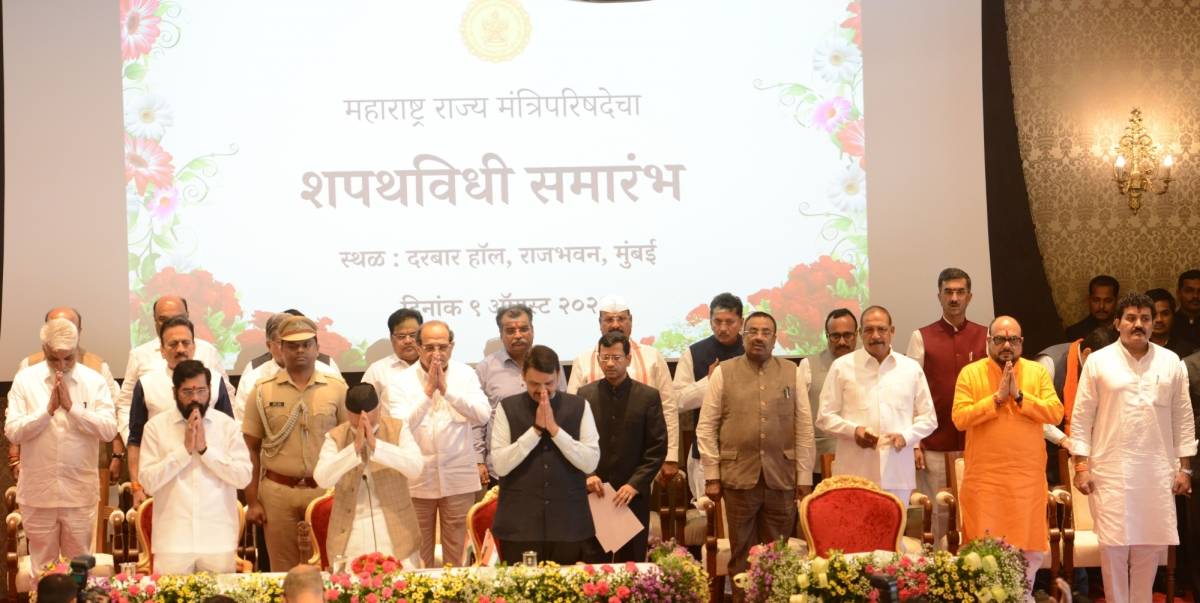
The legal issue emerged after the rebellion led by Eknath Shinde in 2022, which resulted in a split within the Shiv Sena. The Thackeray faction later approached the Maharashtra Legislative Assembly Speaker with disqualification petitions against the rebel legislators. The matter eventually reached the Supreme Court, where a Constitution Bench headed by then Chief Justice of India D.Y. Chandrachud delivered its verdict in May 2023.
Legal experts have pointed out that a group of lawmakers securing the support of two-thirds of a party’s legislative or parliamentary wing does not automatically receive protection from disqualification under the Tenth Schedule of the Constitution.
The issue has gained significance as the Shiv Sena (UBT) currently has nine Lok Sabha MPs. If six or seven MPs decide to leave the faction, they cannot simply operate as an independent group and claim protection under the anti-defection law. To avoid disqualification, they would need to merge with the Shinde-led Shiv Sena or another recognised political party.
The Supreme Court’s interpretation established that a valid merger under the anti-defection law requires two conditions. The original political party must decide to merge with another party, and the merger decision must be backed by at least two-thirds of members of the legislative or parliamentary wing.
This means that even if a majority of MPs from a parliamentary wing support a move, a split limited only to elected representatives may not satisfy the legal requirements unless it is supported by the broader party organisation.
The ruling has made political calculations more complicated for parties dealing with possible defections. Legal experts have argued that legislative numbers alone may not be sufficient to establish a valid merger if the original political organisation does not support the move.
The recent political developments involving Trinamool Congress MPs have also drawn attention to the legal complexities surrounding defections. A group of rebel MPs chose to merge with a smaller regional party rather than function as an independent bloc. The Trinamool Congress is understood to be preparing disqualification petitions against the MPs.
Experts have also noted that merely failing to attend a party meeting outside Parliament does not generally result in disqualification under the Tenth Schedule. However, voting against the party line, violating a whip, or acting contrary to official instructions during House proceedings can lead to disqualification proceedings.
With these legal considerations in mind, the Shinde camp is assessing its options carefully before taking any step involving MPs from the Thackeray-led Shiv Sena (UBT).