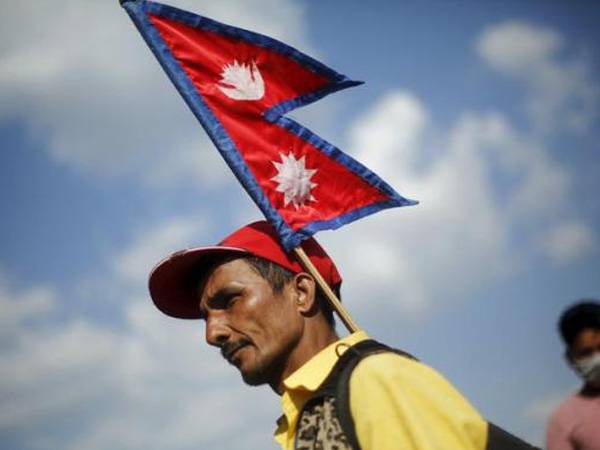
Nepal maintains its ‘BB-’ sovereign rating for the third consecutive year, supported by strong reserves and concessional borrowing….reports Asian Lite News Desk
Nepal has retained its ‘BB-’ sovereign credit rating for the third consecutive year, with Fitch Ratings citing low public debt levels, strong foreign exchange reserves and steady remittance inflows despite mounting debt and the economic impact of devastating floods.
The rating marks the third consecutive year Nepal has maintained the same assessment since receiving its first-ever sovereign credit rating in 2024.
In its latest report, Fitch said Nepal’s rating was supported by relatively low government and external debt, largely secured on highly concessional terms, strong external liquidity and continued access to multilateral financing.
The country’s medium-term growth prospects, particularly investments in hydropower development, were also identified as key factors supporting the rating.
However, the agency warned that Nepal’s underdeveloped economy remained vulnerable to external shocks and natural disasters, while its GDP per capita and governance indicators were weaker than those of countries in the same rating category.
Public debt crosses NPR 3 trillion
Nepal’s public debt has increased substantially over the past decade, particularly following the devastating 2015 earthquake. Despite the rise, the World Bank and the International Monetary Fund continue to classify the country’s risk of debt distress as low.
According to Nepal’s Public Debt Management Office, the country’s total outstanding public debt crossed NPR 3 trillion for the first time during the first quarter of the current fiscal year 2026-27, which began in mid-July.
The outstanding debt stood at NPR 3,009 billion, equivalent to 45.59 per cent of GDP, compared with NPR 697.68 billion, or 26.84 per cent of GDP, in the 2016-17 fiscal year.
Fitch noted that Nepal’s external debt remained largely concessional, with strong prospects for continued support from official creditors.
“This structure preserved financing flexibility amid the shocks from the September 2025 youth-led protest and the August 2026 floods and is further reinforced by the successful completion of Nepal’s IMF programme in June 2026,” the agency said.

Floods weigh on growth outlook
Fitch warned that the devastating floods of August 26 would weigh on Nepal’s economic performance in the current fiscal year.
The disaster claimed more than 1,400 lives and left over 5,000 people missing, according to the National Disaster Risk Reduction and Management Authority. The World Bank estimated the physical damage at $1.66 billion.
“The August 2026 flash floods, which caused substantial human and economic losses, will weigh on near-term growth,” Fitch said.
The floods affected more than 10 per cent of Nepal’s installed power capacity, disrupting electricity generation and transmission, transport connectivity, tourism and industrial activity.
However, the agency expects restoration and reconstruction work to support economic recovery.
Fitch projected Nepal’s economic growth to slow to 3.4 per cent in 2026-27, compared with 3.9 per cent in the previous fiscal year. Growth is expected to rebound to 5.2 per cent in 2027-28, supported by accelerated reconstruction and the restoration of hydropower projects and electricity-grid infrastructure.
The agency cautioned that delays in reconstruction and a prolonged conflict involving Iran could further weaken growth prospects by disrupting energy and fertiliser imports, increasing supply risks and affecting tourism earnings.
Fitch also highlighted an opportunity for Nepal to improve policy predictability and advance economic reforms following the ruling Rastriya Swatantra Party’s clear parliamentary majority in the March elections.
The party has outlined a near-term reform agenda focused on improving governance and the business climate. However, the agency warned that flood-related emergency relief could complicate the government’s reform priorities.
“Political instability could re-emerge if the ruling party fails to deliver credible reforms or relies excessively on ordinances to implement policy,” Fitch said.