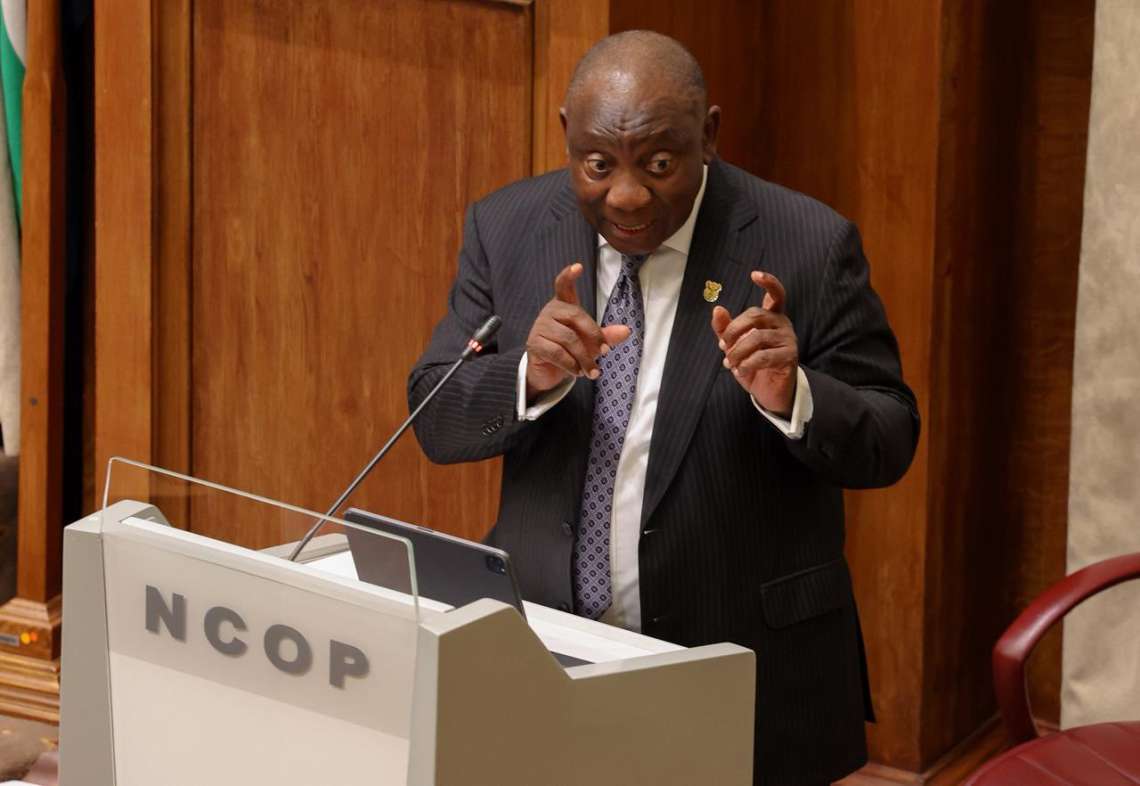
The President reiterated South Africa’s longstanding position that there can be no military solution to fundamentally political disputes…reports Asian Lite News
South Africa President Cyril Ramaphosa and the Government of South Africa have expressed deep concern over the escalating tensions in the Middle East, warning that the unfolding developments pose a serious threat to regional and global peace and security.
In a statement, the Presidency cautioned that the situation carries far-reaching humanitarian, diplomatic and economic consequences, with the potential to further destabilise an already volatile region. President Ramaphosa called on all parties involved to exercise maximum restraint and to conduct themselves in accordance with international law, international humanitarian law and the principles enshrined in the United Nations Charter.
Referring specifically to Article 51 of the UN Charter, Ramaphosa underscored that the provision permits self-defence only in instances where a state has been subjected to an armed invasion. He emphasised that anticipatory self-defence is not recognised under international law and cannot be justified on the basis of assumption or speculation.
The President reiterated South Africa’s longstanding position that there can be no military solution to fundamentally political disputes. He noted that history has repeatedly shown that armed confrontation fails to produce sustainable peace or adequately address the legitimate grievances at the heart of conflicts. Durable peace and long-term stability, he said, can only be secured through inclusive dialogue, mutual recognition and a genuine commitment to justice and peaceful coexistence.
Against this backdrop, Ramaphosa renewed his call for intensified diplomatic engagement aimed at de-escalating tensions and creating space for meaningful negotiations. He urged the international community — including multilateral institutions and regional partners — to redouble efforts to promote mediation and peaceful resolution.
“As a nation that emerged from conflict through dialogue and reconciliation, South Africa remains steadfast in its belief that peace is not only possible, but imperative for the shared future of the Middle East and the world,” Ramaphosa said.
The government reaffirmed its support for diplomatic initiatives designed to prevent further escalation and to safeguard international peace and security.
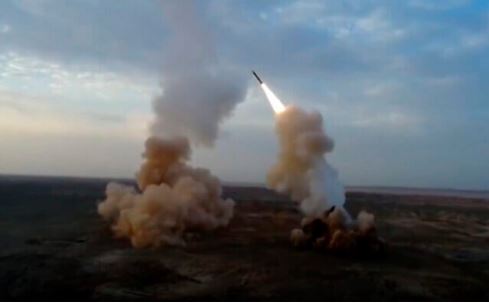
Meanhwhile, the United States and six Gulf nations strongly condemned what they described as “indiscriminate and reckless” missile and drone attacks launched by the Islamic Republic of Iran across the region, calling the strikes a “dangerous escalation” that threatens regional stability.
In a joint statement released by the US State Department, the governments of the United States, Bahrain, Jordan, Kuwait, Qatar, the Kingdom of Saudi Arabia and the United Arab Emirates denounced the attacks on multiple sovereign territories.
“The United States, Bahrain, Jordan, Kuwait, Qatar, the Kingdom of Saudi Arabia, and the United Arab Emirates strongly condemn the Islamic Republic of Iran’s indiscriminate and reckless missile and drone attacks against sovereign territories across the region,” the statement said.
The countries said the strikes affected Bahrain, Iraq — including the Iraqi Kurdistan Region — Jordan, Kuwait, Oman, Qatar, the Kingdom of Saudi Arabia, and the United Arab Emirates.
“These unjustified strikes targeted sovereign territory, endangered civilian populations, and damaged civilian infrastructure,” the joint statement said.
The statement described Tehran’s actions as a direct violation of international norms. “The Islamic Republic’s actions represent a dangerous escalation that violates the sovereignty of multiple states and threatens regional stability,” it said.
The governments also accused Iran of targeting countries that were not directly involved in hostilities.
“The targeting of civilians and of countries not engaged in hostilities is reckless and destabilizing behavior,” the statement added.
The seven nations reaffirmed their security cooperation and collective response framework.
“We stand united in defense of our citizens, sovereignty, and territory, and reaffirm our right to self-defence in the face of these attacks,” the statement said.
They also highlighted coordinated air defence efforts across the region.
“We remain committed to regional security and commend the effective air and missile defense cooperation that has prevented far greater loss of life and destruction,” it added.
The joint declaration comes amid rising hostilities between Iran and several regional actors, with missile and drone warfare becoming a central feature of the confrontation.
Iran has in recent years expanded its missile and unmanned aerial vehicle capabilities, which Western and Gulf officials say have altered the security balance in the region. Tehran maintains that its missile programme is defensive in nature.
The United States maintains military bases across the Gulf and has long-standing defence partnerships with Bahrain, Qatar, Kuwait, Saudi Arabia and the UAE. Regional air defence integration has been a key pillar of US strategy in countering missile and drone threats from Iran and allied groups.