Pakistan’s repeated failure to document its economy has become one of the defining weaknesses of its fiscal system…writes Dr Sakariya Kareem
Pakistan’s fiscal crisis is often discussed in terms of IMF programmes, external debt, or chronic budget deficits. Yet beneath these headline challenges lies a deeper structural problem: the state’s inability to tax a significant share of its own economy. The latest failure of the Federal Board of Revenue’s (FBR) Tax Asaan Scheme has once again exposed a reality that successive governments have struggled to confront. Despite generous incentives, simplified procedures, and repeated political commitments, millions of traders continue to remain outside the formal tax net.
What makes this failure particularly striking is the extraordinary concessions offered to secure compliance. Launched with considerable fanfare by Finance Minister Muhammad Aurangzeb and the FBR, the Tax Asaan Scheme was designed specifically to address the complaints that traders have long raised against Pakistan’s tax administration. Small retailers with annual turnover up to Rs 200 million were offered a simplified one-page return, exemption from routine audits, relief from digital invoicing requirements, and an exceptionally low tax burden. The minimum annual tax was fixed at just Rs 25,000, while turnover taxation was capped at only 1 percent.
If distrust of complicated paperwork and compliance requirements were truly the primary obstacles, the scheme should have attracted thousands of new taxpayers. Instead, it has become another chapter in Pakistan’s long history of failed tax reforms.
The numbers are devastating. By mid-October, tax collections under the scheme amounted to only Rs 90 million against an annual target of Rs 50 billion. Merely 222 new taxpayers joined the tax net, while total filings from small traders stood at 10,945. In practical terms, the programme achieved less than one-fifth of one percent of its revenue target. It is difficult to imagine a starker demonstration of the gulf between policy design and economic reality.
Nor is this an isolated setback. The Tax Asaan Scheme represents the third major attempt by the Shehbaz Sharif government to bring traders into the formal tax system.
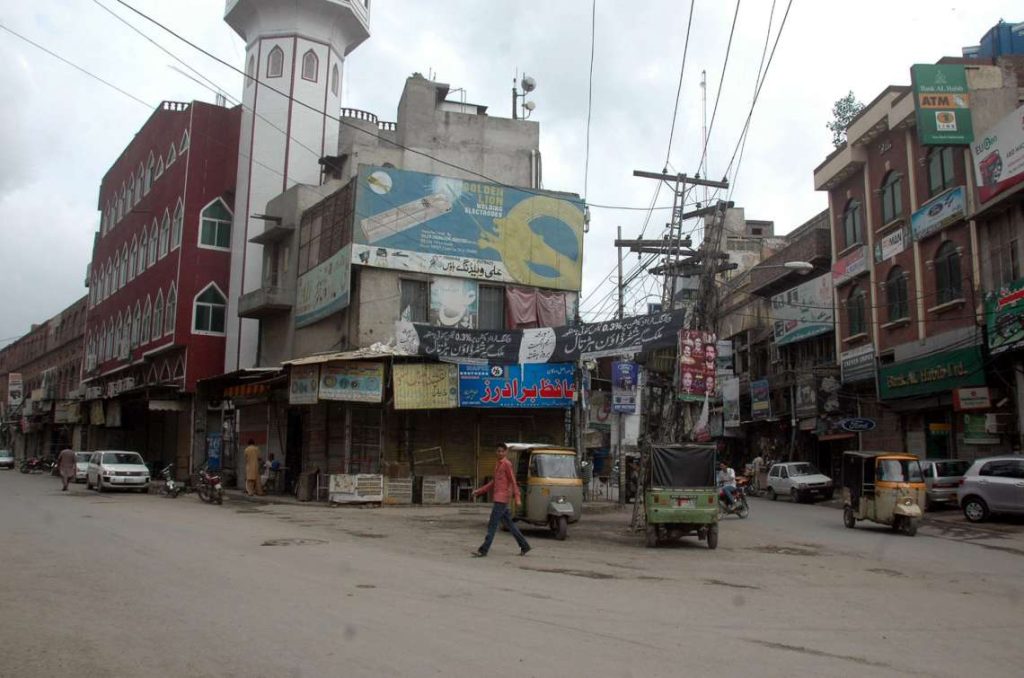
The first effort came in 2022, when then Finance Minister Miftah Ismail sought to collect a fixed monthly tax from traders through electricity bills. Small businesses were expected to pay around Rs 3,000 per month, generating an estimated Rs 42 billion annually. The plan collapsed under pressure from traders’ organisations, forcing the government into a humiliating retreat.
The second attempt emerged in 2024 through the Tajir Dost Scheme, which similarly aimed to expand the retail tax base through a simplified registration and fixed-tax structure. Ambitious targets were set, but collections proved negligible. Against a December target of Rs 23.4 billion, actual collections amounted to barely Rs 4 million. Eventually, the government effectively abandoned specific collection targets for the scheme altogether.
The latest failure therefore suggests something more profound than poor implementation. It points to a fundamental crisis of state capacity and credibility.
Why do traders continue to reject schemes that appear overwhelmingly favourable?
The most common explanation is lack of trust. For decades, relations between traders and the FBR have been characterised by suspicion rather than cooperation. Many retailers believe that providing business records today could expose them to future audits, retrospective tax demands, penalties, and administrative harassment. From their perspective, entering the tax net is not a one-time commitment but the beginning of an open-ended relationship with an institution they do not trust.
Attributing this entirely to resistance to taxation overlooks deeper structural issues.
Pakistan’s tax administration suffers from a serious credibility deficit. Successive governments have frequently changed tax policies, withdrawn incentives, and introduced new compliance requirements. As a result, traders often view promises of immunity or simplified treatment with considerable scepticism. A one-year scheme provides little assurance when business owners fear that entirely different rules may apply the following year.
There is also a practical economic argument. Many small businesses operate in sectors where profit margins are extremely thin. Representatives of traders’ associations argue that some businesses earn margins as low as 0.25 to 0.5 percent. In such sectors, a one-percent turnover tax may appear modest from a policymaker’s perspective but can exceed actual profits. Applying a uniform turnover tax across wildly different industries ignores the variation in commercial realities and reinforces perceptions that tax policy is designed without sufficient consultation.
Yet focusing exclusively on trust and tax design risks overlooking a more uncomfortable explanation. Pakistan’s undocumented economy remains one of the largest barriers to tax reform. Across extensive segments of the wholesale and retail supply chain, business transactions continue to rely heavily on cash. This parallel economy allows buyers and sellers to avoid documentation, conceal turnover, and minimise tax liabilities.In such an environment, operating outside the documented economy has become an entrenched part of the business model for many traders.
This reality helps explain why repeated amnesty schemes have failed. For many traders, the economic benefits of remaining outside the tax net continue to outweigh the incentives offered for joining it.
The consequences extend far beyond revenue collection. While millions of traders remain outside the documented economy, the burden increasingly falls on those who cannot easily avoid taxation: salaried employees, registered companies, and formal sector businesses.
The result is a tax system that relies disproportionately on captive taxpayers.Salaried workers face direct deduction of taxes before receiving their income. Consumers pay heavy indirect taxes on fuel, electricity, telecommunications, and everyday goods. Formal businesses operate under extensive documentation requirements and regulatory scrutiny. Meanwhile, large segments of retail commerce continue to function with limited transparency.
This imbalance creates a dangerous cycle. As the government struggles to broaden the tax base, it repeatedly turns to the same taxpayers for additional revenue. Tax rates rise, withholding taxes expand, and compliance requirements become more burdensome for those already within the system. Predictably, this undermines incentives for formalisation while fuelling resentment among compliant taxpayers.
Three failed schemes have demonstrated the limits of Shehbaz Sharif’s concession-based approach to tax reform. Tax amnesties, simplified returns, audit exemptions and repeated negotiations have produced little more than disappointing numbers. Building a documented economy requires credible institutions, policy consistency, digital transparency and, above all, enforcement that is both predictable and fair.
Pakistan’s repeated failure to document its economy has become one of the defining weaknesses of its fiscal system. Successive governments, including the current Shehbaz Sharif administration, have cycled through tax amnesties, trader-friendly schemes, reduced rates, audit exemptions and endless negotiations, yet millions of businesses continue to operate beyond the tax net.
Taxation is ultimately about state authority. A government that fails to effectively compel large sections of its economy to participate in the tax system faces questions about its administrative reach and institutional credibility.
Each failed initiative reinforces a damaging message: the state possesses neither the credibility to win voluntary compliance nor the enforcement capacity to compel it. The collapse of the Tax Asaan Scheme exposes the persistence of a two-tier economy in which salaried employees, corporations and documented businesses remain easy targets for revenue collection, while vast segments of retail commerce continue to function through cash transactions and limited transparency. The result is a tax system that increasingly punishes visibility and rewards informality.
Until Pakistan succeeds in bringing its vast undocumented economy into the formal sector, every new revenue target, IMF-backed reform plan and trader-friendly package will confront the same obstacle. The country’s fiscal crisis is no longer simply a question of low tax rates or administrative inefficiency; it is a reflection of the state’s inability to establish its writ over a significant part of economic activity.