Abu Dhabi-based genetics expert honoured in global scientific literature as newly identified neurodevelopmental disorder is formally named, marking a landmark moment for UAE medical research….reports Asian Lite News
A rare inherited disorder affecting brain development and muscle strength has been formally named after an Abu Dhabi-based specialist at Burjeel Medical City, marking a significant scientific milestone for the UAE’s growing medical research landscape.
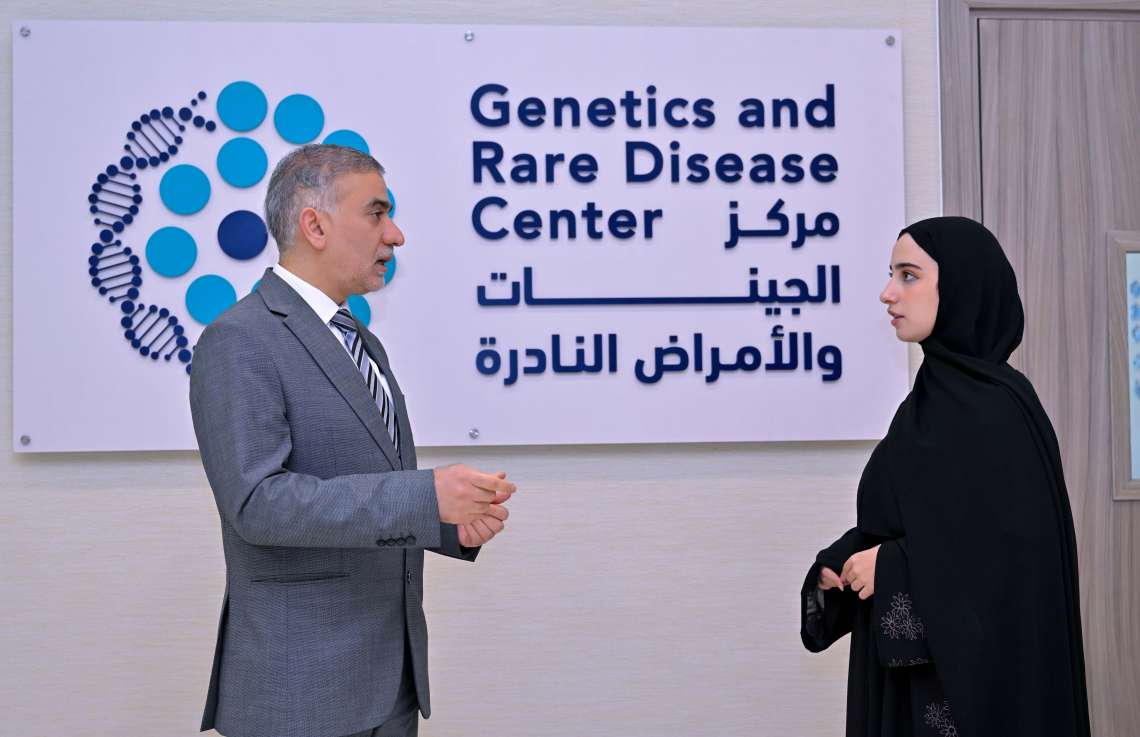
The condition, now known as El-Hattab-Schmidts syndrome, was identified through research led by Prof. Ayman W. El-Hattab, Consultant Clinical Genetics and Director of the Genetics and Rare Disease Centre at the hospital. It is the third rare medical condition in international scientific literature to carry his name — a rare distinction that underscores both the depth of his work and the UAE’s expanding role in genetic research.
A newly recognised neurodevelopmental disorder
El-Hattab-Schmidts syndrome is a genetic neurodevelopmental disorder that affects how a child’s brain and body develop from early life. Children diagnosed with the condition typically experience global developmental delay and intellectual disability. One of its defining characteristics is low muscle tone, medically known as hypotonia, which can make infants appear unusually floppy and may lead to early feeding difficulties.
As affected children grow older, they may develop learning challenges and coordination problems. In some cases, seizures have been reported. Clinicians have also documented eye-related abnormalities, distinctive facial features and structural brain differences visible through imaging studies. Some children may experience breathing difficulties or heart-related findings that require careful monitoring.
The disorder follows an autosomal recessive inheritance pattern. This means both parents usually carry a silent copy of the altered gene without showing symptoms themselves. When both parents pass on the altered gene, the child develops the condition. Diagnosis requires advanced genetic testing to identify mutations in a gene called PPP1R21.
While there is currently no cure, early diagnosis plays a crucial role in improving quality of life. Children can benefit from early intervention services, including physiotherapy, occupational therapy, speech therapy and neurological care, helping families manage symptoms and plan long-term support.
From unexplained cases to global recognition
The discovery dates back to 2018, when Prof. El-Hattab and his team evaluated three children presenting with similar unexplained neurological and developmental symptoms. Routine genetic tests did not match any previously known condition. However, further analysis revealed variants in the PPP1R21 gene — a gene that had not, at that time, been linked to any human disease.
“The similarity of the clinical features and the biological importance of the gene suggested we were looking at a new syndrome,” Prof. El-Hattab explained.
In 2019, an independent multinational research group led by Dr. Schmidts published findings on a separate cohort of patients with comparable clinical features and PPP1R21 variants. The parallel discoveries strengthened the scientific case. Subsequent case reports from research teams across different countries further established the disorder as a distinct clinical entity. The syndrome was eventually formally named in recognition of the contributions of both researchers.
The naming of a syndrome is a rigorous scientific process, typically reflecting sustained research evidence and international validation. For the UAE’s medical research community, it signals a growing capacity to contribute to global knowledge in highly specialised fields such as clinical genetics.
Why diagnosis changes everything
For many families, obtaining a definitive diagnosis ends what is often described as a “diagnostic odyssey” — years of uncertainty, repeated hospital visits and inconclusive tests. According to Prof. El-Hattab, identifying the precise genetic cause enables healthcare providers to tailor medical care more effectively and helps families understand prognosis and recurrence risks.
Because El-Hattab-Schmidts syndrome is inherited in an autosomal recessive manner, confirming the genetic mutation allows parents to explore reproductive options. These may include in vitro fertilisation combined with pre-implantation genetic testing to reduce the likelihood of recurrence in future pregnancies.
Prof. El-Hattab has been involved in identifying more than ten novel genetic syndromes and describing numerous ultra-rare conditions. Advances in genomic sequencing technologies within the UAE have significantly accelerated such discoveries in recent years, enabling clinicians to diagnose conditions that would previously have remained unidentified.
He emphasised that rare disease research extends far beyond individual cases. Identifying new disease-causing genes deepens scientific understanding of biological pathways and disease mechanisms, potentially opening doors to future targeted therapies.
“Many children still present with complex symptoms without a clear diagnosis. Advances in genetic testing are helping us uncover more of these conditions and provide answers to families,” he said, urging families not to lose hope as the field continues to evolve.