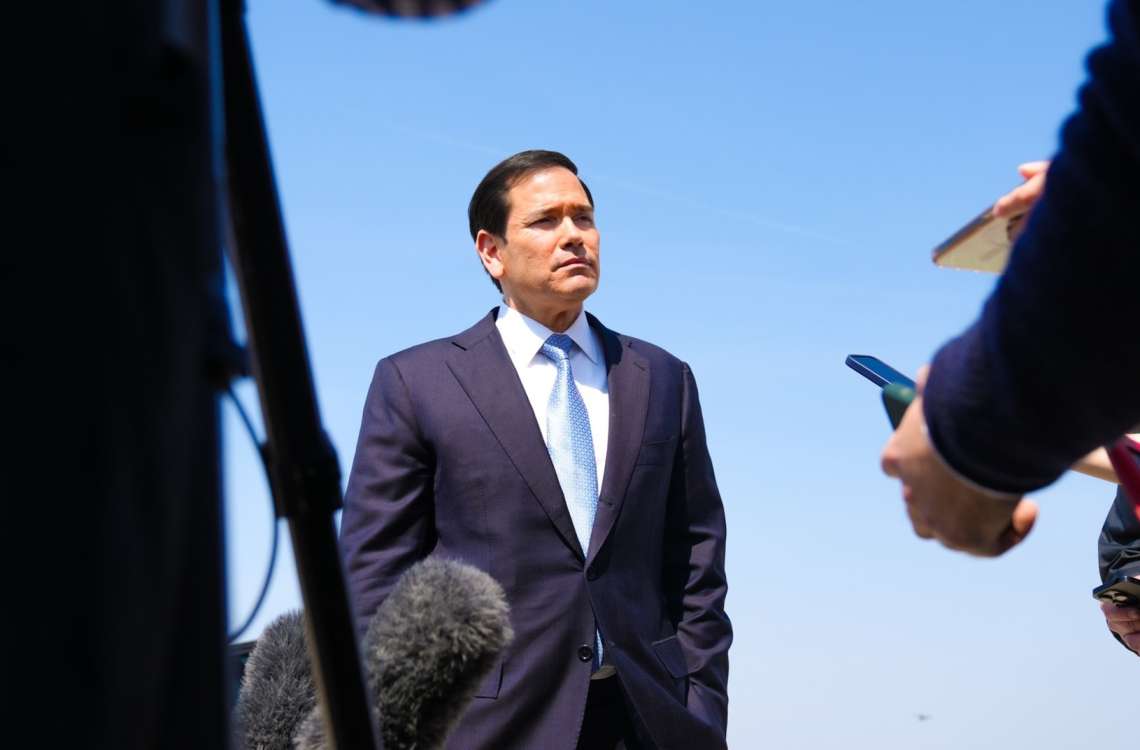
US Secretary of State Marco Rubio signals potential NATO reassessment as European base restrictions limit military operations, raising questions about alliance value and transatlantic security commitments, reports Asian Lite Newsdesk
US Secretary of State Marco Rubio has suggested that Washington may need to reassess its relationship with NATO once the conflict with Iran concludes, raising fresh questions about the transatlantic alliance.
Speaking to Fox News host Sean Hannity on Tuesday, Rubio described the current situation as a potential turning point. “I think there’s no doubt, unfortunately, after this conflict is concluded, we are going to have to reexamine that relationship,” he said. “We’re going to have to reexamine the value of NATO in that alliance for our country.”
Rubio stressed that any final decisions on NATO membership would ultimately rest with President Donald Trump, noting that his remarks were intended to highlight challenges posed by recent restrictions imposed by some European allies.
The secretary of state acknowledged his longstanding support for the alliance, recalling his tenure in the US Senate, where he had been “one of the strongest defenders of NATO” due to the strategic benefits of maintaining US military bases across Europe. “I found great value in it,” he said, citing the ability to project military power globally as a key benefit of NATO cooperation.
However, Rubio warned that the value of the alliance is contingent on access to those bases. “If now we have reached a point where the NATO alliance means that we can’t use those bases, that in fact we can no longer use those bases to defend America’s interests, then NATO is a one-way street,” he said. “When we need them to allow us to use their military bases, their answer is ‘No?’ Then why are we in NATO? You have to ask that question.”
The comments come amid mounting tensions between the US and several European nations over operational access to military infrastructure. On Monday, Spain reportedly closed its airspace to US aircraft involved in operations against Iran, while Italy denied permission for a US plane to land en route to the Middle East on Tuesday.
While Rubio clarified that the US was not demanding that NATO allies participate directly in airstrikes, he said that refusal to provide access to bases during combat operations was deeply problematic. He framed the issue as a fundamental question of reciprocity and strategic alignment within the alliance.
Analysts note that the remarks could spark renewed debate within NATO about the obligations of member states, particularly regarding the balance between national sovereignty and collective defence commitments. European capitals may now face pressure to justify their restrictions, while Washington weighs whether continued participation in NATO remains in its national interest.
Rubio’s statement marks the most explicit indication yet from a senior US official that the country may reconsider the structure and scope of its NATO engagement if operational limitations persist.