From nuclear ambitions to trade demands, Trump’s Asia tour revealed a strategy where cooperation comes with conditions….reports Asian Lite News Desk
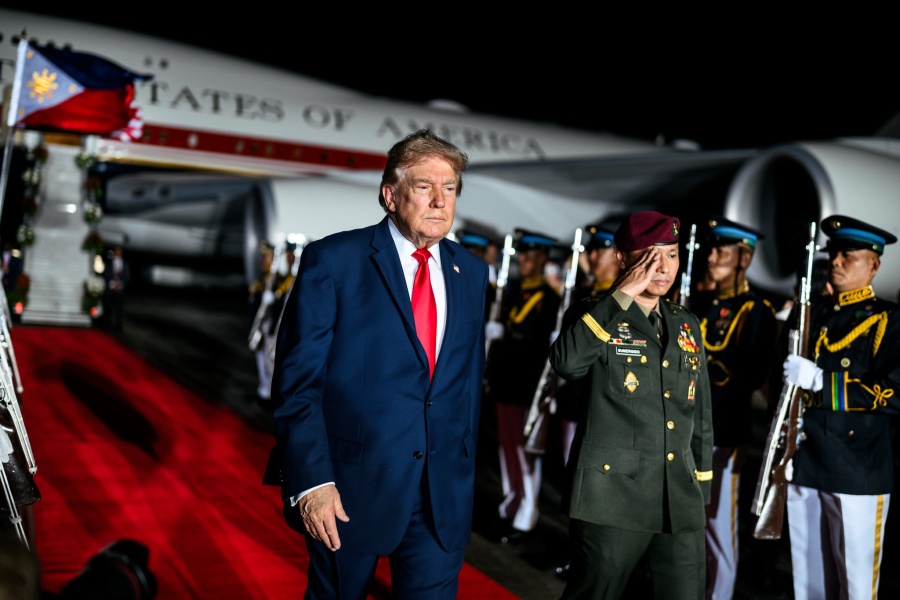
US President Donald Trump’s Asia tour has exposed the competing priorities shaping Washington’s engagement with the region, from nuclear security and trade realignment to artificial intelligence and strategic technology. While Trump projected fresh opportunities for cooperation with China, Russia and Quad partners, his remarks also underlined a distinctly America-first approach, with demands for greater market access and a reluctance to share control over critical technologies.
The central question emerging from Trump’s post-tour briefing is whether Washington can deepen its partnerships across Asia while insisting that the economic and technological gains remain firmly centred in the United States.
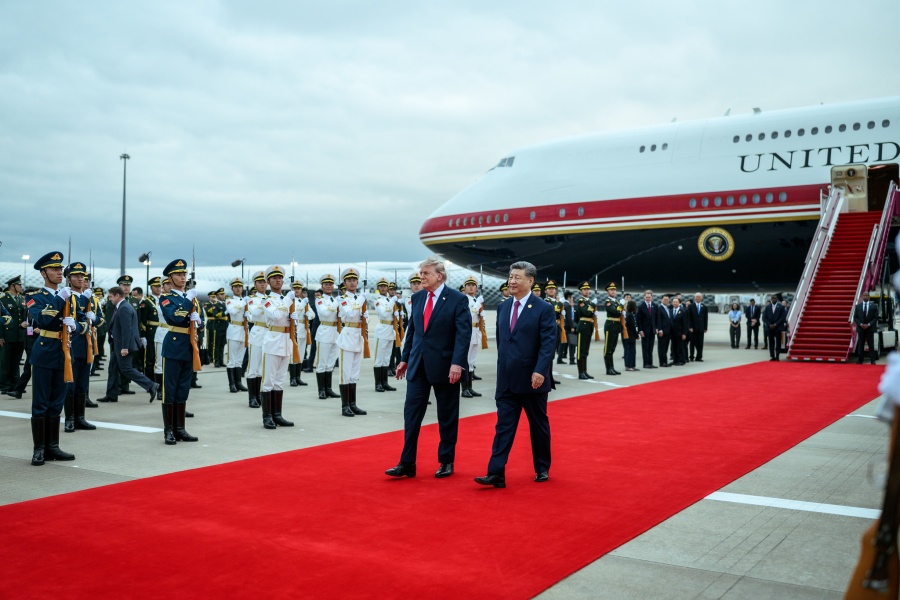
Nuclear security offered one of the most significant diplomatic signals. Trump said Chinese President Xi Jinping had agreed in Shenzhen to discuss reducing nuclear risks with the United States and Russia. He said the three leaders had recognised that nuclear conflict must never be allowed to happen.
The announcement, however, remained at the level of political commitment. No timetable, negotiating framework or agreement on reducing nuclear arsenals was announced. Trump also acknowledged that reaching an agreement to halve the US nuclear arsenal would be difficult. The proposed discussions could open a channel for dialogue between the three major nuclear powers, but their practical significance will depend on whether the stated understanding develops into formal negotiations.
India occupied an important place in Trump’s economic argument. Citing what he described as India’s relatively low interest rates and 7 per cent economic growth, he pressed for the US Federal Reserve to reduce borrowing costs. He suggested that cheaper credit could push American economic growth to 14 or 15 per cent, potentially even 20 per cent, without offering calculations to support the projection.
His remarks placed India at the centre of a comparison over economic performance, while also reflecting his domestic focus on interest rates and growth. The comparison did not amount to a new economic agreement between the two countries, but showed how India’s expansion featured in Trump’s case for changes to US monetary policy.
The Quad’s economic ambitions also featured prominently. US Secretary of State Marco Rubio said leading companies from India, the US, Japan and Australia would meet in early 2027 to explore commercial opportunities. The announcement followed the Quad summit in Manila, attended by Prime Minister Narendra Modi, where leaders agreed to strengthen cooperation on supply chains and maritime surveillance.
Yet Trump’s comments on artificial intelligence revealed the limits of his approach to regional cooperation. Although he acknowledged the Quad’s advanced AI initiative, he said most development work should remain in the US. His threat to impose substantial taxes on American companies building data centres overseas further indicated that he wanted to retain domestic control over strategic technology and investment. Separately, he said Washington and Beijing had agreed to work together on AI safeguards.
His comments on Nvidia chief Jensen Huang and the company’s Blackwell chips added another dimension to the technology debate. Trump said he would like Huang to apologise and return to Nvidia, despite previously recommending Apple chief Tim Cook for the position. He also said American chips sold to China should be older models, underlining his preference for restricting access to advanced semiconductor technology.
Trade negotiations provided another measure of Trump’s approach to Asia. He said Thailand had agreed to eliminate tariffs on US goods and was interested in purchasing $2.6 billion worth of American agricultural products annually, although he described the figure as preliminary. He also said he had urged the Philippines to source all its agricultural and energy imports from the US under a separate framework.
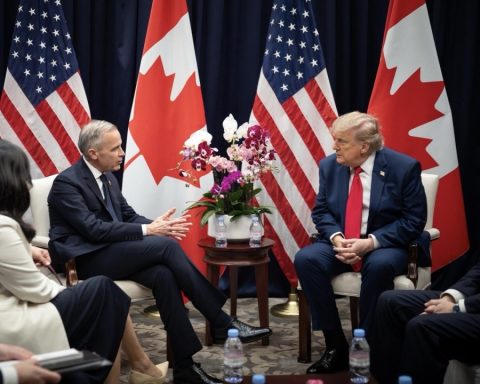
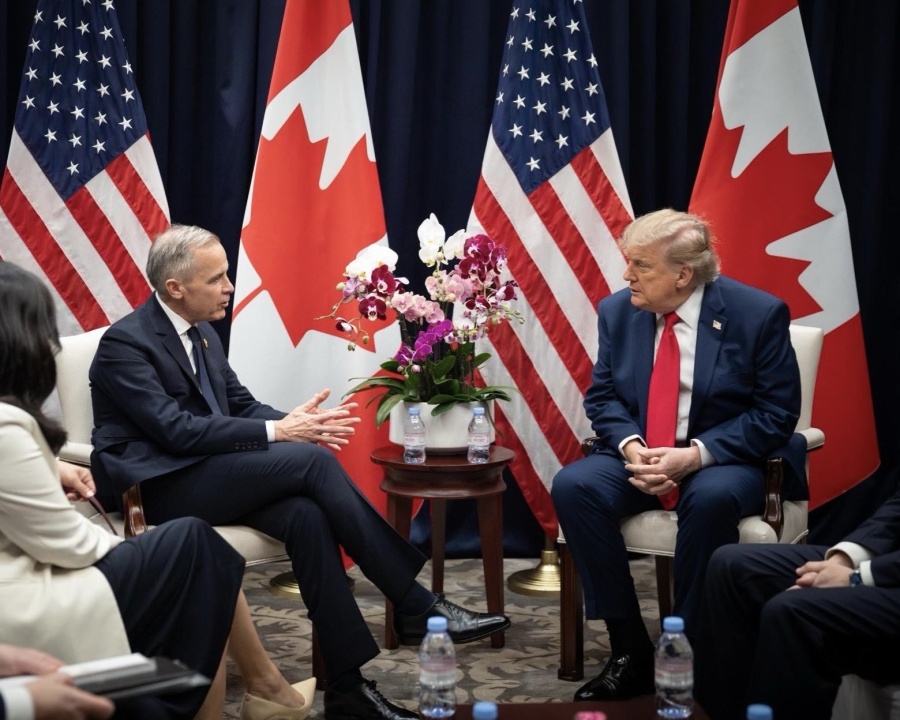
Beyond Asia, Trump said a trade agreement with Mexico was close after his meeting with President Claudia Sheinbaum. He welcomed Canadian Prime Minister Mark Carney’s interest in the Keystone pipeline but insisted that the US trade deficit with Canada, which he estimated at around $80 billion, should be reduced to zero. Together, the remarks reflected his continued emphasis on using trade negotiations to secure concessions for American businesses.
The wars in Ukraine and Iran also featured in the briefing. Trump said Russian President Vladimir Putin had expressed a desire to end the Ukraine conflict during their meeting in Shenzhen. Despite questions about a fresh Russian attack, he maintained that both leaders wanted the fighting to stop, but announced no ceasefire or negotiating date.
On Iran, Trump defended his decision to pursue military action despite acknowledging its impact on fuel prices. He argued that preventing Tehran from acquiring nuclear weapons justified the decision, while Vice President JD Vance defended the objective when questioned about its possible political consequences for Republicans.
Trump also said Democrats had contacted him about immigration and healthcare. He expected discussions to include people who entered the US unlawfully years ago but had since established working lives in the country. He made no commitment on whether they would be allowed to remain.