January 14, 2026
3 mins read

US Blacklists Muslim Brotherhood Wings Over Hamas Ties

The decision, which Washington formally initiated in November last year, will trigger financial and travel restrictions against the three branches….reports Asian Lite News

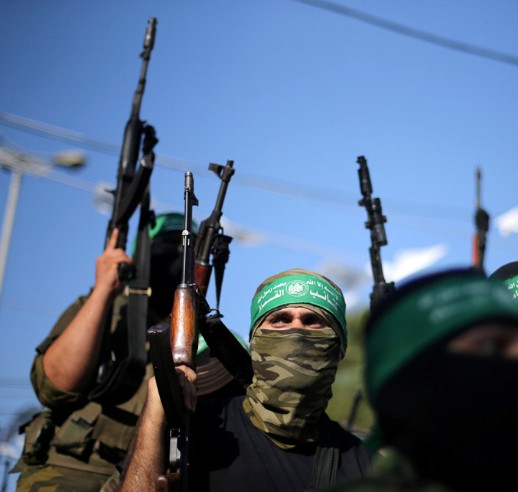
The United States has designated the Egyptian, Lebanese and Jordanian branches of the Muslim Brotherhood as “terrorist organisations”, citing in part what it described as their support for the Hamas group, in a move that is set to impose sweeping sanctions on one of the Arab world’s oldest and most influential Islamist movements.

The decision, which Washington formally initiated in November last year, will trigger financial and travel restrictions against the three branches.

The US Treasury Department on Tuesday (local time) said it has designated the chapters as specially designated global terrorists, accusing them of supporting or encouraging violent terror attacks against Israel and American partners in the region.

“Chapters of the Muslim Brotherhood purport to be legitimate civic organisations while, behind the scenes, they explicitly and enthusiastically support terrorist groups like Hamas,” the Treasury Department said in a statement announcing the designations.

As a consequence of the move, the United States will block any assets held by the Muslim Brotherhood within the world’s largest economy and criminalise transactions involving the group or its affiliates.

The designation also significantly restricts the ability of members to travel to the United States.

Egypt’s foreign ministry welcomed the decision, calling it a “crucial step that reflects the gravity of the group and its extremist ideology and what it represents as a direct threat to regional and international security and stability.”

Founded in Egypt in 1928, the pan-Islamist Muslim Brotherhood once expanded its influence across much of the Arab world.

In recent years, however, the movement has faced sustained pressure and crackdowns by several major Arab governments, leading to a gradual decline in its political reach and organisational strength.

The Brotherhood briefly rose to power in its home country through democratic means following the 2012 election of Mohamed Morsi, which came after the overthrow of longtime ruler Hosni Mubarak.

Mubarak had formally banned the Muslim Brotherhood, though some of its activities, including its extensive network of social services, were tolerated.

Morsi was removed from office in 2013 in a coup led by then-army chief Abdel Fattah al-Sisi, who has since overseen a wide-ranging crackdown on the organisation.

Egypt, along with US allies Saudi Arabia and the United Arab Emirates, has long sought to suppress the Muslim Brotherhood, whose ideological vision calls for the establishment of a unified Islamic caliphate.

The US decision to designate the branches was taken in part on the basis of their alleged support for Hamas, according to American officials.

The Treasury Department said the Egyptian and Jordanian branches of the Brotherhood had coordinated with Hamas, whose large-scale October 7, 2023, attack on Israel sparked a devastating Israeli military offensive in Gaza.

The US State Department, meanwhile, said that in Lebanon, the Muslim Brotherhood, a Sunni Muslim movement, had allied itself with the Hezbollah terror group in launching rockets into Israel.

The Lebanese branch of the Muslim Brotherhood has “pushed for a more formal alignment with the Hizballah-Hamas axis”, the State Department said, underlining Washington’s concerns over the group’s regional alliances.

In Jordan, the Muslim Brotherhood had gained significant influence, with its political wing emerging as the main opposition party in parliament.

However, in April last year, Jordan banned the organisation and ordered the confiscation of its assets after accusing it of stockpiling weapons and plotting to destabilise the kingdom, which maintains a peace treaty with Israel.

In the United States, the Muslim Brotherhood has also been the subject of intense political debate in recent years.

Some conservative groups and lawmakers have promoted claims, widely regarded as unfounded, that the organisation is attempting to infiltrate the US government with the aim of imposing Islamic sharia law.

Republican legislators have repeatedly pushed for a formal ban on the Brotherhood, arguing that such a move would cut off potential funding channels.

Previous Story

US Warning Clouds India’s Chabahar Port Plans

Next Story

Trump Warns Iran of Harsh Response if Protesters Executed

Previous Story

US Warning Clouds India’s Chabahar Port Plans

Next Story

Trump Warns Iran of Harsh Response if Protesters Executed

Latest from -Top News

Pakistan Risks Overstretching Itself in Yemen War

Pakistan’s expanding military role in Saudi Arabia amid the Yemen conflict could strain its defence resources and fragile finances…reports Asian Lite News Desk Pakistan’s military involvement in the war in Yemen may prove unsustainable because of mounting financial pressures and competing security demands, according to a new report. Islamabad’s growing military presence in Saudi Arabia risks stretching its defence resources while exposing the country to greater strategic and economic challenges. An article by Andrew Wilson in One World Outlook describes Pakistan’s involvement as a case of “fiscal and strategic overreach”, arguing that the country lacks the financial flexibility to sustain an expanded military commitment. Pakistan’s external finances depend heavily on an International Monetary Fund (IMF) programme, financial support from Gulf countries and remittances from Pakistani workers in the region. The report argues that deeper military involvement in the conflict could place additional pressure on these sources of financial stability. It also warns that deploying troops and military equipment abroad could weaken Pakistan’s capacity to address security challenges along its eastern border and deal with two domestic insurgencies. The move could also draw Islamabad into a conflict it has sought to approach cautiously. A Reuters report in May, citing Pakistani security and government sources, said Islamabad had deployed around 8,000 troops, a squadron of approximately 16 aircraft, mostly JF-17 fighter jets, two drone squadrons and a Chinese HQ-9 air-defence battery to Saudi Arabia. According to those sources, Riyadh was financing the deployment, with Pakistani personnel operating the equipment. The sources also said a confidential agreement contemplated the possibility of deploying up to 80,000 troops. Islamabad has not confirmed those figures, although it has acknowledged its military presence in Saudi Arabia, including the deployment of fighter jets at King Abdulaziz Air Base from April. The One World Outlook article argues that Saudi financial support can cover allowances and operating expenses but cannot easily replace military equipment needed elsewhere or resolve the political and strategic challenges of participating in the Yemen conflict. Pakistan’s defence budget is another concern. For the 2026-27 financial year, the federal government allocated PKR 3 trillion, or approximately $10.8 billion, to defence services. The allocation represents an 18 per cent increase from the original PKR 2.55 trillion provision and amounts to around 2.1 per cent of projected gross domestic product (GDP). Defence spending accounts for approximately 16 per cent of the federal government’s PKR 18.8 trillion expenditure. Military pensions are budgeted separately at PKR 822 billion, while debt servicing costs stand at approximately PKR 8 trillion, more than two-and-a-half times the defence allocation. The report argues that these competing financial obligations leave little room for additional military expenditure without placing further pressure on public finances. Pakistan’s reliance on IMF assistance also limits its fiscal flexibility. The country must meet the conditions attached to the programme, including a primary budget surplus target of 2 per cent of GDP and continued restraint on development spending. According to the article, these requirements make it difficult for Islamabad to finance an additional military commitment without compromising other budgetary priorities. Pakistan’s economic indicators offer limited reassurance. Economic growth for the 2025-26 financial year is estimated at between 3.6 and 3.7 per cent, while inflation reached approximately 10.3 per cent in September following an energy price shock. Foreign exchange reserves stood at around $21.5 billion at the end of September. Although this marks an improvement from the low levels recorded in 2023, the report notes that the reserves cover only a few months of imports. Financial assistance from Gulf partners remains central to Pakistan’s external stability. The article says Islamabad holds approximately $8 billion in Saudi deposits at its central bank. In July, the State Bank of Pakistan said Riyadh had extended the maturity of $5 billion in deposits to December 2028, easing the country’s immediate external financing requirements. A further $3 billion deposit was also extended in the spring. However, the article argues that these arrangements provide temporary relief rather than long-term financial independence, particularly as regional conflict threatens the stability of the Gulf economies on which Pakistan relies. The report concludes that Pakistan faces a difficult balance between supporting Saudi Arabia militarily and preserving the financial and military resources needed to address its domestic and regional challenges.

UK and Germany Ratify Kensington Treaty

Britain and Germany ratify the Kensington Treaty, agreeing new cooperation on AI, quantum research, defence and security while targeting investment, jobs and Russian hybrid threats…reports Asian Lite News Desk Britain and Germany

Economic tide is turning in Bangladesh

If there is one thing that can bring some comfort to the struggling Bangladeshi economy, it is good relations with India. Bangladesh should remember that Delhi’s backing, through easy supplies of essentials
Go toTop

Don't Miss

Biden plans holding talks with Xi, mulls tariff easing

The statement from Biden comes a day after a US

Bush calls on Americans to confront violent extremists

Bush’s speech at the Flight 93 Memorial in Shanksville, Pennsylvania,