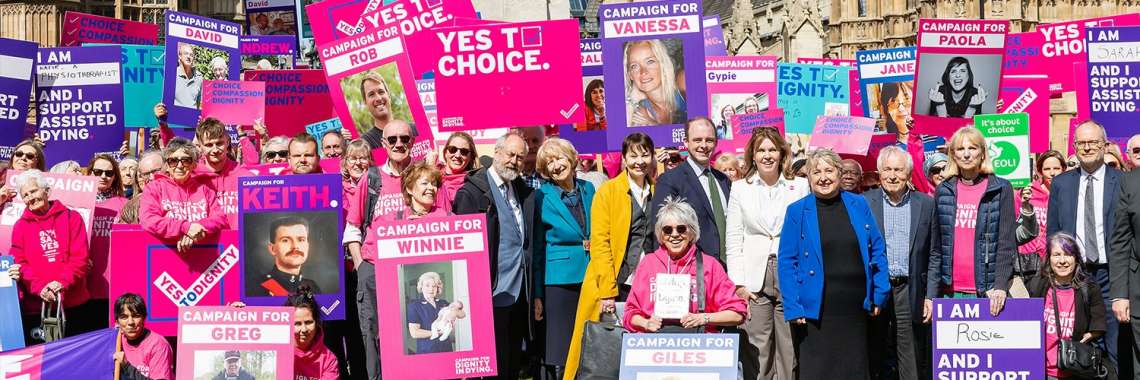
Peers signal assisted dying bill is likely to run out of time before the May deadline. Campaigners accuse a small group in the Lords of blocking legislation as the government declines extra time
The Terminally Ill Adults (End of Life) Bill is now widely expected to fail before the May deadline, after the government confirmed it would not allocate further parliamentary time in the House of Lords.
Roy Kennedy, Labour’s chief whip in the Lords, said this week that ministers would not extend proceedings beyond May, when all legislation that has not completed its passage falls automatically ahead of the King’s Speech. With six sitting days remaining before the deadline, the team behind the bill has acknowledged that the legislation in its current form is unlikely to pass.
The government has previously granted additional time for the bill’s consideration, including in December, but is not repeating that move. Supporters of the legislation said they did not blame ministers, describing the government as having been helpful to date. Instead, they criticised a small group of peers who have tabled numerous amendments and questions on the bill’s details.
Broadcaster and campaigner Esther Rantzen said: “This is absolute blatant sabotage. This is a handful of peers putting down 1,200 amendments not to scrutinise the bill, which is their job, but to block it. A few peers, for their own reasons, have decided that they’re going to stop this going through Parliament, and the only way to stop them would be to invoke the Parliament Act, which has happened before, or get rid of the House of Lords – they’re clearly not fit for purpose.”
She said she remained hopeful that change would come, citing what she described as growing international calls for reform. She also paid tribute to Keir Starmer, who supports changing the law, saying he had done everything he had promised her before the election.
Frank Sutton, who has terminal cancer and wants to choose how she dies, said: “I don’t want to die without dignity, without it being my choice, without my family knowing that this is what I want.”
Opponents of assisted dying rejected claims of obstruction. Dr Gordon McDonald, chief executive of Care Not Killing, told Sky News: “This issue is very difficult, and it needs proper scrutiny – that’s what the members of the House of Lords have been doing. It didn’t get proper scrutiny in the House of Commons. It’s right that parliaments look at these bills properly and give them due consideration, that’s what the House of Lords is doing.”
The prospect of the bill’s collapse has not been widely understood outside Westminster. Earlier this week, the Welsh Parliament approved a legislative consent order, endorsing in principle the legislation it expected to emerge from Parliament.
Attention is now turning to what might happen after May. Supporters argue that opinion polling and repeated backing from MPs suggest the issue should return to the Commons. However, the government is likely to continue handling the matter at arm’s length. There is no unified cabinet position, and senior ministers, including Wes Streeting and Shabana Mahmood, oppose changing the law.
Some MPs who supported the bill during its Commons stages have said the process was protracted and complex, and would be reluctant to repeat it. Supporters contend that if reintroduced, parts of the parliamentary process could be shortened, and that the Parliament Act could, in theory, be used to override resistance in the Lords.
Nevertheless, the broader political context, pressures on parliamentary time and the proximity of a general election mean that any renewed attempt to change the law would face significant practical and political hurdles.