South Korea has asked the United Kingdom to exempt its imports of Russian liquefied natural gas from upcoming sanctions, warning that the measures could threaten the country’s energy security…reports Asian Lite News Desk
South Korea has asked the United Kingdom to exempt its imports of Russian liquefied natural gas (LNG) from planned sanctions, warning that the measures could disrupt the country’s energy supply and undermine energy security.
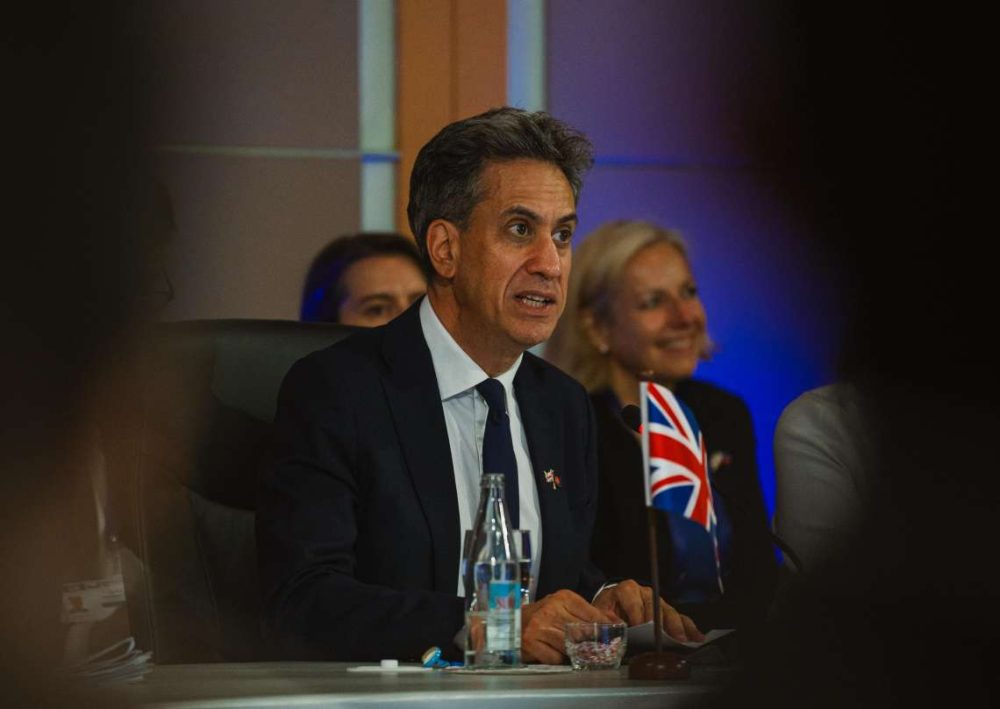
Trade Minister Yeo Han-koo raised the issue during a virtual meeting with Britain’s newly appointed Trade Minister Anas Sarwar on Thursday, where the two sides discussed bilateral trade and economic cooperation, according to South Korea’s Ministry of Trade, Industry and Energy.
Yeo expressed concern over Britain’s plan to ban maritime transport, insurance and related services for Russian LNG from January 2027.
“Britain’s plan to ban the provision of maritime transport, insurance and related services for Russian LNG starting in January 2027 could undermine South Korea’s energy security and the stability of its LNG supply,” Yeo said.
The ministry said the sanctions could affect imports by the state-run Korea Gas Corporation (KOGAS), which has a long-term contract to purchase LNG from Russia’s Sakhalin-II oil and gas project until March 2028.
Officials also warned that shipments could face disruption if British insurers withdraw reinsurance and other services linked to the contract.
South Korea urged Britain to follow the European Union’s approach. Last month, the EU approved similar sanctions on Russian LNG but granted exemptions for shipments from the Sakhalin-II project to South Korea and Japan.
Yeo called for close consultations with London and requested that Britain introduce a comparable exemption to safeguard energy supplies.
During the meeting, the South Korean minister also raised concerns over Britain’s tightened safeguard measures on steel imports, urging the UK to allocate fair import quotas for South Korean steel products.
Britain introduced revised steel import rules on July 1, cutting import quotas for several products and imposing a 50 per cent tariff on shipments exceeding the quota limits.
Although South Korea’s duty-free quota increased from 93,000 tonnes to 173,000 tonnes, the number of steel product categories covered by the quota expanded from four to nine, effectively tightening the restrictions on exporters.
The discussions come as Seoul seeks to protect its energy imports and maintain stable trade relations with key partners amid evolving international sanctions and trade measures.