The government has launched a new Sovereign AI Fund aimed at strengthening the UK’s domestic artificial intelligence capabilities and supporting high-growth firms. Speaking at Wayve, the Science and Technology Secretary set out plans to combine state backing with venture-style investment to accelerate innovation and improve national resilience
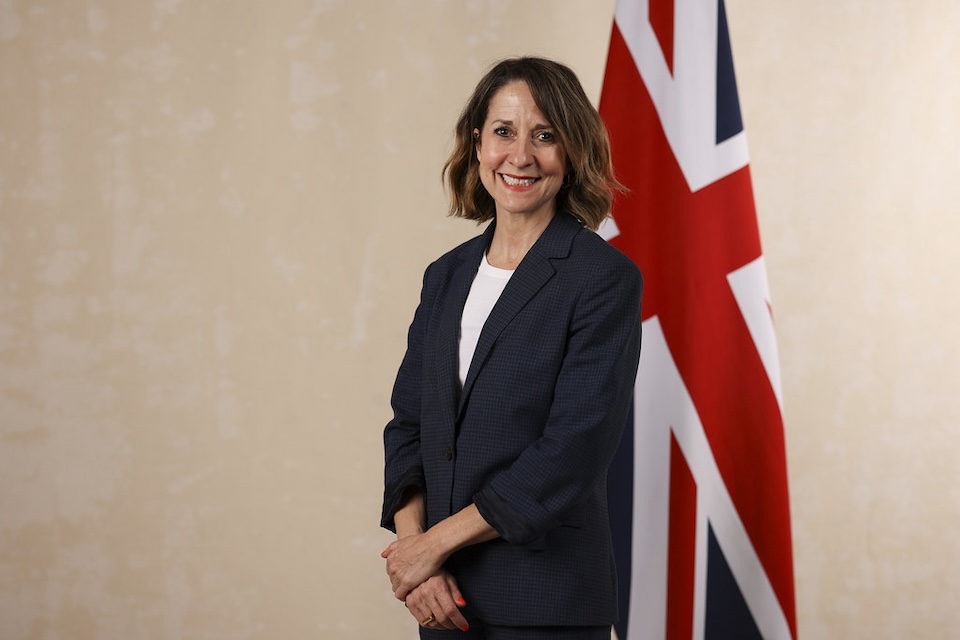
The Secretary of State for Science, Innovation and Technology, Liz Kendall, has launched the Sovereign AI Fund at an event hosted by autonomous driving company Wayve, setting out the government’s approach to strengthening domestic artificial intelligence capabilities and supporting British firms to compete globally.
Opening the event, Kendall thanked Wayve and described the company as a global leader in embodied AI for autonomous driving, highlighting its backing from major automotive firms including Mercedes-Benz, Nissan and Stellantis, as well as support from leading semiconductor companies. She said the launch was intended to help more British AI companies “start up, scale up and compete and succeed globally” while ensuring the UK develops greater sovereign capability in the technology.
Kendall described Sovereign AI as “one of the most important things this government does to build a better future for our country”, adding: “But AI is the most powerful technology of our lifetime, with the potential to transform every aspect of our lives. It is critical to our economic prosperity and non-negotiable for our national security.”
She said the UK must be “an AI maker, not just an AI taker”, arguing that greater domestic control would allow the country to capture more of the benefits of the technology. The speech also pointed to existing national strengths, including universities, talent, access to venture capital and a “pragmatic not dogmatic approach to regulation”, alongside institutions such as the AI Security Institute.
Kendall said the initiative marked a shift in the government’s approach, combining “the speed of venture with the strength of the nation state”. She contrasted this with what she described as slower traditional processes in government, citing the time taken to pass legislation and the challenges of decision-making across departments.
The fund will operate independently, with an investment committee making decisions “free from political interference about who to back and why”. It will be led by chair James Wise and head of ventures Josephine Kant, with a managing partner expected to be announced shortly.
According to Kendall, the fund has already made two direct investments, including one in Callosum, described as a company building AI infrastructure. A further investment is expected to be announced, while five “right of first refusal” agreements have been signed with companies raising future funding rounds. These include firms working on applications such as tackling Alzheimer’s and Parkinson’s, developing defence and security technologies, and creating AI agents that improve through real-world use.
She said the initiative was designed to go beyond financial support by mobilising wider state resources. This includes providing access to the UK’s largest supercomputers and offering accelerated visa processing for global talent, with decisions made within one working day and up to ten visas for research and development staff provided without cost.
Kendall told founders that her aim was to ensure they “never have to choose between your ambition and your home”, and invited those working in AI internationally to build their companies in the UK.
In closing, she acknowledged wider uncertainty in the global environment but said she believed progress was possible. “I believe that with the talent in this room – and a government that has a cause to make technology work for all, that believes in an active state, and that is prepared to do things differently – we can and we will lead our country to a better future,” she said.
The launch of the Sovereign AI Fund forms part of broader efforts by the government to position the UK as a leading centre for artificial intelligence, with an emphasis on domestic capability, investment and global competitiveness.