India with multiple needs for hardware could finalise a mega-purchase this week from the US in the $20-30 billion range, reports Robinder Sachdev and SPS Pannu
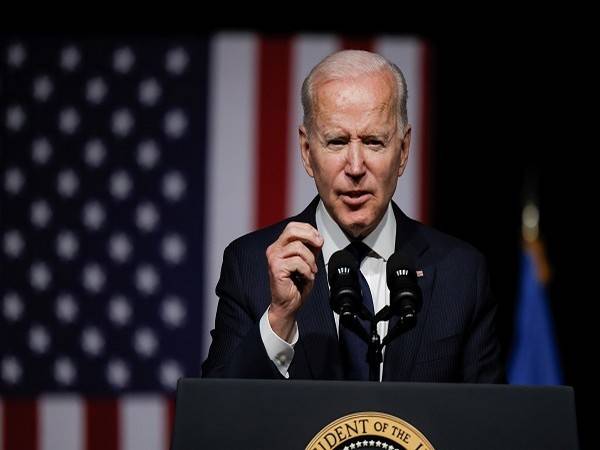
President Joe Biden will be hosting the Quad countries’ heads of governments summit this coming week, in Washington comprising of the US, Japan, Australia, and India. By end of the week, there could be announcements of military deals with Japan, Australia, and India, that may total up to $100 billion in American defence exports.
In fact, the Australian submarine deal, signed on Thursday, itself is estimated at $40 billion (and projected to reach $90 billion in long-term). In the days ahead, before September 24, when the formal Quad summit will be held, Japan could also well, and does need to, sign up for some $20-30 billion package, and the same goes for India. India too has its multiple needs for hardware, needs to ramp up fast, and thus could finalise a mega-purchase this week from the US, again in the $20-30 billion range.
The US is now leading the Quad towards a loose but muscular military alliance to prevent the planetary dominance plans of China. As part of the US plan, the Indo-Pacific nations of Japan, India, Australia will need to each boost up their defence and offence capabilities, for their own national, self-interest, with accompanying investments also made by the US in its own force projection in this theatre. Consequently, together the Quad will become a formidable firewall to the expansionism and military adventurism of China.
With the for-ever wars in Iraq and Afghanistan now over. Where is the next big market for US defence exports? Thanks to China, which through its behaviour, is ensuring that the next big market for military sales by the US is in the Indo-Pacific region.
Pact on stepping up chip production likely
The United States, Japan, India and Australia are likely to sign an agreement to take steps to build secure semiconductor chip supply chains when they meet in Washington for the Indo-Pacific Quad summit next week, according to a report Japans Nikkei newspaper.
The move is aimed at reducing the dependence for semiconductor chips on an increasingly assertive China. Prime Minister Narendra Modi will be attending the first in-person Quad summit to be hosted by President Joe Biden in Washington.
The Nikkei report is based on a draft of the joint statement that is expected to be issued at the summit. The draft says that in order to create robust supply chains, the four countries will ascertain their semiconductor supply capacities and identify vulnerability.
The statement also says the use of advanced technologies should be based on the rule of respecting human rights, the newspaper said on its website.
The chip shortage is worldwide and even Indian auto and smartphone manufacturing companies have been affected.
The Senate has already approved by an overwhelming majority the legislation to provide a staggering $190 billion package to beef up the country’s ability to compete with Chinese technology.
The bill authorises the largest ever funding in American history for technology research, semiconductor development and manufacturing, as well as subsidies for robot makers and chipmakers. The computer chip shortage has hit automobile production in major US companies such as GM at a time when global demand is reviving.
Commerce Secretary Gina Raimondo has said the funding is on a scale that could enable the setting up of as many as seven to 10 new semiconductor plants.
President Joe Biden is continuing with his predecessor Donald Trump’s hard line as far as China is concerned. He has blacklisted over 50 Chinese companies because of their links to Beijing’s “military-industrial complex.” US companies and investors are barred from entering into any deals with these companies.
These companies are suspected to be stealing US technology and using it to strengthen China’s military and fuel its belligerent foreign policy which has emerged as a worrying factor in Asia and the Indo-Pacific region.