General Mark Milley, Chairman of US Joint Chiefs of Staffs said he still believed the war would end at the negotiating table..reports Asian Lite News
General Mark Milley, Chairman of US Joint Chiefs of Staff, has said that neither Russia nor Ukraine is likely to achieve their military aims, and he believes the war will end at the negotiating table, The Guardian reported.
The Pentagon is re-examining its weapons stockpiles and may need to boost military spending after seeing how quickly ammunition has been used during the war in Ukraine, Milley said in an interview with the Financial Times.
While he did not tie the depletion of stockpiles to his support for peace talks, Milley said he still believed the war would end at the negotiating table, The Guardian reported.
He said, “It will be almost impossible for the Russians to achieve their political objectives by military means. It is unlikely that Russia is going to overrun Ukraine. It’s just not going to happen.”
It would also be “very, very difficult for Ukraine this year to kick the Russians out of every inch of Russian-occupied Ukraine”, he said, adding, “It’s not to say that it can’t happen… But it’s extraordinarily difficult. And it would require essentially the collapse of the Russian military.”
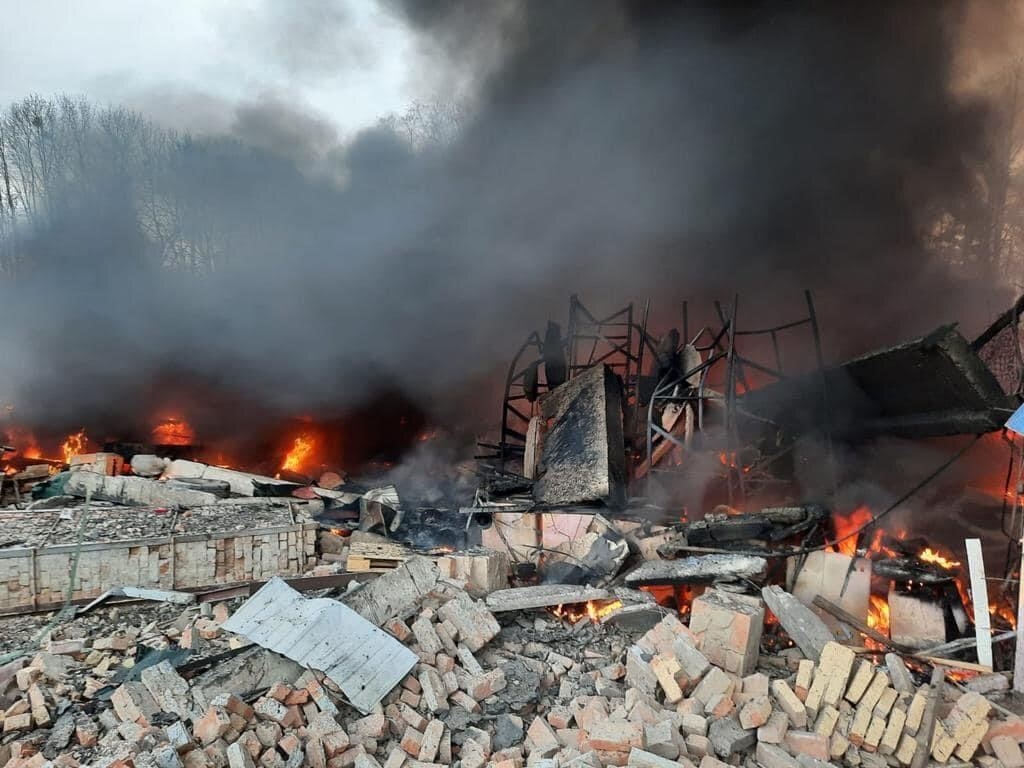
On Tuesday, Milley said Russia has lost “strategically, operationally and tactically” during a joint news conference with the US Defence Secretary, Lloyd Austin, The Guardian reported.
He said at the time, “Russia is a global pariah and the world remains inspired by Ukrainian bravery and resilience. In short, Russia has lost – they’ve lost strategically, operationally and tactically and they are paying an enormous price on the battlefield”.
Meanwhile, Russia’s army is estimated to have lost nearly 40 per cent of its prewar fleet of tanks after the almost year-long of fighting in Ukraine, according to a count by the specialist think-tank, the International Institute of Strategic Studies (IISS), according to a media report.
That rises to as much as 50 per cent for some of the key tanks used in combat, forcing Russia to reach into its still sizeable cold war-era stocks, The Guardian reported.
Ukraine’s tank numbers are estimated to have increased because of the number it has captured and supplies of Soviet-era tanks from its western allies.
John Chipman, the think-tank’s chair, said the war had been “a political and military failure for Russia” highlighting shortcomings in leadership and deficiencies in its munitions, despite Kremlin modernisation efforts, The Guardian reported.
“Russia’s actions over the past year have raised questions not only over the competence of its military and senior military leadership, but also over command cohesion,” he said, launching the IISS’s annual Military Balance audit of the world’s armed forces, The Guardian reported.
The thinktank’s figures are based largely on open source images from drones, satellites and on the battlefield, running from the beginning of the war to the end of November, although the conflict means numbers can only be estimated.
Its headline count is that Russia’s number of tanks in its army have reduced by 38 per cent from 2,927 to 1,800, while there have been particularly heavy losses of its workhorse T-72B3, an upgrade first delivered to its army in 2013.
Heavy losses on the battlefield have meant that Russia had lost “around 50 per cent of its pre invasion fleet” of the tank and a related variant, Chipman said, and slow industrial production was “forcing Moscow to rely on its older stored weapons as attrition replacements”.
Russian overoptimism meant that it suffered heavy tank losses at the beginning of the war, particularly in the abortive attack on Kiev, where large numbers of tanks and armoured vehicles moving in a convoy were destroyed on roads north of the capital. Many others were captured or towed off by tractors as the assault failed, The Guardian reported.