April 26, 2023
2 mins read

Ukraine receives $6.6 bn in direct budget support from EU

Ukraine received the first tranche of 3 billion euros in January, and the second tranche of 1.5 billion euros in March…reports Asian Lite News

As Russia’s continues its full scale invasion of Kiev, Ukraine has received 6 billion euros ($6.6 billion in direct budget support from the European Union (EU) so far this year, the government’s press service reported.

Ukraine received the third tranche of the EU’s large-scale macro-financial assistance (MFA) worth 1.5 billion euros on Tuesday, which will be directed to cover urgent budget needs.

Ukraine received the first tranche of 3 billion euros in January, and the second tranche of 1.5 billion euros in March.

While commenting on the aid, Finance Minister Serhiy Marchenko said the EU’s support would help the government to implement the country’s budget “on time and in full”.

Under the MFA, the EU plans to provide Ukraine with a total of 18 billion euros of concessional financing in 2023.

Meanwhile, amid talk of a Ukrainian counter-offensive doing rounds, Russia has introduced its most advanced T-14 ‘Armata’ main battle tank to the battlefield after fitting it with additional protection.

“The Russian forces have begun to use the newest Armata tanks to fire at Ukrainian positions but they haven’t participated in direct assault actions yet,” a source told RIA Novosti news agency.

According to the source, the T-14s were fitted with additional protection from anti-tank munitions and tank crews have been training in one of “newly-incorporated” Donbass republics since 2022.

In February, a video was posted on social media that purportedly showed a T-14 firing its 125mm gun “in the zone of the special military operation([in Ukraine)”.

RT also reported Konstantin Sivkov, the Vice-President of the Russian Academy of Rocket and Artillery Sciences, telling news website URA.ru on Tuesday that the T-14 will be primarily pitted against the British Challenger 2 and German-made Leopard 2A6 models that were pledged to Kiev by NATO countries.

“The Armata surpasses both of these newest Western tanks in terms of technical characteristics,” he asserted. He added that the T-14 can operate as “a command (centre)” in a group of Russian T-90M tanks.

The T-14 was unveiled to the public in 2015 and first saw combat in Syria, where Russian forces are supporting President Bashar Assad’s fight against Islamic State (IS, formerly ISIS) and other Islamist militants.
ALSO READ: Brazil’s Lula stresses Russia-Ukraine direct talks

Previous Story

‘Brits need to accept they are now poorer’

Next Story

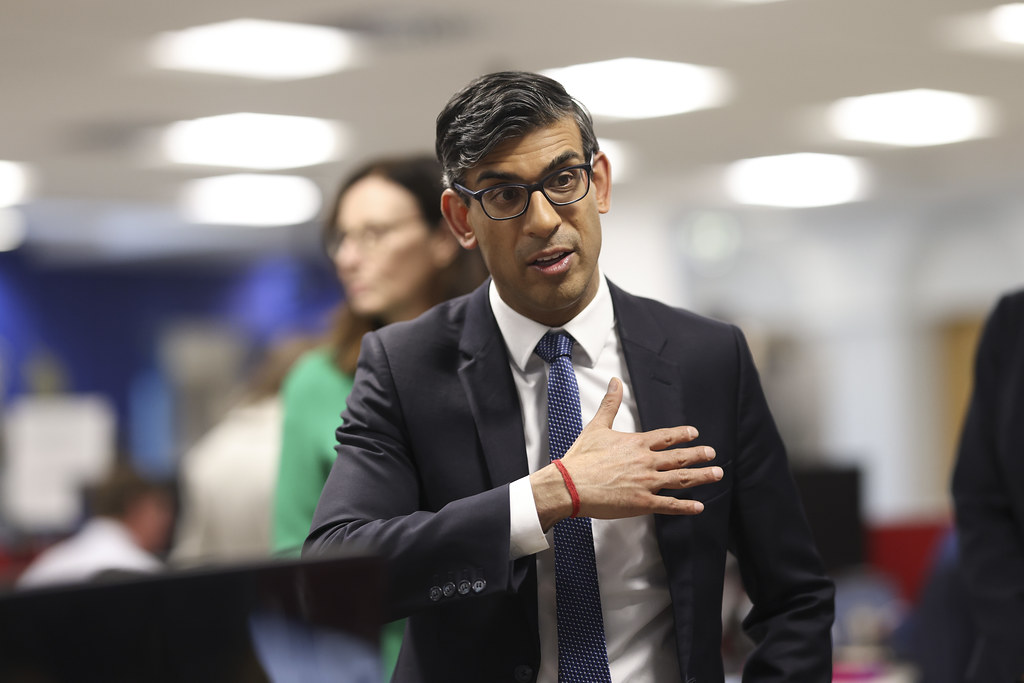
Sunak wants EU deal on passport checks to ease delays

Previous Story

‘Brits need to accept they are now poorer’

Next Story

Sunak wants EU deal on passport checks to ease delays

Latest from -Top News

Pakistan Risks Overstretching Itself in Yemen War

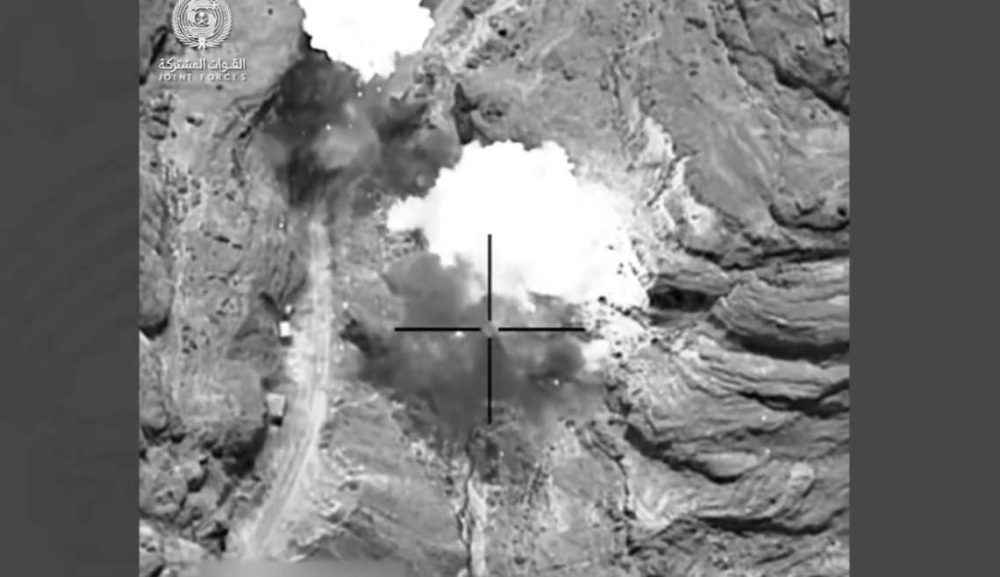
Pakistan’s expanding military role in Saudi Arabia amid the Yemen conflict could strain its defence resources and fragile finances…reports Asian Lite News Desk Pakistan’s military involvement in the war in Yemen may prove unsustainable because of mounting financial pressures and competing security demands, according to a new report. Islamabad’s growing military presence in Saudi Arabia risks stretching its defence resources while exposing the country to greater strategic and economic challenges. An article by Andrew Wilson in One World Outlook describes Pakistan’s involvement as a case of “fiscal and strategic overreach”, arguing that the country lacks the financial flexibility to sustain an expanded military commitment. Pakistan’s external finances depend heavily on an International Monetary Fund (IMF) programme, financial support from Gulf countries and remittances from Pakistani workers in the region. The report argues that deeper military involvement in the conflict could place additional pressure on these sources of financial stability. It also warns that deploying troops and military equipment abroad could weaken Pakistan’s capacity to address security challenges along its eastern border and deal with two domestic insurgencies. The move could also draw Islamabad into a conflict it has sought to approach cautiously. A Reuters report in May, citing Pakistani security and government sources, said Islamabad had deployed around 8,000 troops, a squadron of approximately 16 aircraft, mostly JF-17 fighter jets, two drone squadrons and a Chinese HQ-9 air-defence battery to Saudi Arabia. According to those sources, Riyadh was financing the deployment, with Pakistani personnel operating the equipment. The sources also said a confidential agreement contemplated the possibility of deploying up to 80,000 troops. Islamabad has not confirmed those figures, although it has acknowledged its military presence in Saudi Arabia, including the deployment of fighter jets at King Abdulaziz Air Base from April. The One World Outlook article argues that Saudi financial support can cover allowances and operating expenses but cannot easily replace military equipment needed elsewhere or resolve the political and strategic challenges of participating in the Yemen conflict. Pakistan’s defence budget is another concern. For the 2026-27 financial year, the federal government allocated PKR 3 trillion, or approximately $10.8 billion, to defence services. The allocation represents an 18 per cent increase from the original PKR 2.55 trillion provision and amounts to around 2.1 per cent of projected gross domestic product (GDP). Defence spending accounts for approximately 16 per cent of the federal government’s PKR 18.8 trillion expenditure. Military pensions are budgeted separately at PKR 822 billion, while debt servicing costs stand at approximately PKR 8 trillion, more than two-and-a-half times the defence allocation. The report argues that these competing financial obligations leave little room for additional military expenditure without placing further pressure on public finances. Pakistan’s reliance on IMF assistance also limits its fiscal flexibility. The country must meet the conditions attached to the programme, including a primary budget surplus target of 2 per cent of GDP and continued restraint on development spending. According to the article, these requirements make it difficult for Islamabad to finance an additional military commitment without compromising other budgetary priorities. Pakistan’s economic indicators offer limited reassurance. Economic growth for the 2025-26 financial year is estimated at between 3.6 and 3.7 per cent, while inflation reached approximately 10.3 per cent in September following an energy price shock. Foreign exchange reserves stood at around $21.5 billion at the end of September. Although this marks an improvement from the low levels recorded in 2023, the report notes that the reserves cover only a few months of imports. Financial assistance from Gulf partners remains central to Pakistan’s external stability. The article says Islamabad holds approximately $8 billion in Saudi deposits at its central bank. In July, the State Bank of Pakistan said Riyadh had extended the maturity of $5 billion in deposits to December 2028, easing the country’s immediate external financing requirements. A further $3 billion deposit was also extended in the spring. However, the article argues that these arrangements provide temporary relief rather than long-term financial independence, particularly as regional conflict threatens the stability of the Gulf economies on which Pakistan relies. The report concludes that Pakistan faces a difficult balance between supporting Saudi Arabia militarily and preserving the financial and military resources needed to address its domestic and regional challenges.
Go toTop

Don't Miss

Canada to donate 200 additional armoured vehicles to Ukraine

Canada’s military assistance committed to Ukraine since February 2022 includes

NATO Must Not Be Party To War: Scholz

German Chancellor made these statements during a joint presser with