August 8, 2025
2 mins read

Meta sued for $1b over Hamas attack livestream

Meta, the parent company of Facebook and Instagram, is facing a staggering $1.17 billion lawsuit in Israel over its alleged role in enabling the October 7 Hamas attack to be livestreamed on its platforms. Survivors and relatives of victims claim that Meta’s social media sites became a tool for terrorists to broadcast their brutal actions, deepening the trauma of those affected.

The legal action was filed in the Tel Aviv District Court and seeks nearly 4 billion shekels in damages. Plaintiffs are demanding compensation both for the victims whose suffering was shown online and for the Israeli public who were exposed to the violent footage. According to the lawsuit, Meta failed to act swiftly to remove videos showing killings, kidnappings, and other atrocities, allowing them to remain accessible for hours or even days.

One of the most heartbreaking accounts comes from the Idan family. Hamas militants reportedly stormed their home during the attack, holding family members hostage and killing their eldest daughter, Maayan. The mother’s Facebook account was used to livestream the horrific scene. The father, Tsachi, was kidnapped and later killed in Gaza. The family’s ordeal was broadcast to thousands, amplifying their pain and anguish.

Other plaintiffs include members of the public who say they were traumatized simply by opening Facebook or Instagram on that day, encountering graphic and violent content without warning or protection. The lawsuit accuses Meta of effectively becoming part of Hamas’s “terror infrastructure” by failing to block the harmful material quickly enough.

In addition to charges of negligence, Meta is also accused of violating the privacy and dignity of victims and profiting from the viral spread of terror content through its algorithms. Critics argue the company did not have adequate rapid response systems in place to combat the real-time dissemination of violent videos during the attack.

A spokesperson for Meta expressed condolences to those affected and highlighted the company’s ongoing efforts to remove content supporting or glorifying Hamas. They stated that teams work around the clock to monitor and take down inappropriate posts. However, many believe these measures were too little, too late.

This lawsuit is part of a growing trend of legal challenges aimed at holding various parties accountable for supporting or enabling Hamas. Recently, families of victims also sued the Palestinian Authority, condemning its policy of providing financial aid to convicted attackers and their families, which they say fuels terrorism.

Newsdesk

Newsdesk

Aravind Rajeev is Deputy News Editor at Asian Lite, mostly covering the Middle East and GCC. He has over eight years of experience as a journalist, with a background in ground-level reporting, crime reporting, as well as international and regional news.

Previous Story

Trump pushes ‘strong economy’ message

Next Story

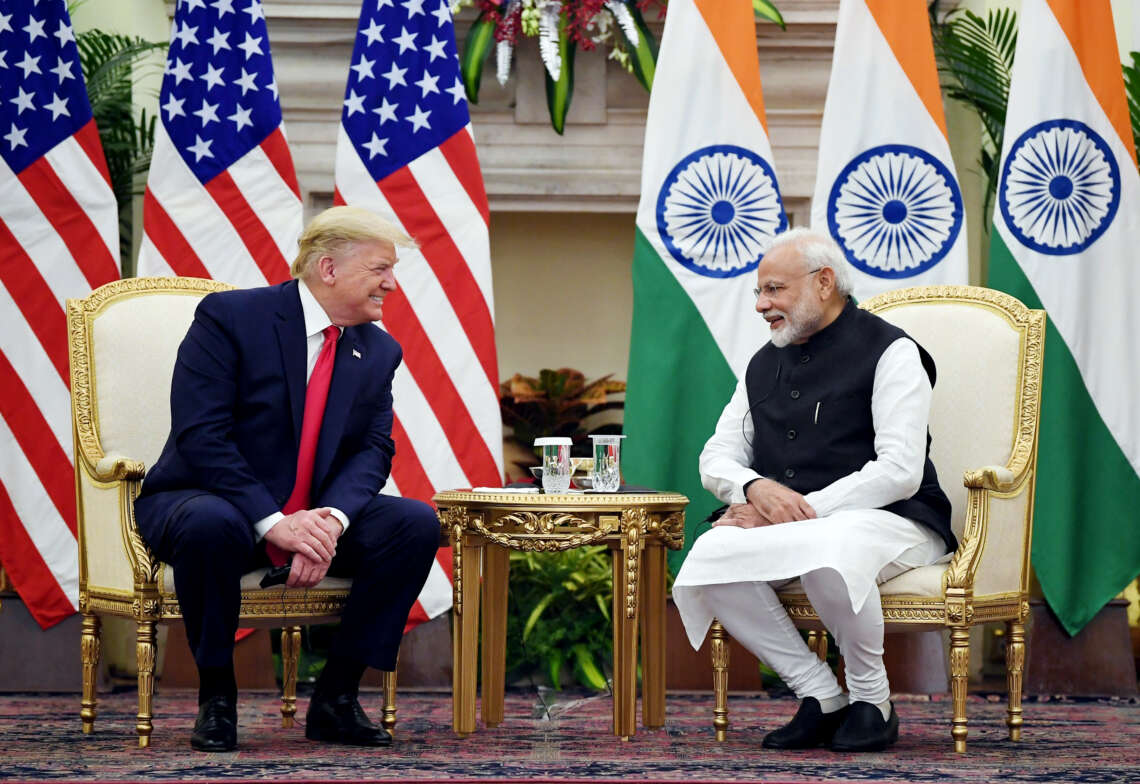
Trump rules out trade talks with India

Previous Story

Trump pushes ‘strong economy’ message

Next Story

Trump rules out trade talks with India

Latest from -Top News

Pakistan Risks Overstretching Itself in Yemen War

Pakistan’s expanding military role in Saudi Arabia amid the Yemen conflict could strain its defence resources and fragile finances…reports Asian Lite News Desk Pakistan’s military involvement in the war in Yemen may prove unsustainable because of mounting financial pressures and competing security demands, according to a new report. Islamabad’s growing military presence in Saudi Arabia risks stretching its defence resources while exposing the country to greater strategic and economic challenges. An article by Andrew Wilson in One World Outlook describes Pakistan’s involvement as a case of “fiscal and strategic overreach”, arguing that the country lacks the financial flexibility to sustain an expanded military commitment. Pakistan’s external finances depend heavily on an International Monetary Fund (IMF) programme, financial support from Gulf countries and remittances from Pakistani workers in the region. The report argues that deeper military involvement in the conflict could place additional pressure on these sources of financial stability. It also warns that deploying troops and military equipment abroad could weaken Pakistan’s capacity to address security challenges along its eastern border and deal with two domestic insurgencies. The move could also draw Islamabad into a conflict it has sought to approach cautiously. A Reuters report in May, citing Pakistani security and government sources, said Islamabad had deployed around 8,000 troops, a squadron of approximately 16 aircraft, mostly JF-17 fighter jets, two drone squadrons and a Chinese HQ-9 air-defence battery to Saudi Arabia. According to those sources, Riyadh was financing the deployment, with Pakistani personnel operating the equipment. The sources also said a confidential agreement contemplated the possibility of deploying up to 80,000 troops. Islamabad has not confirmed those figures, although it has acknowledged its military presence in Saudi Arabia, including the deployment of fighter jets at King Abdulaziz Air Base from April. The One World Outlook article argues that Saudi financial support can cover allowances and operating expenses but cannot easily replace military equipment needed elsewhere or resolve the political and strategic challenges of participating in the Yemen conflict. Pakistan’s defence budget is another concern. For the 2026-27 financial year, the federal government allocated PKR 3 trillion, or approximately $10.8 billion, to defence services. The allocation represents an 18 per cent increase from the original PKR 2.55 trillion provision and amounts to around 2.1 per cent of projected gross domestic product (GDP). Defence spending accounts for approximately 16 per cent of the federal government’s PKR 18.8 trillion expenditure. Military pensions are budgeted separately at PKR 822 billion, while debt servicing costs stand at approximately PKR 8 trillion, more than two-and-a-half times the defence allocation. The report argues that these competing financial obligations leave little room for additional military expenditure without placing further pressure on public finances. Pakistan’s reliance on IMF assistance also limits its fiscal flexibility. The country must meet the conditions attached to the programme, including a primary budget surplus target of 2 per cent of GDP and continued restraint on development spending. According to the article, these requirements make it difficult for Islamabad to finance an additional military commitment without compromising other budgetary priorities. Pakistan’s economic indicators offer limited reassurance. Economic growth for the 2025-26 financial year is estimated at between 3.6 and 3.7 per cent, while inflation reached approximately 10.3 per cent in September following an energy price shock. Foreign exchange reserves stood at around $21.5 billion at the end of September. Although this marks an improvement from the low levels recorded in 2023, the report notes that the reserves cover only a few months of imports. Financial assistance from Gulf partners remains central to Pakistan’s external stability. The article says Islamabad holds approximately $8 billion in Saudi deposits at its central bank. In July, the State Bank of Pakistan said Riyadh had extended the maturity of $5 billion in deposits to December 2028, easing the country’s immediate external financing requirements. A further $3 billion deposit was also extended in the spring. However, the article argues that these arrangements provide temporary relief rather than long-term financial independence, particularly as regional conflict threatens the stability of the Gulf economies on which Pakistan relies. The report concludes that Pakistan faces a difficult balance between supporting Saudi Arabia militarily and preserving the financial and military resources needed to address its domestic and regional challenges.

UK and Germany Ratify Kensington Treaty

Britain and Germany ratify the Kensington Treaty, agreeing new cooperation on AI, quantum research, defence and security while targeting investment, jobs and Russian hybrid threats…reports Asian Lite News Desk Britain and Germany

Economic tide is turning in Bangladesh

If there is one thing that can bring some comfort to the struggling Bangladeshi economy, it is good relations with India. Bangladesh should remember that Delhi’s backing, through easy supplies of essentials
Go toTop