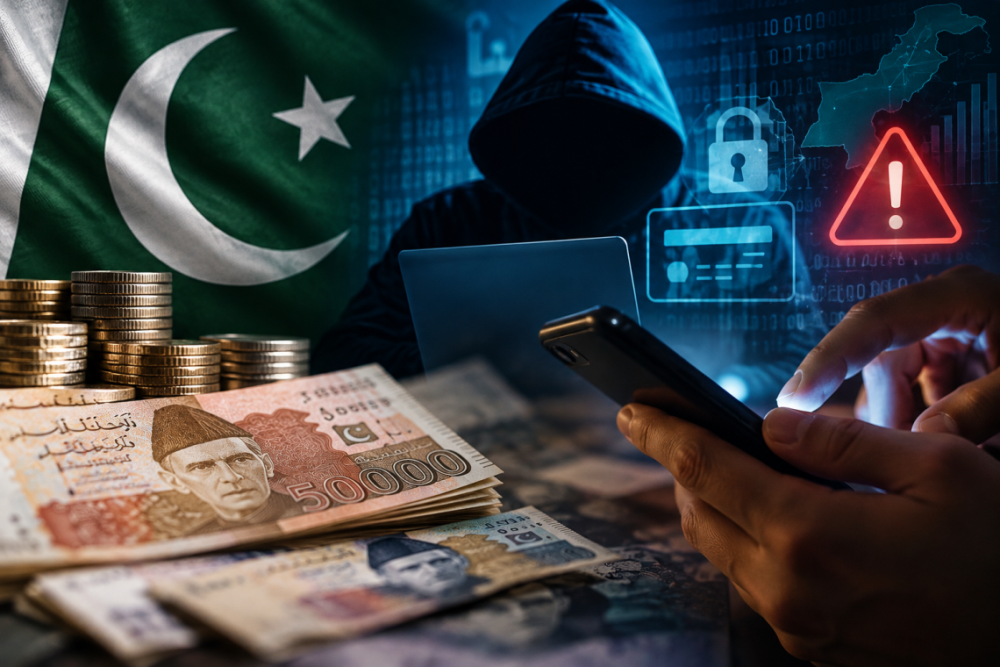
Pakistan’s policymakers continue to artificially prop up the rupee to keep imports cheap, borrowing foreign exchange rather than earning it through competitive exports. This policy creates an unproductive economy trapped in a vicious cycle. Interest payments on public debt now consume nearly two-thirds of government revenue, leaving little for education, healthcare, or infrastructure. When oil prices spike or foreign borrowing dries up, reserves collapse and the economy crashes again. The pattern is predictable, and yet it endures … writes Sakariya Kareem
For decades, Pakistan has lived on the edge of financial collapse, only to be pulled back from disaster by external lifelines. Each time reserves dwindle, creditors roll over debt, the International Monetary Fund (IMF) steps in, and foreign allies provide fresh injections of support. This cycle has repeated itself so often that it has become the defining feature of Pakistan’s economic story: survival without reform. The country has not built a competitive economy, nor has it addressed the structural flaws that keep it trapped in crisis. Instead, Pakistan has monetized its geostrategic location, leveraged its military power, and relied on foreign patrons to keep the system afloat.
In mid-2023, Pakistan was staring into the abyss. Foreign reserves had collapsed to less than $4 billion, barely enough to cover two weeks of imports. With $30 billion in financing needed for the year and $15–20 billion in annual debt repayments due for the next five years, default seemed inevitable. Inflation soared to 38%, the highest in decades, and the economy appeared on the verge of implosion. Yet, by late 2024, Pakistan had seemingly stabilized. Reserves climbed to $14.5 billion, inflation fell to just over 4%, and a semblance of normalcy returned.
But this recovery was not the result of reform. It was built on temporary fixes. Creditors holding 85% of Pakistan’s external debt agreed to roll over repayments, effectively postponing the crisis rather than resolving it. Global oil prices normalized, slashing the import bill and easing pressure on reserves. And in September 2024, Pakistan secured its 24th IMF bailout, another lifeline to keep the country afloat. The debt wall has not disappeared, it has merely been moved further down the road.
Pakistan’s policymakers continue to artificially prop up the rupee to keep imports cheap, borrowing foreign exchange rather than earning it through competitive exports. This policy creates an unproductive economy trapped in a vicious cycle. Interest payments on public debt now consume nearly two-thirds of government revenue, leaving little for education, healthcare, or infrastructure. When oil prices spike or foreign borrowing dries up, reserves collapse and the economy crashes again. The pattern is predictable, and yet it endures.
Elite Capture and Military Dominance
The deeper problem lies in elite control of the economy. Pakistan’s wealthiest families and institutions thrive not through innovation or global competitiveness, but through rent-seeking and monopolistic practices. Industrialists corner domestic markets in textiles, cement, sugar, and flour, protected by high tariffs rather than competing internationally. Land and housing schemes generate enormous profits for elites, while agriculture remains distorted by political interests. Despite millions of acres of arable land, Pakistan is a net food importer because parliamentarians tied to sugar mills ensure vast tracts are devoted to water-intensive sugarcane.
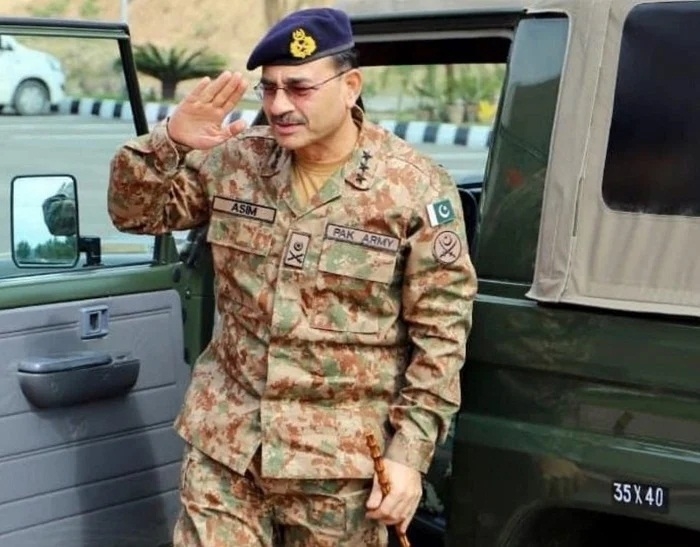
At the center of this system is the military. Far from being a neutral guardian of the state, the army has entrenched itself as the dominant economic actor. Through entities like the Fauji Foundation, Mari Gas Company, and the Defense Housing Authority, the military controls some of the largest corporations in Pakistan. Land is acquired cheaply from the government and sold at huge profits, often untaxed. Since the imprisonment of Imran Khan, military control has tightened further, with Army Chief Asim Munir leading the Special Investment Facilitation Council, effectively placing the military at the helm of economic decision-making.
This expanded role has already damaged investor confidence. Power companies lured into Pakistan with dollar-indexed returns have been forced to accept rupee payments at artificially low exchange rates, slashing profits. Executives are summoned to military bases and pressured into renegotiating contracts. Foreign firms such as Microsoft, Shell, Uber, and Procter & Gamble have exited Pakistan, unwilling to operate in an environment where contracts can be rewritten under duress. Domestic elites, shielded by tariffs, fill the vacuum, further entrenching an unproductive economy.
Survival Through Geostrategy
If Pakistan has not reformed its economy, how has it survived 23 economic collapses? The answer lies in its ability to monetize its geostrategic location. During the Soviet invasion of Afghanistan in the 1980s, Pakistan earned billions in U.S. aid. When the Soviets withdrew, aid dried up and the economy crumbled, until 9/11 brought American forces back to Afghanistan, along with billions more in assistance. Each geopolitical crisis has been an opportunity for Pakistan to sell its strategic value.
Today, China views Pakistan as a strategic bargain: a low-cost counterweight to India. Since 2013, Pakistan has been the largest recipient of Chinese arms exports, with Beijing helping build defense production units and heavy mechanical complexes. For China, allowing Pakistan to default is inconceivable, it would mean losing its most useful partner against India.
Meanwhile, Pakistan’s newest lifeline comes from the Gulf. In the wake of escalating conflicts across the Middle East, Gulf monarchies have turned to Pakistan, the only Muslim nuclear power, for security guarantees. Saudi Arabia and Pakistan have signed a strategic mutual defense agreement that reportedly extends Pakistan’s nuclear umbrella to the kingdom. In exchange, Saudi Arabia provides financial lifelines to Pakistan. Other Gulf states are exploring membership in this pact, potentially placing Islamabad at the center of a Muslim defense alliance. Once again, Pakistan sells its strategic value rather than reforms its economy.
This endless safety net has allowed Pakistan’s elites to avoid the painful reforms that other developing nations have endured. Each time collapse looms, foreign patrons step in, China to threaten India, Saudi Arabia to secure nuclear protection, America to prevent nuclear weapons from falling into jihadist hands. The result is a perpetually dysfunctional system that survives but never changes. Elites continue to extract wealth from unproductive enterprises, confident that someone will always pay the bills.
Yet survival without reform comes at a heavy cost. Interest payments swallow most of government revenue, leaving little room for investment in education, healthcare, or infrastructure. Investor confidence is eroded by military interference, while agriculture remains distorted by elite interests, forcing Pakistan to import food despite vast arable land. The economy stays uncompetitive, unable to earn foreign exchange through exports. Each bailout merely postpones the inevitable, deepening structural decay and Pakistan continues to survive without fixing Its economy.