Saudi Arabia and Türkiye reaffirm support for regional stability as Erdoğan backs the Kingdom’s new multinational maritime coalition to strengthen security across key Red Sea shipping routes….reports Arab Daily News Desk
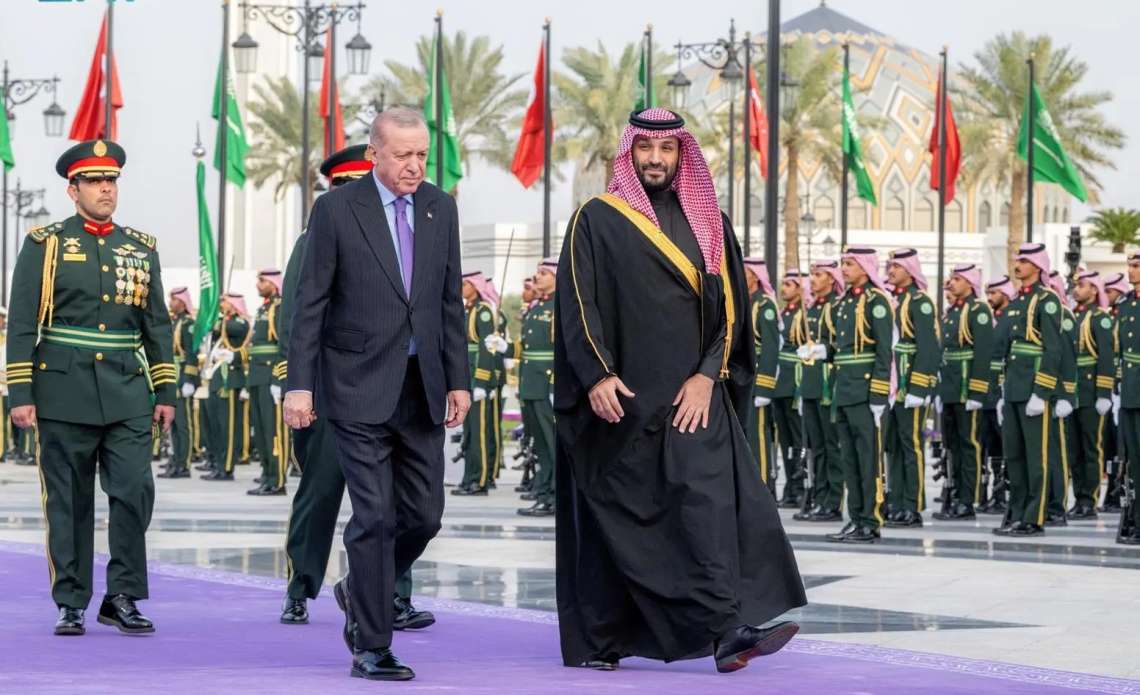
Saudi Crown Prince Mohammed bin Salman and Turkish President Recep Tayyip Erdoğan have reaffirmed their commitment to strengthening bilateral ties and enhancing regional security, with both leaders discussing developments in the Middle East and maritime security in the Red Sea during a telephone conversation.
The two leaders reviewed Saudi-Turkish relations and explored ways to deepen cooperation across a range of sectors, while also exchanging views on the rapidly evolving regional situation.
A key focus of the discussion was the security of international shipping routes in the Red Sea, where attacks on commercial vessels have heightened concerns over global trade and maritime stability.
During the call, President Erdoğan reiterated Türkiye’s condemnation of attacks carried out by the Iran-backed Houthi militia against vessels operating in the Red Sea and reaffirmed Ankara’s support for Saudi Arabia’s efforts to safeguard regional security.
The Turkish leader also welcomed the establishment of the Saudi-led Multinational Maritime Defence Coalition, expressing confidence that the initiative would strengthen the protection of international shipping lanes and contribute to maintaining freedom of navigation through some of the world’s busiest sea routes.
Maritime coalition gains support
The telephone conversation came as Saudi Arabia continues to rally international backing for the newly established maritime security alliance.
Launched last week with the participation of 13 partner nations, the Multinational Maritime Defence Coalition is designed to enhance security across the Red Sea, the Bab Al-Mandab Strait and the Gulf of Aden, areas that are critical to global energy supplies and international trade.
Saudi Arabia’s Ministry of Defence said the coalition aims to improve coordination among participating countries, protect commercial shipping, strengthen maritime surveillance and address threats to navigation across key regional waterways.
The initiative reflects the Kingdom’s broader efforts to reinforce regional security through multilateral cooperation while ensuring the uninterrupted movement of global trade and energy shipments.
Cabinet stresses diplomacy and regional stability
The latest diplomatic engagement coincided with the weekly Saudi Cabinet meeting in Jeddah, chaired by Crown Prince Mohammed bin Salman.
During the session, ministers reviewed recent regional developments and reaffirmed the Kingdom’s position that dialogue remains the most effective path towards reducing tensions and achieving lasting regional stability.
The Cabinet underscored the importance of continued diplomatic efforts to prevent further escalation and create conditions for political solutions to ongoing regional crises.
The Crown Prince also briefed ministers on his recent telephone conversation with US President Donald Trump, during which both leaders discussed developments in the region and efforts to reduce tensions.
According to SPA, Prince Mohammed stressed the need to prioritise dialogue and support initiatives that could pave the way for diplomatic solutions capable of preserving regional peace and security.
Maritime security has become an increasingly important issue for regional governments amid heightened tensions affecting some of the world’s busiest shipping corridors.
The Red Sea and adjoining waterways handle a significant share of global trade, linking Europe with Asia through the Suez Canal and serving as a vital route for energy exports from the Gulf.
Recent attacks on commercial vessels have prompted governments to strengthen cooperation on protecting shipping lanes and ensuring the free flow of international commerce.
Saudi Arabia has described the multinational coalition as an important platform for enhancing coordination among partner countries while reinforcing collective efforts to safeguard maritime navigation and regional stability.