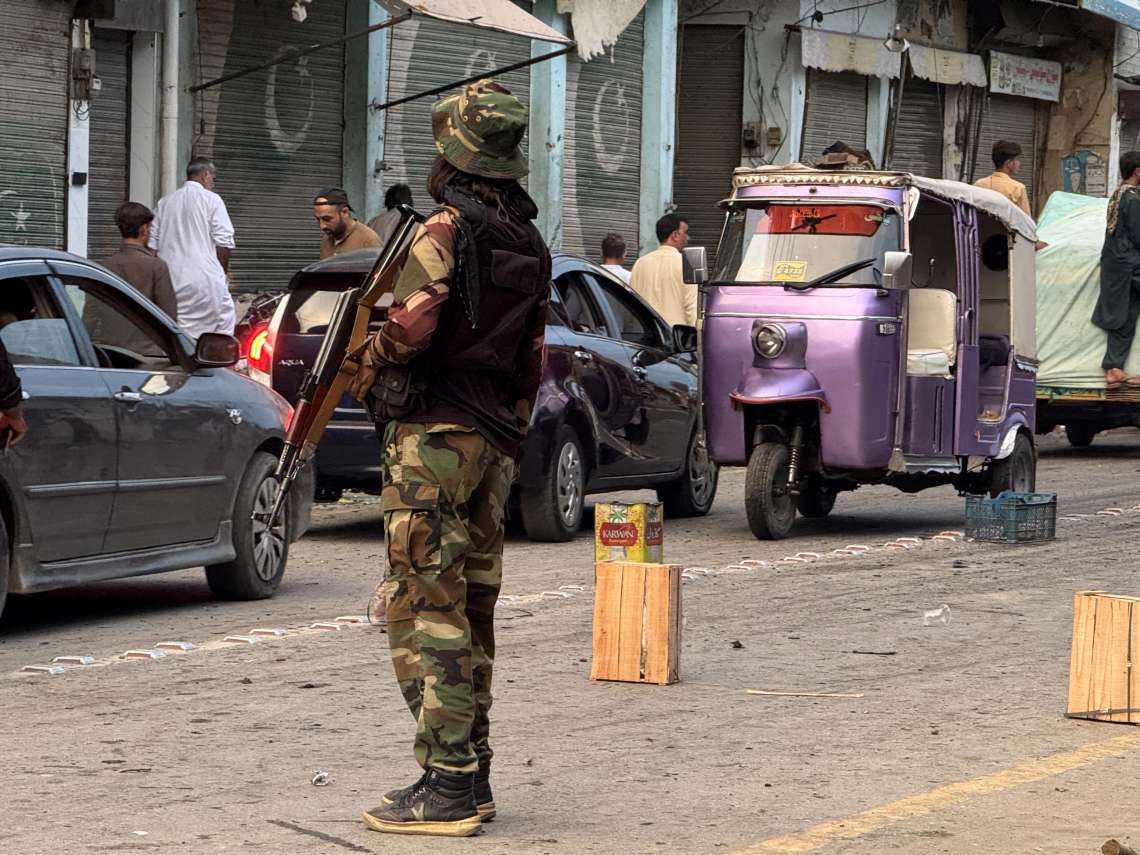
Lawyers’ associations in Pakistan have condemned the imposition of emergency and governor’s rule in Khyber Pakhtunkhwa as undemocratic….reports Asian Lite News Desk
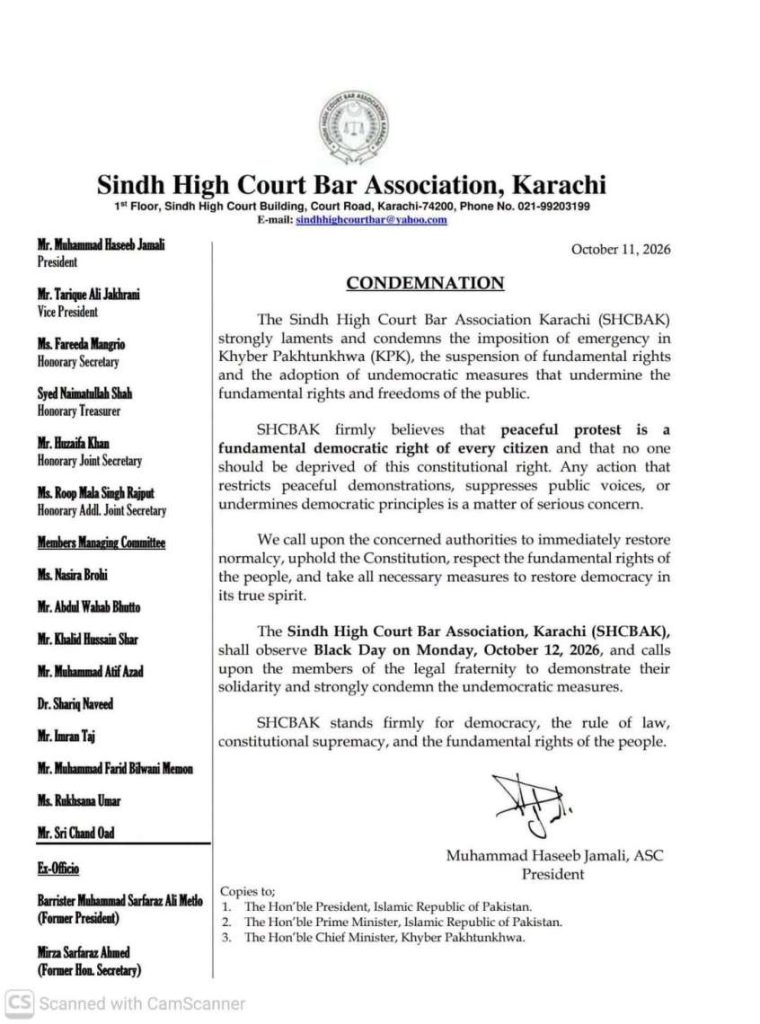
Lawyers’ associations in Pakistan’s Sindh province have condemned the federal government’s decision to impose a state of emergency and governor’s rule in Khyber Pakhtunkhwa, calling the move “undemocratic”. The associations have announced a ‘black day’ in solidarity with the people of the north-western province and urged authorities to respect democratic principles and constitutional rights.
The Sindh High Court Bar Association (SHCBA) called on the authorities to uphold fundamental rights and take steps to restore democracy, Pakistan’s Dawn newspaper reported.
The Karachi Bar Association (KBA) announced that lawyers would refrain from official work on Monday. It also called a general body meeting to discuss the imposition of emergency and governor’s rule.
The KBA urged political parties to respect the mandate of the people of Khyber Pakhtunkhwa and avoid actions that could trigger political instability or undermine public confidence in democratic institutions.
Pakistan Tehreek-e-Insaf (PTI) chairman Gohar Ali Khan also condemned the federal government’s decision on Sunday, describing it as a “political mistake and undemocratic”.
“We strongly condemn the imposition of emergency in the province in the strongest terms and completely reject this action. This is an extremely alarming and grave political mistake and an undemocratic measure— the people will never accept such actions against their rights,” Khan posted on X.
He said the mandate of the people of Khyber Pakhtunkhwa was their constitutional and legal right, adding that peace could not be established “by ignoring this mandate, weakening provincial autonomy, and creating conflict between the federation and the province.”
Khan said there was no disagreement over the need to eliminate terrorism but warned that counter-terrorism efforts should not be used to suppress public opinion, pursue political objectives or restrict the province’s constitutional authority.
“The federation cannot be strengthened by weakening the provinces. The solution to problems lies not in force, confrontation, and extraordinary measures, but in political wisdom, supremacy of the constitution, and meaningful negotiations and practical steps. We will raise a strong voice on every constitutional, legal, and democratic forum for the protection of the people’s mandate, provincial autonomy, and constitutional and democratic rights,” he wrote.
He further urged the federal government to reconsider its decision, saying that strong provinces were essential for a strong federation and that constitutional governance was vital to Pakistan’s stability.
“There is still time; this decision can be withdrawn in a few days. Let the federation set aside its ego, understand the ground realities, acknowledge legitimate demands, respect the sentiments and emotions of the people, and save the country from further political and economic damage and from pushing back the democratic process,” Khan said.
He added that revisiting political decisions was a sign of wisdom rather than weakness and warned that failure to reconsider the move could cause significant damage.
The statements from the lawyers’ associations and the PTI chairman followed the federal government’s announcement on Sunday that it had imposed a state of emergency in 12 districts of Khyber Pakhtunkhwa and placed the province under governor’s rule.
According to Dawn, the decision came after Pakistan President Asif Ali Zardari approved recommendations submitted by the federal cabinet.
The emergency proclamation covers Bannu, Bajaur, Mohmand, Khyber, Kurram, Orakzai, Dera Ismail Khan, Tank, Lakki Marwat, North Waziristan and South Waziristan, along with one other district.
The government also approved the deployment of Pakistan Army personnel and assets in Khyber Pakhtunkhwa to assist civil authorities.
The decision has drawn criticism from legal and political circles, with the lawyers’ associations and the PTI leadership raising concerns over democratic rights, provincial autonomy and the potential consequences for political stability.