The US urges China to respect Tibetan religious freedom after authorities demolish monks’ residences at a monastery in eastern Tibet, raising fresh concerns….reports Asian Lite News Desk
The United States has urged China to stop interfering in Tibetan religious affairs following the demolition of monks’ residential quarters at a monastery in eastern Tibet, raising fresh concerns over religious freedom and the preservation of Tibetan Buddhist traditions.
Chinese authorities began demolishing around 200 monks’ residences at Dza Sershul Thekchen Dargyeling Monastery in Sershul County, Kardze (Ganzi) Tibetan Autonomous Prefecture, on October 25 and 26, according to sources who spoke to Radio Free Asia (RFA) on condition of anonymity, citing security concerns.
The developments have drawn criticism from Washington, which accused Beijing of seeking greater control over religious institutions, education and monastic life in Tibet.
“Everything is over now. We are losing everything,” one source told RFA, describing the impact of the demolitions.
A US State Department spokesperson told RFA on Thursday that the destruction of the residential quarters formed part of wider Chinese government efforts to control spiritual institutions and religious practices in the region.
“We call on Beijing to end its interference in Tibetan religious life. Tibetan Buddhists should have the right to practice their faith freely, educate their clergy and choose their religious leaders, including the Dalai Lama and the Panchen Lama, without government interference,” the spokesperson said.
The statement also highlighted concerns over China’s involvement in the traditional succession processes of Tibetan Buddhism’s two most revered religious figures, the Dalai Lama and the Panchen Lama.
The issue of religious leadership has remained a sensitive point in relations between Beijing and Tibetan Buddhist communities, with the US reiterating that decisions concerning religious leaders should be free from government intervention.
Tenzin Lekshay, spokesperson for the Central Tibetan Administration (CTA), the Tibetan government-in-exile based in Dharamsala, India, alleged that the demolition of monks’ residences and the reduction in the number of monks were part of a broader effort to assimilate Tibetans into Chinese society.
“This is a mask used by the Chinese government under the recently enacted Ethnic Unity Law to assimilate Tibetans and destroy Tibetan religion, culture, and language. This is not the first time. We have also seen young monks forcibly expelled from monasteries and sent to China’s colonial boarding schools,” he told RFA.
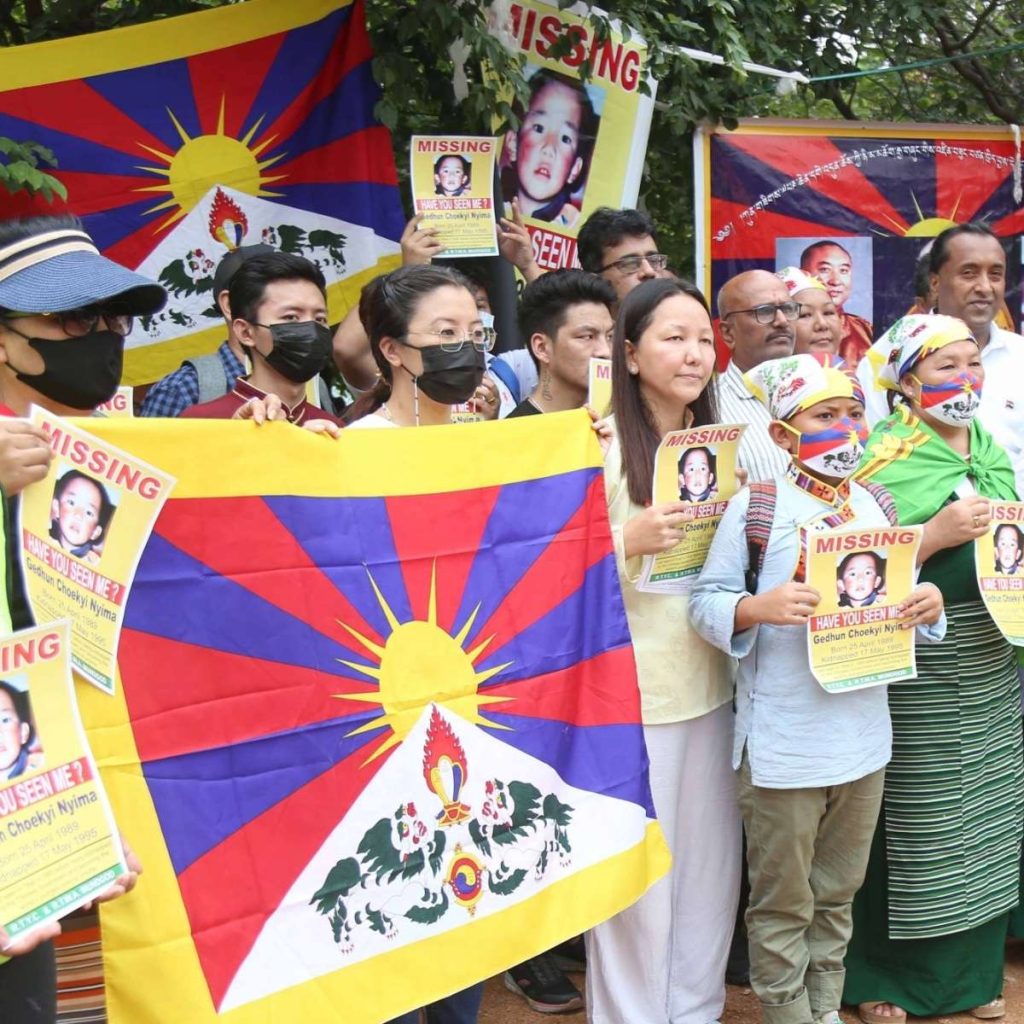
Lekshay accused Chinese authorities of continuing efforts to shut down monasteries and schools established by Tibetans while seeking greater control over the region and its cultural identity.
He said the destruction of religious institutions threatened not only Tibetan Buddhism but also the language and traditions that form an important part of Tibetan national identity.
“It is time for the Chinese government to acknowledge and trust that Tibetan religion and culture are beneficial to China and the world and that the destruction of Tibetan religion and culture will have negative consequences for both China and the world,” he said.
The controversy has also drawn criticism from the US Commission on International Religious Freedom (USCIRF), an independent, bipartisan US government commission, which warned that restrictions in Tibet threatened the region’s Tibetan Buddhist heritage.
Commission chair Asif Mahmood said the demolition of monasteries was part of a wider pattern of measures aimed at weakening the connection between Tibetan communities and their religious traditions.
“Demolition of Tibetan monasteries is just one tactic in a wider effort by Chinese authorities to sever the people of Tibet from their Tibetan Buddhist heritage, including the forced assimilation of ethnic minorities through the draconian ‘Ethnic Unity’ law that came into effect in July,” Mahmood told RFA.
The latest developments have renewed international concerns over religious freedom in Tibet, particularly regarding the autonomy of monasteries, religious education and the selection of spiritual leaders.
The US has called on Beijing to respect the rights of Tibetan Buddhists to practise their religion and preserve their traditions without government interference. The demolition at Dza Sershul Thekchen Dargyeling Monastery has added to concerns raised by Tibetan representatives and religious freedom advocates over the future of the region’s religious and cultural institutions.