Ankara plans a major expansion of renewable power capacity, with wind and solar expected to account for 175 gigawatts as part of its transition strategy…reports Asian Lite News Desk
Türkiye plans to invest approximately $300 billion in its energy transition by 2040, with electrification and improved energy efficiency expected to generate cumulative savings of $240 billion, Energy and Natural Resources Minister Alparslan Bayraktar has said.
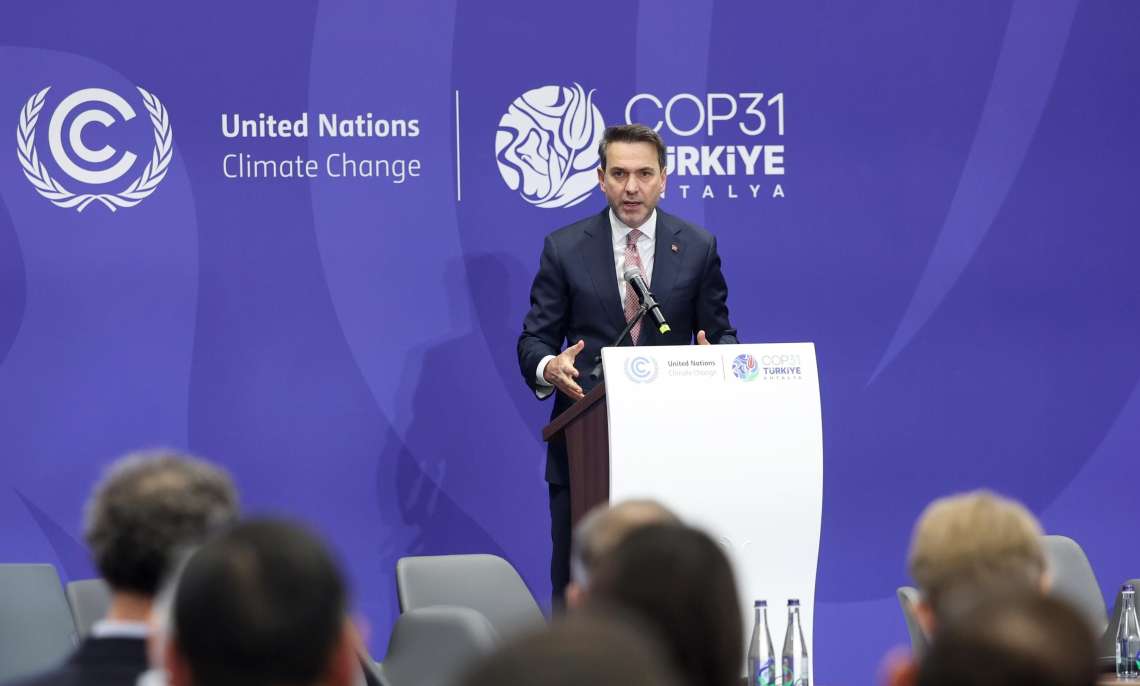
Speaking at the COP31 climate conference in Antalya on Tuesday, Bayraktar said the country’s transition would require substantial investment, international partnerships and innovative technologies to meet its long-term energy targets.
“We estimate that approximately $300 billion will be needed for this transition by 2040,” he said during a panel discussion titled Architecting Energy Transitions in a Shifting Global Landscape.
He stressed that implementation would be critical to translating climate and energy commitments into measurable progress.
“We have set targets, we have given words, but it is now the time to implement those,” Bayraktar said, according to Anadolu Agency.
Türkiye aims to increase its total installed electricity generation capacity from the current 128 gigawatts to 281 gigawatts by 2040. Wind and solar power are expected to contribute 175 gigawatts of that total, making renewable energy central to the country’s expansion plans.
The targets form part of Ankara’s wider strategy to strengthen domestic energy infrastructure, reduce reliance on imported energy and contribute to regional and global energy security.
Bayraktar said achieving the transition would depend on creating a predictable investment environment capable of attracting the capital required for new infrastructure and technologies.
Efficiency and electrification drive
Alongside renewable energy expansion, Türkiye is seeking to improve energy efficiency across its economy.
The country’s National Energy Efficiency Action Plan aims to mobilise $20.2 billion in investment between 2024 and 2030, supporting measures to reduce energy consumption and improve the efficiency of industrial, commercial and other sectors.
Bayraktar said combining electrification with efficiency improvements would deliver substantial long-term economic benefits.
“Together with electrification, efficiency will deliver 240 billion dollars in cumulative savings to us by 2040,” he said.
The projected savings underline the economic dimension of Türkiye’s energy transition, with the government seeking to balance rising electricity demand with cleaner generation and more efficient energy use.
The $300 billion investment requirement will involve mobilising funding from multiple sources, alongside cooperation with international partners and the deployment of new technologies.