Bangladesh’s political transition has done little to silence concerns over the country’s human rights record…writes Dr Sakariya Kareem
More than two years after the student-led uprising that ended Sheikh Hasina’s rule in Bangladesh, allegations of arbitrary arrests, political persecution, custodial deaths, attacks on journalists and restrictions on democratic freedoms continue to emerge.
The latest concerns have reached Brussels, where an international human rights organisation has urged the European Union (EU) to examine what it describes as an increasingly disturbing pattern of abuses under successive post-Hasina administrations.
Justice Makers Bangladesh in France (JMBF), a human rights organisation monitoring developments in Bangladesh, raised the alarm during a meeting with a representative of the European Commission on October 16, 2026.
The delegation, led by its founder and president, Advocate Shahanur Islam, met Fausto Matos, a Cabinet Member in the office of European Commission Executive Vice-President Henna Virkkunen.
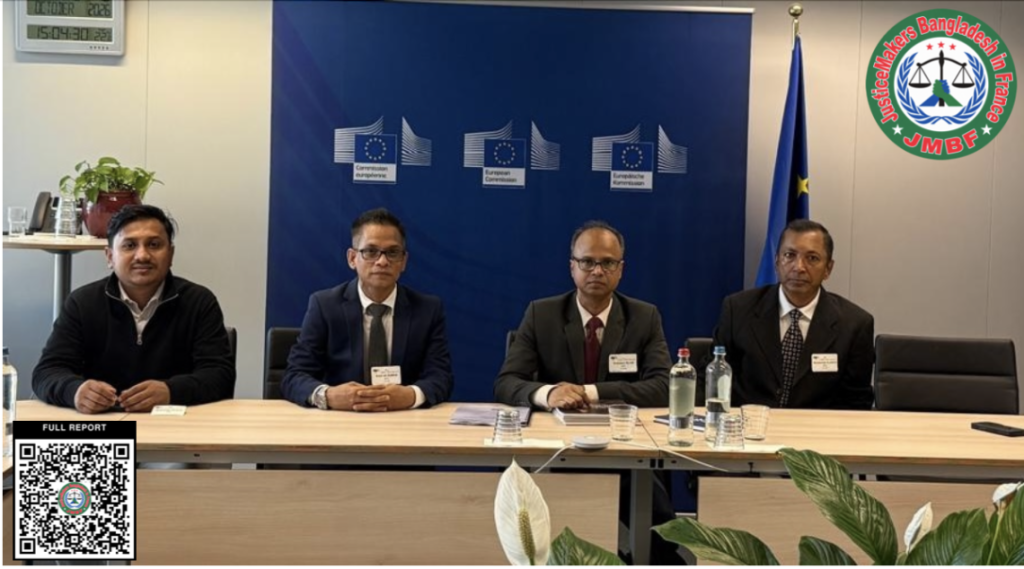
The meeting highlighted allegations involving political persecution, arbitrary detention, extrajudicial killings, torture, mob violence and restrictions on fundamental freedoms since August 2024.
The intervention comes at a sensitive moment for Bangladesh. The country held parliamentary elections in February 2026, bringing the Bangladesh Nationalist Party (BNP) to power under Prime Minister Tarique Rahman. Yet the Awami League remains banned, its senior leaders face criminal proceedings, and questions over the independence of the judiciary and the fairness of politically sensitive trials continue to attract international scrutiny.
JMBF takes human rights concerns to Brussels
According to JMBF, its five-member delegation submitted a briefing note titled Human Rights Concerns in Bangladesh Since the Change of Government in August 2024.
The document covers reported violations between August 2024 and October 2026 and calls for stronger European engagement with the Bangladeshi authorities.
The delegation also presented six thematic reports examining alleged extrajudicial killings and custodial deaths under the former Muhammad Yunus-led interim administration, threats to the independence of the legal profession, LGBTQI+ rights, violence against garment workers and an alleged media blackout affecting the organisation’s human rights reporting.
JMBF urged the EU to press Dhaka to lift the ban on the Awami League, end political persecution and protect fundamental freedoms irrespective of political affiliation. It also called for accountability for alleged abuses and measurable human rights commitments in the bloc’s diplomatic, trade and development engagement with Bangladesh.
On October 23, Islam held a separate meeting with Anne Vaugier Chatterjee, a Bangladesh policy officer at the European External Action Service (EEAS), where he raised concerns about political repression, fair-trial standards, religious extremism and access to justice.
Awami League ban and death sentences under scrutiny
One of the most contentious issues raised by the delegation concerns the prohibition of the Awami League and criminal proceedings against its leadership.
The interim administration banned the party’s activities in May 2025, invoking the country’s anti-terrorism legislation. The prohibition prevented the Awami League from participating in the February 2026 parliamentary election. The BNP subsequently secured a parliamentary majority, while the Awami League remained outside the electoral process.
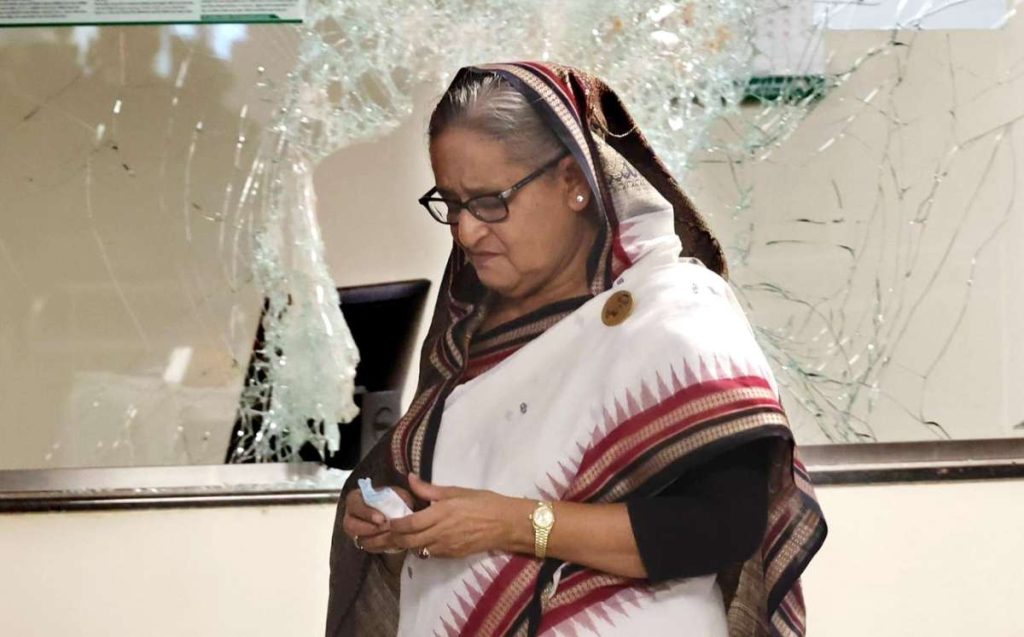
JMBF argues that the ban raises serious questions about political pluralism and freedom of association, particularly alongside the arrests and prosecution of party leaders, activists and supporters.
The organisation also expressed concern over 23 death sentences imposed by Bangladesh’s International Crimes Tribunals against 22 individuals, including former prime minister Sheikh Hasina, former home minister Asaduzzaman Khan Kamal and other Awami League leaders and associates.
The proceedings relate to allegations of crimes against humanity committed during the July-August 2024 uprising and the crackdown on protesters.
Hasina was sentenced to death in absentia in November 2025. On September 15, 2026, seven former ministers and senior officials associated with her administration also received death sentences from the tribunal, according to the UK government’s October country assessment.
JMBF founder Shahanur Islam questioned the independence and impartiality of the tribunals, particularly the imposition of capital punishment following trials conducted in absentia. He also raised concerns over alleged politically motivated prosecutions and whether the proceedings met internationally recognised fair-trial standards.
The criticism does not negate the gravity of the alleged crimes committed during the 2024 crackdown. Hundreds of people were killed during the suppression of the protests, and accountability remains a major issue. However, the legitimacy of prosecutions also depends on the fairness of the judicial process and the protection of defendants’ legal rights.
Arrests, custodial deaths and allegations of torture
Beyond the politically sensitive trials, the delegation highlighted allegations of arbitrary arrests, torture, extrajudicial killings and deaths in custody.
The October 2026 country assessment published by the UK Home Office records that more than 12,000 people, mainly Awami League supporters, were arrested during a police operation between February and March 2025. The operation, launched to address unrest and maintain public safety, was suspended on March 1, 2025.
The assessment also notes that many people arrested on politically motivated charges under the previous administration have since been released and that more than 21,000 politically motivated or false cases have reportedly been withdrawn. Nevertheless, large numbers of former Awami League politicians and activists continue to face criminal proceedings.
A report by the Human Rights Support Society (HRSS), covering January to September 2026, recorded more than 95 deaths in prison custody. It also documented over 187 deaths linked to mob violence and public lynchings, alongside more than 1,013 incidents of political violence. More than 6,473 people were reportedly injured in political violence during the nine months.
These figures represent HRSS’s own monitoring and should not be treated as independently adjudicated findings. However, they illustrate the scale of concerns being raised by domestic rights monitors.
The allegations of custodial abuse are particularly sensitive in Bangladesh, where enforced disappearances and extrajudicial killings were repeatedly reported during Hasina’s tenure. The transition of power raised expectations of accountability, but fresh allegations involving detention facilities and law enforcement agencies have continued to emerge.
JMBF argues that allegations of abuse should be scrutinised regardless of the political identity of the victims or perpetrators.
Journalists, lawyers face growing pressure
The treatment of journalists and legal professionals formed another major part of the submission to the European Commission.
JMBF alleged that journalists, lawyers and human rights defenders have faced intimidation, threats, arrests and professional restrictions. It warned that politically motivated arrests and intimidation of lawyers threaten their ability to represent clients independently.
Press freedom has also remained a concern following the political transition. The HRSS monitoring report covering January to September 2026 recorded more than 518 journalists subjected to torture or harassment, a reported 52 per cent increase compared with the corresponding monitoring figure for 2025.
Its October 2026 report separately documented at least 46 journalists who were tortured or harassed during the month, including one journalist who was killed. The figures cover reported incidents and do not, by themselves, establish responsibility in every case.
JMBF also alleged that its own human rights documentation faced a government-driven media blackout, raising questions about the ability of independent organisations to publish findings without interference.
Garment workers and vulnerable communities under threat
The delegation also drew attention to violence against garment workers, women and children, religious and ethnic minorities, and LGBTQI+ individuals.
Bangladesh’s garment industry is a major pillar of its export economy and employs millions of workers, making allegations of police violence during labour protests particularly significant.
On November 6, JMBF condemned the BNP government’s handling of recent garment workers’ protests, reporting that at least one worker had been killed, more than 210 injured and 216 arrested. It also alleged that 19,521 people had been named in 18 criminal cases connected with the unrest. These figures represent JMBF’s claims and have not been independently established through a judicial determination.
The organisation has also raised concerns about sexual violence against children. Its November 1 monitoring report documented 199 incidents of sexual violence involving 274 boys across 61 districts between January 1 and October 31, 2026. Five deaths were recorded in the cases covered by the report.
Religious and ethnic minorities have also remained vulnerable to intimidation and attacks. The HRSS report for January-September 2026 recorded more than 56 attacks on minority communities, compared with 22 in its 2025 monitoring figures. It also documented more than 2,404 women and girls as victims of violence during the period.
JMBF’s thematic reports on LGBTQI+ rights examine discrimination, threats and restrictions affecting sexual minorities, groups that often face additional barriers in reporting violence or seeking legal protection.
EU’s trade and diplomatic leverage in focus
JMBF’s appeal also raises questions about the EU’s broader relationship with Bangladesh. The bloc is an important trading partner, particularly through the country’s garment exports and preferential access to European markets.
The organisation has urged Brussels to incorporate measurable human rights commitments into its diplomatic, trade and development engagement with Dhaka, alongside closer scrutiny of Bangladesh’s compliance with international labour standards and fundamental freedoms.
Bangladesh’s future access to preferential European trade arrangements, including the Generalised Scheme of Preferences Plus (GSP+), is linked to compliance with international conventions covering human rights, labour rights, environmental protection and good governance.
During his October 23 meeting with the EEAS, Islam urged European officials to consider human rights conditions in discussions concerning GSP+ eligibility and other bilateral arrangements. He also called for independent consultations with civil society organisations rather than relying exclusively on government-selected interlocutors.
The EU faces a complex diplomatic situation. Bangladesh has an elected government, but the Awami League remains prohibited from political activity, while allegations of abuses involving law enforcement agencies, political groups and other institutions continue to surface.
A political transition shadowed by rights concerns
The developments have exposed the continuing difficulties facing Bangladesh following the collapse of Hasina’s administration. The July-August 2024 uprising was driven by widespread anger over political repression, governance and the government’s response to student protests.
The subsequent transition brought an end to Hasina’s 15-year rule, but it did not immediately resolve the country’s deeper institutional and political divisions.
The BNP’s electoral victory in February 2026 marked another significant change in the country’s political landscape. Yet the continuing ban on the Awami League, contentious criminal proceedings, allegations of political retaliation and reports of violence against journalists, workers and vulnerable communities indicate that the transition remains deeply contested.
The latest intervention by JMBF has brought these concerns directly to European institutions. Its submission argues that the protection of human rights must extend beyond a change in political leadership and cannot depend on whether those affected belong to the ruling establishment or the opposition.
The organisation’s allegations require independent scrutiny, and claims involving criminal responsibility must be assessed through credible investigations and judicial proceedings. At the same time, figures documented by domestic monitoring groups and concerns raised by international organisations have placed Bangladesh’s human rights record under renewed scrutiny.
For a country attempting to redefine its political order after a violent uprising, the growing list of allegations presents a serious challenge. The central issue is no longer simply the legacy of Hasina’s rule, but whether the institutions that emerged from its collapse can avoid reproducing patterns of political exclusion, intimidation and restrictions on fundamental freedoms.