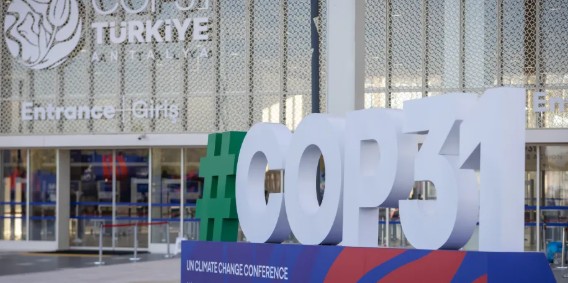
France and Brazil have launched a 25-country initiative at COP31 to accelerate ocean-based climate solutions, as new data highlights major funding gaps threatening the implementation of national commitments…reports Asian Lite News Desk
France and Brazil have launched a global taskforce to accelerate ocean-based climate action, bringing together governments, financial institutions and experts to turn national climate commitments into practical solutions. The initiative, unveiled at the United Nations Climate Change Conference (COP31) on Tuesday, aims to help countries reduce emissions, strengthen climate resilience and protect marine ecosystems.
The Implementation Taskforce is part of the Blue NDC Challenge, a coalition of 25 countries spanning Africa, Asia, the Americas, the Caribbean, Europe and the Pacific. Co-led by France and Brazil, the initiative builds on work undertaken since the third UN Ocean Conference in 2025.
The taskforce will support participating countries in overcoming financial and technical barriers to implementing ocean-related commitments under their national climate plans.
Its launch comes amid growing concerns over rising ocean temperatures and their impact on fisheries, coastal infrastructure and energy systems. Record-breaking ocean heat, intensified by El Niño, has further highlighted the need for coordinated international action.
By bringing together national governments, development banks, institutional investors and technical experts, the initiative aims to mobilise political support and financing for ocean-based climate solutions in line with the Paris Agreement.
A first group of 23 delivery partners, covering maritime transport, energy, aquatic food systems, marine conservation, climate finance, scientific research and policy, will help countries address implementation challenges and accelerate progress.
New benchmark data published by the World Resources Institute, Ocean and Climate Platform, and Ocean Conservancy highlighted the significant gap between countries’ climate ambitions and the resources available to achieve them.
The analysis found that 95 per cent of coastal nations have included ocean-based solutions in their national climate plans. However, more than 60 per cent of these commitments depend on external funding or technical assistance.
Middle-income countries face particular difficulties, accounting for 82 per cent of unfunded commitments. As a result, nine out of 10 proposed projects across Latin America, Sub-Saharan Africa and Oceania remain difficult to implement.
For low-income countries, ocean-related climate action is largely focused on survival, with 88 per cent of their targets centred on adaptation and resilience.
Marine conservation and food security have emerged as major priorities, with countries making commitments to restore mangroves and other marine ecosystems, strengthen disaster preparedness and protect local fisheries.
Decarbonising maritime transport is another key focus, accounting for nearly 35 per cent of all ocean-based emissions reduction targets. Governments are looking to modernise and electrify ports, retrofit shipping vessels and expand the use of alternative marine fuels to reduce dependence on fossil fuels.
Ambassador Carlos Marcio Cozendey of Brazil, co-chair of the Blue NDC Challenge, said the coalition was working to place oceans at the centre of national climate strategies.
“Ambition alone is not enough. We must now ensure these commitments translate into concrete action, delivering real benefits for people, nature and the climate,” he said.
He added that the initiative would carry forward the spirit of global cooperation promoted by Brazil at COP30 in Belem, inviting more countries to join efforts to turn ocean-related commitments into measurable action.