August 14, 2020
4 mins read

Sadiq unveils plan to save West End businesses

In a letter to Prime Minister Boris Johnson the Mayor of London Sadiq Khan set out eight proposals to ensure the survival of West End from the COVID-19 pandemic.

Businesses face a ‘perfect storm’ of continued home working, restrictions on domestic and international tourism, and the requirement for continued social distancing

The Mayor has met businesses in the heart of London’s West End to highlight the urgent action needed to protect its future in the face of the COVID-19 pandemic.

Also Read – Sir Iain favours India over China

Central London businesses are facing a ‘perfect storm’ of continued home working, restrictions on domestic and international tourism, and the requirement for continued social distancing for the foreseeable future until an operational vaccine is found. The New West End Company has forecast a loss of over £5 billion retail sales within the district this year, with one third of the retail and hospitality workforce potentially being made redundant by the end of this year.

The Mayor is doing all within his power to support struggling businesses, including providing loans and funding directly to small businesses, and ensuring TfL’s unprecedented range of safety and hygiene measures mean more passengers are now able to travel on London public’s transport network, whether for work or to visit cultural venues in the West End.

“But above all, central London needs targeted and sustained financial and fiscal support from the Government in order to survive. The economic case for protecting these businesses is overwhelming – London’s economy accounts for a quarter of the UK’s total economic output and contributes a net £38.7 billion to the Treasury,” a press release from the mayor said.
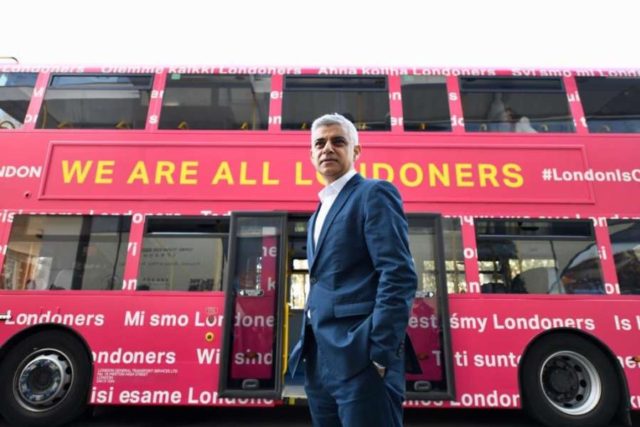
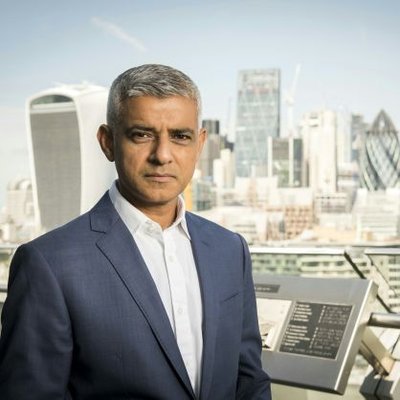
Mayor of London Sadiq Khan

The Mayor has written to the Prime Minister with eight proposals that would help secure the West End’s future survival. These are:

Confirm an extension to the business rates holiday, which is due to end in March, or a discount for businesses in the central London area for the next year, guaranteed now. Many large retail, leisure and hospitality businesses will take important decisions for 2021/22 in the coming weeks, so certainty over the business rates holiday is urgently needed.

Create a direct financial aid scheme for hospitality, retail, leisure and cultural businesses in central London.

Provide targeted support for jobs and the workforce extension to the Coronavirus Job Retention Scheme for retail, hospitality, leisure, and creative businesses that will not be able to operate on a financially sustainable level under continued social distancing requirements.

Extend support for freelancers and the self-employed.  The cultural and creative industries that characterise central London are hugely dependent on these workers.

Overhaul business rates, to create a fair playing field between physical and online retail.  A subsequent letter with more detailed demands will be forthcoming.

Introduce a support scheme for small and medium-sized businesses that are struggling to meet their rent bills due to coronavirus, which could help to ease negotiations between landlords and tenants in cases where rent is in arrears.

Prioritise investment in NHS Test and Trace and more support for hospitality businesses to implement systems.  It is now clear that we need to learn to live with the virus, and Test and Trace plays a large role in giving the public confidence.

Customers keep social distancing whilst queuing up outside the IKEA store in Wembley, London, Britain (Xinhua/ IANS) by .
Customers keep social distancing whilst queuing up outside the IKEA store in Wembley, London, Britain (Xinhua/ IANS)

Explore other measures which might increase public confidence, such as making face coverings compulsory in the busiest public spaces (as has been done in Paris), and commission further scientific research into the efficacy of such measures.

The Mayor of London, Sadiq Khan, said: “For decades central London has been the economic engine of the UK, a cultural powerhouse, and a gateway for global tourism to the UK. But it now faces a real existential threat from the COVID-19 pandemic.

“Until we have an operational vaccine in place social distancing will have to continue to protect people’s health, and with employers planning to continue home-working well into next year, the numbers of people visiting the West End will be reduced for many months ahead.

“As Mayor I’m doing all within my powers to help. This includes providing loans and funding directly to small businesses and ensuring TfL’s unprecedented range of safety and hygiene measures mean more passengers are now able to travel on London public’s transport network.

“But in the face of a perfect economic storm, our businesses need urgent and sustained support from Government to ensure they can survive this pandemic. This must include extending the business rates holiday beyond next March, in addition to a comprehensive package of new financial support.”


by .
Previous Story

Kamala Fuels Hope

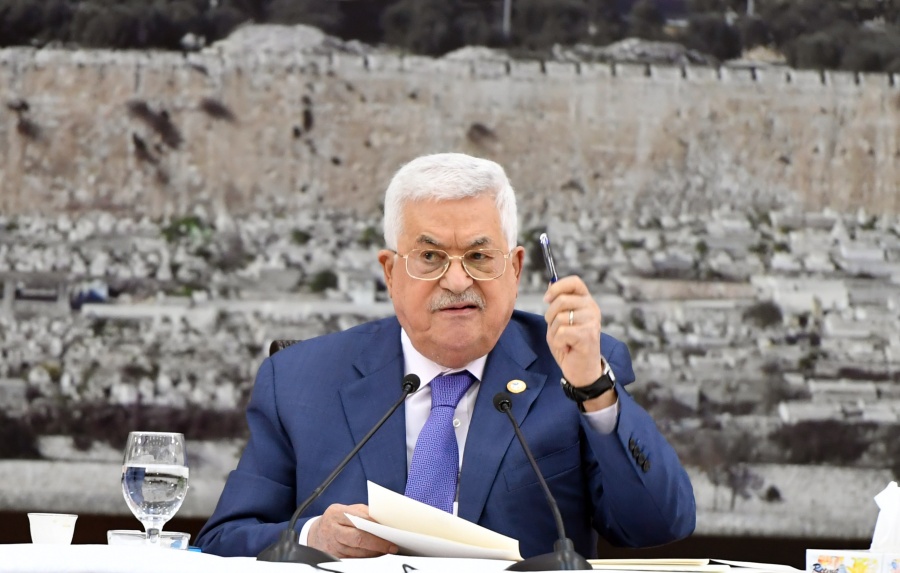
RAMALLAH, July 25, 2019 (Xinhua) -- Palestinian President Mahmoud Abbas speaks during a meeting of the Palestinian leadership in the West Bank city of Ramallah, on July 25, 2019. Palestinian President Mahmoud Abbas on Thursday declared that the Palestinian leadership has decided to stop abiding by the signed agreements between Palestine Liberation Organization (PLO) and Israel, in line with former decisions taken by Palestinian National and Central Councils. (Str/Xinhua/IANS) by .
Next Story

Abbas denounces Israel-UAE deal

by .
Previous Story

Kamala Fuels Hope

RAMALLAH, July 25, 2019 (Xinhua) -- Palestinian President Mahmoud Abbas speaks during a meeting of the Palestinian leadership in the West Bank city of Ramallah, on July 25, 2019. Palestinian President Mahmoud Abbas on Thursday declared that the Palestinian leadership has decided to stop abiding by the signed agreements between Palestine Liberation Organization (PLO) and Israel, in line with former decisions taken by Palestinian National and Central Councils. (Str/Xinhua/IANS) by .
Next Story

Abbas denounces Israel-UAE deal

Latest from -Top News

Pakistan Risks Overstretching Itself in Yemen War

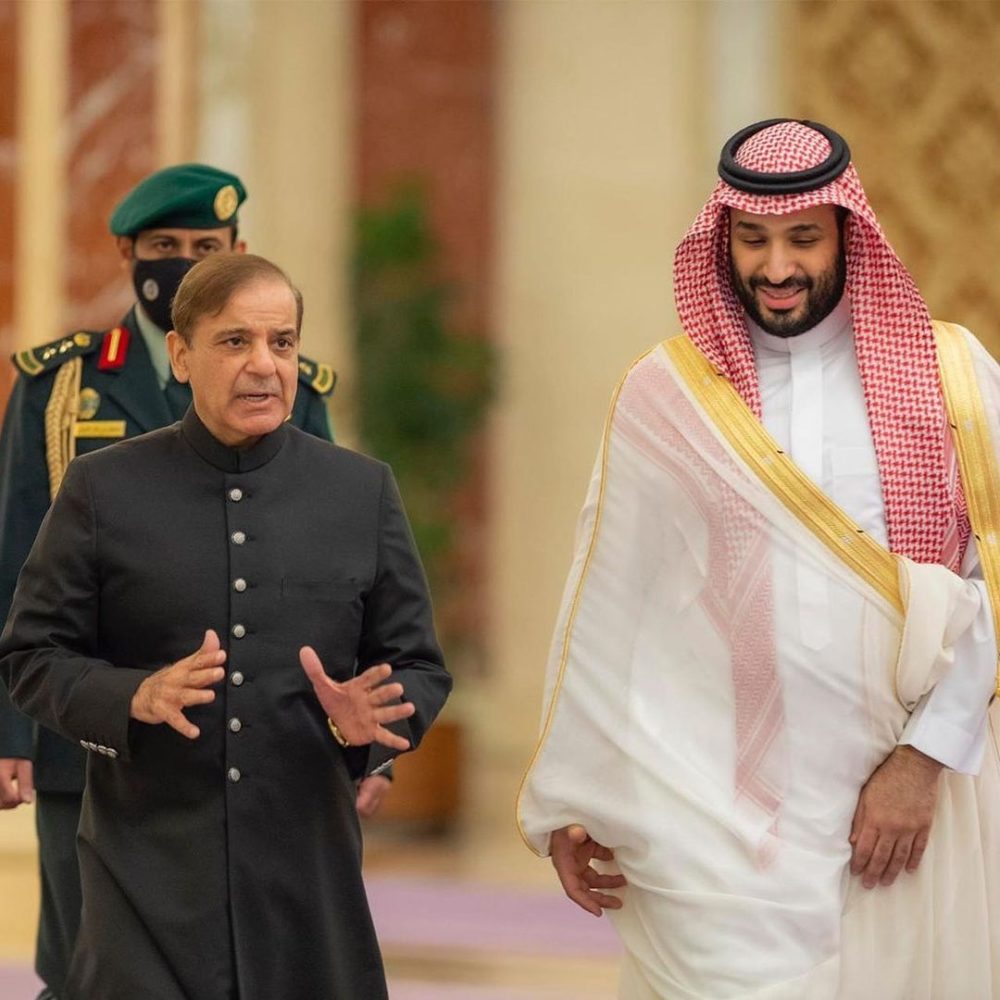
Pakistan’s expanding military role in Saudi Arabia amid the Yemen conflict could strain its defence resources and fragile finances…reports Asian Lite News Desk Pakistan’s military involvement in the war in Yemen may prove unsustainable because of mounting financial pressures and competing security demands, according to a new report. Islamabad’s growing military presence in Saudi Arabia risks stretching its defence resources while exposing the country to greater strategic and economic challenges. An article by Andrew Wilson in One World Outlook describes Pakistan’s involvement as a case of “fiscal and strategic overreach”, arguing that the country lacks the financial flexibility to sustain an expanded military commitment. Pakistan’s external finances depend heavily on an International Monetary Fund (IMF) programme, financial support from Gulf countries and remittances from Pakistani workers in the region. The report argues that deeper military involvement in the conflict could place additional pressure on these sources of financial stability. It also warns that deploying troops and military equipment abroad could weaken Pakistan’s capacity to address security challenges along its eastern border and deal with two domestic insurgencies. The move could also draw Islamabad into a conflict it has sought to approach cautiously. A Reuters report in May, citing Pakistani security and government sources, said Islamabad had deployed around 8,000 troops, a squadron of approximately 16 aircraft, mostly JF-17 fighter jets, two drone squadrons and a Chinese HQ-9 air-defence battery to Saudi Arabia. According to those sources, Riyadh was financing the deployment, with Pakistani personnel operating the equipment. The sources also said a confidential agreement contemplated the possibility of deploying up to 80,000 troops. Islamabad has not confirmed those figures, although it has acknowledged its military presence in Saudi Arabia, including the deployment of fighter jets at King Abdulaziz Air Base from April. The One World Outlook article argues that Saudi financial support can cover allowances and operating expenses but cannot easily replace military equipment needed elsewhere or resolve the political and strategic challenges of participating in the Yemen conflict. Pakistan’s defence budget is another concern. For the 2026-27 financial year, the federal government allocated PKR 3 trillion, or approximately $10.8 billion, to defence services. The allocation represents an 18 per cent increase from the original PKR 2.55 trillion provision and amounts to around 2.1 per cent of projected gross domestic product (GDP). Defence spending accounts for approximately 16 per cent of the federal government’s PKR 18.8 trillion expenditure. Military pensions are budgeted separately at PKR 822 billion, while debt servicing costs stand at approximately PKR 8 trillion, more than two-and-a-half times the defence allocation. The report argues that these competing financial obligations leave little room for additional military expenditure without placing further pressure on public finances. Pakistan’s reliance on IMF assistance also limits its fiscal flexibility. The country must meet the conditions attached to the programme, including a primary budget surplus target of 2 per cent of GDP and continued restraint on development spending. According to the article, these requirements make it difficult for Islamabad to finance an additional military commitment without compromising other budgetary priorities. Pakistan’s economic indicators offer limited reassurance. Economic growth for the 2025-26 financial year is estimated at between 3.6 and 3.7 per cent, while inflation reached approximately 10.3 per cent in September following an energy price shock. Foreign exchange reserves stood at around $21.5 billion at the end of September. Although this marks an improvement from the low levels recorded in 2023, the report notes that the reserves cover only a few months of imports. Financial assistance from Gulf partners remains central to Pakistan’s external stability. The article says Islamabad holds approximately $8 billion in Saudi deposits at its central bank. In July, the State Bank of Pakistan said Riyadh had extended the maturity of $5 billion in deposits to December 2028, easing the country’s immediate external financing requirements. A further $3 billion deposit was also extended in the spring. However, the article argues that these arrangements provide temporary relief rather than long-term financial independence, particularly as regional conflict threatens the stability of the Gulf economies on which Pakistan relies. The report concludes that Pakistan faces a difficult balance between supporting Saudi Arabia militarily and preserving the financial and military resources needed to address its domestic and regional challenges.

UK and Germany Ratify Kensington Treaty

Britain and Germany ratify the Kensington Treaty, agreeing new cooperation on AI, quantum research, defence and security while targeting investment, jobs and Russian hybrid threats…reports Asian Lite News Desk Britain and Germany

Economic tide is turning in Bangladesh

If there is one thing that can bring some comfort to the struggling Bangladeshi economy, it is good relations with India. Bangladesh should remember that Delhi’s backing, through easy supplies of essentials
Go toTop