February 12, 2021
2 mins read

NZ’s 1st shipment of Covid vaccine to arrive soon: PM

She said the arrival of the first batch of doses is an important milestone in New Zealand’s fight against Covid-19, adding the country anticipates further deliveries through quarter one from Pfizer…reports Asian Lite News

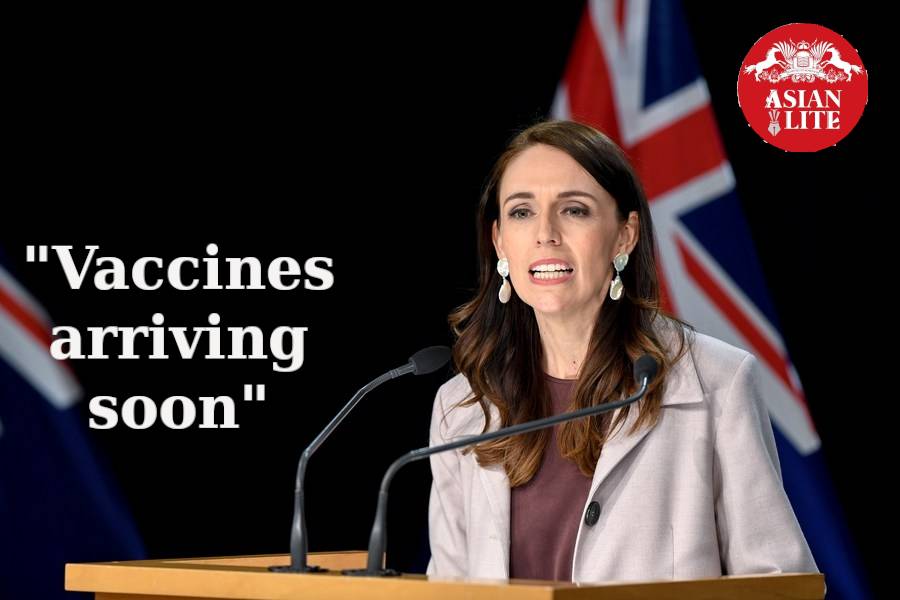
New Zealand’s first batch of the Pfizer/BioNTech Covid-19 vaccine is set to arrive next week subject to transportation plans and quality temperature control, Prime Minister Jacinda Ardern said on Friday.

“We have been working behind the scenes to secure the timely arrival of vaccines for our border workers and their families and it’s great they will arrive well within our scheduled timeframes,” Ardern told a press conference.

“Government representatives have been in conversations with Pfizer on a constant basis for the last few weeks. We appreciate the effort the company has gone to deliver the first instalment earlier than originally anticipated.

“Last year we indicated the vaccine would arrive in quarter two, and earlier this year we updated that to quarter one. It’s pleasing to be receiving doses this early in quarter one,” Xinhua news agency quoted the Prime Minister as saying.

She said the arrival of the first batch of doses is an important milestone in New Zealand’s fight against Covid-19, adding the country anticipates further deliveries through quarter one from Pfizer.

“Our first priority is our border workers, who we expect to vaccinate within two to three weeks followed by their household contacts. Health care and essential workers and those most at risk from Covid-19 will follow in quarter two, before vaccination of the wider population in the second half of the year,” Ardern said.

Covid-19 Response Minister Chris Hipkins said the first vaccinations to border workers were on track to be administered in the same week as the vaccine’s arrival in New Zealand.

The Pfizer/BioNTech vaccine requires two doses and must be stored at -70 degrees Celsius.

“Systems and processes are in place for the first vaccinations to start once final checks have been completed,” Hipkins said, adding the vaccine must be independently tested for quality assurance on arrival, which is another important safety check.

The vaccine will be offered to border and managed isolation workers on February 20, with the first jabs administered to those working in the Auckland region, he said.

As of Friday, New Zealand’s registered coronavirus cases and deaths stood at 2,326 and 25, respectively.

Also read:Covid cluster: Aus state imposes snap lockdown

Previous Story

Covid cluster: Aus state imposes snap lockdown

Next Story

Hightime to Heed Tibetan Woes

Previous Story

Covid cluster: Aus state imposes snap lockdown

Next Story

Hightime to Heed Tibetan Woes

Latest from -Top News

Pakistan Risks Overstretching Itself in Yemen War

Pakistan’s expanding military role in Saudi Arabia amid the Yemen conflict could strain its defence resources and fragile finances…reports Asian Lite News Desk Pakistan’s military involvement in the war in Yemen may prove unsustainable because of mounting financial pressures and competing security demands, according to a new report. Islamabad’s growing military presence in Saudi Arabia risks stretching its defence resources while exposing the country to greater strategic and economic challenges. An article by Andrew Wilson in One World Outlook describes Pakistan’s involvement as a case of “fiscal and strategic overreach”, arguing that the country lacks the financial flexibility to sustain an expanded military commitment. Pakistan’s external finances depend heavily on an International Monetary Fund (IMF) programme, financial support from Gulf countries and remittances from Pakistani workers in the region. The report argues that deeper military involvement in the conflict could place additional pressure on these sources of financial stability. It also warns that deploying troops and military equipment abroad could weaken Pakistan’s capacity to address security challenges along its eastern border and deal with two domestic insurgencies. The move could also draw Islamabad into a conflict it has sought to approach cautiously. A Reuters report in May, citing Pakistani security and government sources, said Islamabad had deployed around 8,000 troops, a squadron of approximately 16 aircraft, mostly JF-17 fighter jets, two drone squadrons and a Chinese HQ-9 air-defence battery to Saudi Arabia. According to those sources, Riyadh was financing the deployment, with Pakistani personnel operating the equipment. The sources also said a confidential agreement contemplated the possibility of deploying up to 80,000 troops. Islamabad has not confirmed those figures, although it has acknowledged its military presence in Saudi Arabia, including the deployment of fighter jets at King Abdulaziz Air Base from April. The One World Outlook article argues that Saudi financial support can cover allowances and operating expenses but cannot easily replace military equipment needed elsewhere or resolve the political and strategic challenges of participating in the Yemen conflict. Pakistan’s defence budget is another concern. For the 2026-27 financial year, the federal government allocated PKR 3 trillion, or approximately $10.8 billion, to defence services. The allocation represents an 18 per cent increase from the original PKR 2.55 trillion provision and amounts to around 2.1 per cent of projected gross domestic product (GDP). Defence spending accounts for approximately 16 per cent of the federal government’s PKR 18.8 trillion expenditure. Military pensions are budgeted separately at PKR 822 billion, while debt servicing costs stand at approximately PKR 8 trillion, more than two-and-a-half times the defence allocation. The report argues that these competing financial obligations leave little room for additional military expenditure without placing further pressure on public finances. Pakistan’s reliance on IMF assistance also limits its fiscal flexibility. The country must meet the conditions attached to the programme, including a primary budget surplus target of 2 per cent of GDP and continued restraint on development spending. According to the article, these requirements make it difficult for Islamabad to finance an additional military commitment without compromising other budgetary priorities. Pakistan’s economic indicators offer limited reassurance. Economic growth for the 2025-26 financial year is estimated at between 3.6 and 3.7 per cent, while inflation reached approximately 10.3 per cent in September following an energy price shock. Foreign exchange reserves stood at around $21.5 billion at the end of September. Although this marks an improvement from the low levels recorded in 2023, the report notes that the reserves cover only a few months of imports. Financial assistance from Gulf partners remains central to Pakistan’s external stability. The article says Islamabad holds approximately $8 billion in Saudi deposits at its central bank. In July, the State Bank of Pakistan said Riyadh had extended the maturity of $5 billion in deposits to December 2028, easing the country’s immediate external financing requirements. A further $3 billion deposit was also extended in the spring. However, the article argues that these arrangements provide temporary relief rather than long-term financial independence, particularly as regional conflict threatens the stability of the Gulf economies on which Pakistan relies. The report concludes that Pakistan faces a difficult balance between supporting Saudi Arabia militarily and preserving the financial and military resources needed to address its domestic and regional challenges.

UK and Germany Ratify Kensington Treaty

Britain and Germany ratify the Kensington Treaty, agreeing new cooperation on AI, quantum research, defence and security while targeting investment, jobs and Russian hybrid threats…reports Asian Lite News Desk Britain and Germany

Economic tide is turning in Bangladesh

If there is one thing that can bring some comfort to the struggling Bangladeshi economy, it is good relations with India. Bangladesh should remember that Delhi’s backing, through easy supplies of essentials
Go toTop